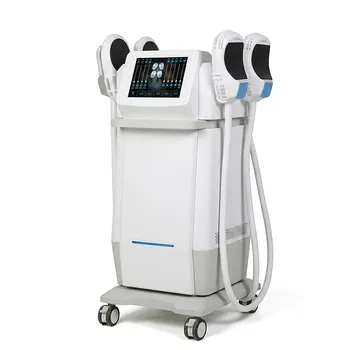
Consumable costs and post-purchase maintenance can determine whether professional aesthetic equipment generates profit or quietly destroys it. The purchase price is only the starting point: disposable tips, replacement parts, service contracts, repairs, downtime, and warranty coverage all affect the equipment’s true cost per treatment. A device with a lower upfront price may deliver worse ROI than a more expensive system if it requires costly consumables or frequent servicing.
The reliable way to assess ROI is to calculate the equipment’s total cost of ownership and compare it with realistic contribution margin per treatment. Sustainable profitability depends on predictable operating costs, treatment demand, equipment uptime, and the ability to maintain consistent service quality.
Why the Purchase Price Does Not Define ROI
Capital cost is only one part of the investment
The initial machine price is a visible, one-time expense. It does not reveal how much the equipment will cost to operate over its useful life.
A complete assessment should include the equipment, installation, training, financing, consumables, maintenance, repairs, warranties, software, energy use, and eventual replacement costs.
ROI depends on contribution margin
The relevant question is not simply how much revenue each treatment produces. It is how much remains after variable treatment costs.
A basic contribution-margin calculation is:
Treatment price - consumable cost - variable labor - allocated operating cost = contribution per treatment
That contribution must then recover the equipment’s fixed investment and other ownership expenses.
Break-even volume exposes unrealistic assumptions
A clinic can estimate break-even treatment volume by dividing total recoverable investment by contribution per treatment:
Break-even treatments = total investment to recover / contribution per treatment
If consumable costs reduce the contribution per treatment, the clinic must perform more procedures to reach break-even.
How Consumables Affect Profitability
Per-treatment costs compound quickly
A disposable tip or cartridge may appear inexpensive in isolation. Across hundreds or thousands of procedures, however, even a modest per-treatment cost can materially reduce annual profit.
This effect is especially important for high-volume services where the equipment is expected to generate frequent treatments.
Consumables can change the true treatment margin
Two devices may produce similar treatment revenue while creating very different margins. One may use inexpensive, widely available supplies; the other may require proprietary tips, expiring components, or single-use handpieces.
The device with the higher treatment price is not necessarily the more profitable option.
Supply reliability affects revenue continuity
A consumable is an operating requirement, not merely a purchasing detail. If supplies are delayed, allocated, discontinued, or difficult to source, the clinic may be unable to deliver scheduled treatments.
Interruptions can cause lost revenue, cancelled appointments, inconsistent clinical workflows, and lower patient confidence.
Pricing terms matter as much as list price
Providers should examine minimum order quantities, shipping costs, volume discounts, expiration dates, storage requirements, and price-increase history.
A supplier with slightly higher unit prices may still be preferable if it provides dependable availability and transparent purchasing terms.
How Maintenance Changes the Financial Model
Routine maintenance is a predictable ownership cost
Energy-based systems may require scheduled calibration, cleaning, inspections, replacement lamps, handpiece servicing, cooling-system maintenance, or software support.
These expenses should be included in the annual operating budget from the beginning rather than treated as unexpected costs.
Repairs create both direct and indirect losses
A repair may involve parts, technician labor, shipping, travel, and expedited service fees. The larger financial impact may come from the treatments that cannot be performed while the device is unavailable.
The cost of downtime should therefore be estimated as:
Lost contribution from cancelled treatments + repair expense + related rescheduling or recovery costs
Service coverage influences risk
A warranty or service agreement can make costs more predictable, but coverage varies substantially. Buyers should verify response times, included parts, labor coverage, exclusions, loaner equipment, preventive maintenance, and geographic service availability.
A low-cost contract with narrow coverage may provide less protection than a more comprehensive agreement.
Uptime is part of ROI
A device that produces high margins when operational may still have poor ROI if it is frequently unavailable. Reliable performance supports appointment continuity, staff utilization, patient satisfaction, and consistent treatment outcomes.
For this reason, service capability and equipment reliability should be evaluated alongside technical specifications.
How to Calculate the Total Cost of Ownership
Build a multi-year cost model
A useful model should project costs over the expected ownership period rather than only the first year.
Include:
- Purchase, financing, installation, and training
- Consumables by treatment type and expected treatment volume
- Preventive maintenance and service contracts
- Replacement parts and limited-life components
- Repairs, shipping, and technician travel
- Energy, software, and regulatory compliance costs
- Expected downtime and lost treatment contribution
- Equipment resale or replacement value
Use realistic treatment assumptions
Manufacturer projections may assume ideal utilization, pricing, treatment speed, and patient demand. A clinic should replace those assumptions with its own expected treatment volume, staffing model, procedure duration, and local pricing.
The analysis should also account for ramp-up time while staff become proficient and the service develops a patient base.
Model more than one scenario
At minimum, calculate conservative, expected, and optimistic cases. Vary treatment volume, consumable pricing, service costs, treatment price, and downtime.
This shows whether the investment remains viable if demand is slower than expected or operating costs increase.
Include local market conditions
Competition can limit the price a clinic can charge. If several providers offer similar services, discounting may reduce revenue before the equipment has recovered its cost.
ROI should therefore reflect local competition, patient demographics, referral patterns, and the clinic’s ability to differentiate the treatment.
Understanding the Trade-offs
Lower upfront cost can mean higher long-term expense
A less expensive device may rely on proprietary consumables, have limited service coverage, or require more frequent replacement of critical components.
The purchase decision should compare total ownership cost and expected contribution, not competing purchase prices alone.
Reusable components may shift costs rather than eliminate them
Reusable handpieces or applicators can reduce disposable expenses, but they may introduce sterilization, inspection, calibration, and eventual refurbishment costs.
The correct comparison is the complete cost per treatment under the clinic’s actual operating procedures.
Comprehensive service contracts are not automatically economical
A service agreement reduces uncertainty but adds a recurring expense. It is most valuable when repairs are costly, downtime is commercially damaging, or local technical support is limited.
Review the contract’s exclusions and service-level commitments before assigning it value in the ROI model.
High utilization increases both revenue and wear
Frequent use can accelerate replacement cycles and maintenance requirements. However, low utilization creates its own problem: the equipment may not generate enough contribution to recover its fixed cost.
The target is not maximum use at any cost, but sufficient profitable utilization with manageable wear and service demands.
Clinical quality cannot be separated from financial return
Unreliable equipment or inconsistent consumables can compromise treatment continuity and patient satisfaction. Refunds, repeat treatments, reputational damage, and lost referrals may not appear in a basic spreadsheet but can materially weaken the investment.
Financial analysis should therefore include operational reliability and service quality as risk factors.
Making the Right Choice for Your Goal
The purchasing process should produce a documented cost-per-treatment and multi-year break-even estimate before the clinic commits capital.
- If your primary focus is predictable profitability: Choose equipment with transparent consumable pricing, stable supply, clearly defined maintenance costs, and a contribution margin that remains healthy under conservative treatment volumes.
- If your primary focus is high treatment volume: Prioritize low recurring consumable costs, fast procedure workflows, dependable uptime, and service support that minimizes cancellations.
- If your primary focus is minimizing financial risk: Negotiate comprehensive warranty and service terms, verify repair response times, and model downtime and demand shortfalls before purchasing.
- If your primary focus is clinical continuity: Select a system with reliable performance, readily available consumables, qualified local service support, and backup procedures for supply or equipment interruptions.
- If your primary focus is market differentiation: Confirm that local demand and pricing support the treatment’s expected margin rather than relying solely on manufacturer revenue projections.
A professional aesthetic equipment investment is financially sound when its full operating burden is understood, its risks are contractually controlled, and its realistic treatment contribution can recover the investment.
Summary Table:
| Factor | Impact on ROI | Consideration |
|---|---|---|
| Consumables | Direct cost per treatment; reduces contribution margin | Likely costs vary; may be proprietary |
| Maintenance | Predictable costs; repairs and downtime | Scheduled servicing and uncertainty |
| Uptime | Affects revenue generation | Reliability and service support |
| Break-even | Increases required volume | Higher costs lead to more treatments needed |
| Total Cost of Ownership | Comprehensive model | Purchase, consumables, maintenance, downtime |
Maximize your ROI with reliable, cost-effective aesthetic devices from BELIS. Our advanced systems—including Diode Laser, IPL, and HIFU—are designed for low maintenance and efficient operation. Ensure predictable profitability and high uptime with our professional-grade equipment. Contact our experts to discuss how BELIS can support your business goals and optimize your investment. Contact Us Today
Related Products
- Tri Laser Diode Hair Removal Machine Professional Beauty Equipment
- Hydrafacial Machine with Facial Skin Analyzer Skin Tester
- Cryolipolysis Fat Freezing Machine and Ultrasonic Cavitation Device
- 808nm Diode Laser Hair Removal Machine 755+808+1064nm Mixed Wavelength Professional Equipment
- 22D HIFU Machine Device Facial Machine
People Also Ask
- How do broad-spectrum noncoherent light sources compare to single-wavelength diode lasers in aesthetic hair removal applications? Find the best fit for your clinic.
- How can aesthetic practitioners prevent side effects like paradoxical hair regrowth and thermal burns when performing diode laser hair removal on dark skin? Master safe protocols for Fitzpatrick IV–VI skin.
- How do demographic trends in non-surgical procedures like laser hair removal compare to surgical aesthetics, and how should clinics leverage professional diode laser hair removal equipment to meet this demand?
- Why is monitoring the revenue rate per hour per physician essential when deciding to invest in high-throughput aesthetic technology like diode hair removal lasers or multi-applicator body sculpting machines? Optimize your practice's profitability
- What are the primary differences in mechanism and pigment dependency between standard laser hair removal devices (Alexandrite, Diode, Nd:YAG) and photosensitizer-assisted light therapies? Discover expert insights and tailored solutions