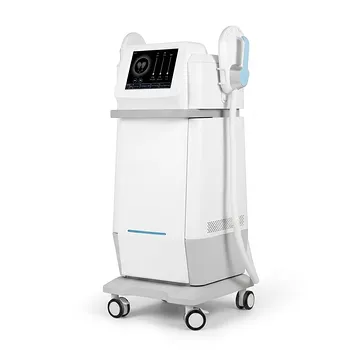
Combined RF, near-infrared light, and vacuum massage work synergistically by heating different tissue depths while mechanically mobilizing the treated area. Near-infrared light primarily warms superficial tissue, RF delivers controlled thermal energy deeper into the dermal and subcutaneous layers, and vacuum massage lifts, compresses, and moves tissue while supporting circulation and lymphatic drainage. Together, these effects can improve the appearance of cellulite, temporarily reduce circumference, and enhance skin firmness without surgical tissue removal.
The central advantage is complementary action: light and RF provide controlled thermal stimulation, while vacuum massage improves tissue handling, circulation, and fluid movement. The result is broader tissue coverage than any single modality typically provides, although outcomes depend on device settings, treatment protocols, and patient characteristics.
How Each Modality Contributes
Near-Infrared Light Heats Superficial Tissue
Near-infrared light, commonly delivered within approximately 700–1,500 nm in the systems described here, is absorbed by tissue components such as water and blood-related chromophores. This produces mainly superficial to intermediate heating.
The resulting thermal effect can increase local circulation and warm the dermal collagen matrix. Controlled heating may contribute to short-term collagen contraction and longer-term remodeling, which can improve the appearance of lax or dimpled skin.
RF Reaches Deeper Layers
Radiofrequency energy generates heat through tissue resistance to an alternating electrical field. Depending on electrode design, frequency, and power, RF can heat deeper dermal and subcutaneous tissue than superficial optical energy alone.
This deeper heating is used to affect collagen-containing tissue, fibrous connective structures, and subcutaneous fat. It may support collagen remodeling and increase local metabolic activity, but it should not be interpreted as guaranteed destruction or permanent removal of fat cells.
Vacuum Massage Manipulates the Tissue
Negative-pressure suction draws tissue into the handpiece, while massage or rolling components may compress and release it. This mechanical action can temporarily separate and mobilize tissue planes, including fibrous structures associated with cellulite.
Vacuum treatment also increases superficial blood flow and supports movement of interstitial fluid through the lymphatic system. These effects can reduce the appearance of swelling and improve skin texture, particularly when fluid retention contributes to uneven contours.
Why the Combination Can Be Synergistic
Different Modalities Address Different Tissue Depths
The modalities are complementary rather than redundant. Near-infrared light primarily affects superficial tissue, RF contributes deeper heating, and vacuum massage provides mechanical manipulation.
This layered approach allows a device to address both skin quality and subcutaneous contour irregularities during the same treatment session.
Heat Can Improve Tissue Compliance
Warmed tissue generally becomes more pliable, allowing the vacuum handpiece to manipulate it more consistently. This may help the device maintain more uniform contact and distribute mechanical forces across the treatment area.
The vacuum system can therefore function not only as a massage mechanism but also as a way to position tissue for more predictable energy delivery.
Thermal and Mechanical Effects Address Cellulite Differently
Cellulite involves several interacting factors, including subcutaneous fat, fibrous connective bands, skin laxity, and local fluid distribution. Thermal energy may soften or remodel collagen-rich structures, while mechanical massage can mobilize fibrous tissue and improve fluid movement.
Because the causes are multifactorial, combining thermal and mechanical effects is more logical than relying on a single mechanism. However, this does not mean every device produces the same degree of cellulite improvement.
Circulation and Fluid Movement Support the Treatment Response
RF and infrared heating can increase local blood flow. Vacuum massage adds a physical stimulus that may enhance superficial circulation and lymphatic drainage.
These effects can reduce temporary tissue congestion and help move mobilized interstitial fluid. They may improve visible smoothness, but they should not be confused with a proven pathway for permanently eliminating large quantities of body fat.
Oxygen Availability May Influence Local Metabolism
The supplied references describe RF and infrared heating as potentially promoting the dissociation of oxygen from oxyhemoglobin. This could increase local oxygen availability and support metabolic activity in adipose tissue.
That mechanism is best viewed as a proposed contribution to the overall treatment effect, not as a standalone explanation for fat loss. Changes in body circumference can also reflect fluid shifts, tissue compression, skin tightening, and temporary changes in swelling.
What Happens During a Typical Treatment
Tissue Is Drawn Into the Applicator
Vacuum suction gently lifts the skin and underlying tissue into the treatment head. This creates contact between the applicator and the target area while mechanically mobilizing the tissue.
The vacuum level is typically adjusted according to the treatment area, tissue characteristics, device design, and patient comfort.
Thermal Energy Raises Tissue Temperature
Infrared light warms more superficial structures, while RF adds controlled heating to deeper tissue. The operator generally monitors comfort and skin response rather than pursuing the highest possible temperature.
A mild, controlled erythema—temporary redness—is often used as a practical endpoint for some protocols. Excessive heat is not evidence of a better treatment and can increase the risk of adverse effects.
Massage Moves Fluid and Softens Tissue
As the tissue is heated and mechanically manipulated, the handpiece may improve mobility of fibrous structures and promote movement of interstitial fluid. This can create an immediate feeling of reduced tightness or improved smoothness.
The visible result directly after treatment may therefore include both genuine tissue effects and temporary changes in fluid distribution.
Repeated Sessions Support Remodeling
Collagen remodeling and changes in skin appearance develop over time rather than immediately. For that reason, treatment programs commonly involve multiple sessions and reassessment.
The appropriate number and interval depend on the device, treatment objective, body area, and individual response. A single session should not be expected to produce a permanent transformation.
What Outcomes Are Reasonable to Expect
Skin May Look Smoother and Firmer
Thermal stimulation and mechanical manipulation can improve the visible appearance of lax or dimpled skin. Collagen contraction may provide an early tightening effect, while collagen remodeling may contribute to later changes in texture.
The improvement is generally cosmetic and gradual. It does not replace surgical skin removal when substantial excess skin is present.
Circumference May Decrease Temporarily or Modestly
Some users experience a measurable reduction in treated-area circumference. This may reflect a combination of tissue compression, reduced fluid accumulation, altered skin tension, and changes in the treated fat compartment.
The result should not automatically be equated with permanent fat loss. Durable body-composition change still depends primarily on overall energy balance and other biological factors.
Deeper Structures Are Intended to Remain Intact
Non-invasive systems are designed to affect the skin and subcutaneous tissues without incisions. Properly controlled treatment should avoid damage to deeper structures, but “non-invasive” does not mean “risk-free.”
Safety depends on correct energy delivery, adequate cooling or temperature control where applicable, appropriate patient selection, and trained operation.
Understanding the Trade-offs
More Energy Is Not Necessarily Better
Increasing RF power, infrared intensity, or vacuum pressure can increase discomfort and the risk of burns, bruising, prolonged redness, or other tissue irritation. Effective treatment requires reaching a controlled therapeutic endpoint, not maximizing every setting.
Device specifications and treatment parameters should therefore be evaluated together rather than by headline power alone.
Vacuum Can Cause Bruising or Tenderness
Negative pressure may produce temporary bruising, petechiae, soreness, or sensitivity, especially in patients with fragile vessels or when pressure is excessive. These effects are mechanical rather than evidence that more fat has been removed.
A comfortable, controlled vacuum level is generally more appropriate than aggressive suction.
Results Vary by Tissue Composition
The response depends on factors such as the amount and distribution of subcutaneous fat, skin elasticity, cellulite severity, connective-tissue structure, circulation, and baseline fluid retention.
A device may improve surface texture without substantially changing total body weight or eliminating localized fat deposits.
The Mechanism Should Not Be Overstated
Claims that vacuum massage permanently pushes released fat directly into the lymphatic system, or that thermal energy reliably destroys fat cells, are stronger than the evidence supplied here supports. These systems may mobilize tissue and produce contour changes, but their effects should be described as controlled heating, mechanical manipulation, fluid movement, and possible metabolic or remodeling responses.
Patients should receive realistic expectations rather than assurances of permanent fat elimination.
Medical Contraindications Matter
RF and vacuum procedures may be inappropriate for some people with implanted electronic devices, certain metal implants, active skin disease, impaired sensation, vascular disorders, bleeding risks, or other medical conditions.
Screening should be performed before treatment, and manufacturer contraindications and local clinical guidance should be followed.
Making the Right Choice for Your Goal
The best way to evaluate a combined device is to match its mechanisms to the actual treatment objective.
- If your primary focus is cellulite appearance: Prioritize a protocol that combines controlled heating with mechanical tissue manipulation, because cellulite involves skin laxity, fibrous structures, fat distribution, and fluid movement.
- If your primary focus is skin tightening: Emphasize RF and infrared thermal delivery, with settings designed to stimulate collagen contraction and remodeling without excessive surface heating.
- If your primary focus is temporary swelling or fluid-related fullness: Vacuum massage and lymphatic-supportive mechanical action may be particularly relevant, although they do not constitute permanent fat removal.
- If your primary focus is localized contouring: Ask for objective measurements, realistic expectations, and evidence for the specific device rather than assuming that every RF–IR–vacuum system has equivalent results.
- If your primary focus is safety: Choose a system with controlled energy delivery, adjustable vacuum levels, trained operators, and clear screening and aftercare procedures.
Combined RF, near-infrared light, and vacuum massage are best understood as a coordinated tissue-heating and mechanical-mobilization system—not as a substitute for surgical fat removal or overall weight management.
Summary Table:
| Modality | Depth of Action | Primary Effects |
|---|---|---|
| Near-Infrared Light | Superficial to intermediate | Warms tissue, increases circulation, stimulates collagen |
| Radiofrequency (RF) | Deeper dermal and subcutaneous | Heats tissue, promotes collagen remodeling, affects fibrous structures |
| Vacuum Massage | Surface and underlying tissue | Mechanically mobilizes tissue, improves circulation and lymphatic drainage |
| Combined | Multiple depths | Addresses cellulite, reduces circumference, enhances skin firmness |
Ready to enhance your clinic's body sculpting offerings? BELIS provides professional-grade RF, infrared, and vacuum devices designed for effective, non-invasive treatments. Our advanced technology, coupled with exceptional OEM/ODM support and full certifications, ensures your practice delivers outstanding results. Contact us today to learn more and elevate your aesthetic solutions—get in touch!
Related Products
- EMS Body Sculpting Slimming Machine EMSlim Body Slimming Machine
- EMSlim Neo Nova Body Sculpting EMS Sculpting Machine
- EMSlim RG Laser Body Sculpting and Slimming Machine
- EMS Body Sculpting Machine for Body Slimming and Sculpting
- EMSlim Body Sculpting Machine EMS Body Slimming Machine
People Also Ask
- Does EMS sculpting really work? Achieve Clinically-Proven Body Contouring
- What is the recommended waiting period after liposuction before EMslim? Optimize Your Body Contouring Results Safely
- Can EMslim treatment be administered after a liposuction procedure? Enhance and Refine Post-Surgical Body Contouring
- Is EMSlim safe? Ensuring Your Safety in Non-Invasive Body Contouring
- How long does it take to see results from EMSlim? A Realistic Timeline for Lasting Body Contouring