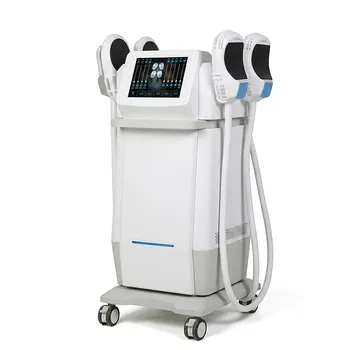
Professional RF skin tightening and neuromuscular treatment address different causes of neck and lower-face aging. Neuromodulators can reduce excessive platysmal activity and soften dynamic bands, while deep volumetric RF heats the dermis to support collagen remodeling, improve elasticity, and create modest tissue tightening. A coordinated plan typically relaxes the target muscles first, then uses RF after muscular relaxation to improve the overlying skin and submental contour.
The combination works because it separates the problems: neuromuscular treatment reduces dynamic movement, while RF addresses dermal laxity and structural support. It can produce a more balanced, non-surgical rejuvenation result than either treatment alone, but it is not a substitute for surgery when laxity or fat excess is advanced.
Why Combine RF With Neuromuscular Treatment?
Treating movement and laxity separately
Neck and lower-face aging often involves several overlapping factors: dynamic muscle activity, reduced collagen support, skin laxity, and sometimes submental fullness.
A neuromodulator primarily affects muscle activity. RF primarily affects the skin and deeper dermal tissues, so the treatments are complementary rather than interchangeable.
Addressing platysmal bands
Hyperkinetic platysmal bands can create vertical neck lines, downward traction, and visible muscle activity during facial expression or neck movement.
When appropriately selected and administered, a neuromodulator can reduce this dynamic component. It does not directly rebuild lax dermal tissue, which is where RF may add value.
Improving skin support with RF
Professional RF devices deliver controlled electromagnetic energy that is converted into thermal energy within the deeper dermal tissue.
The heating produces immediate contraction of existing collagen fibers and stimulates longer-term collagen remodeling. Over time, this can improve firmness, elasticity, lower-face definition, and the appearance of mild-to-moderate laxity.
How the Combined Treatment Strategy Works
Begin with anatomical and tissue assessment
A clinician should first determine whether the dominant concern is muscle activity, skin laxity, submental fullness, loss of volume, or a combination of these factors.
This distinction matters because RF is most appropriate for improving tissue firmness and support. It should not be presented as a comprehensive solution for substantial excess skin, pronounced fat, or major structural descent.
Treat the neuromuscular component first
When platysmal activity is a significant contributor, the neuromodulator is generally placed before the RF phase of the plan.
The aim is to reduce excessive muscular contraction so that the subsequent tightening treatment is performed over a more relaxed muscular foundation. Treatment must be individualized because excessive weakening of neck muscles can produce undesirable functional or aesthetic effects.
Apply RF after muscular relaxation
Once the neuromuscular treatment has taken effect, the provider can use a professional external RF device to deliver controlled deep thermal heating to the neck, submental region, and lower face, as appropriate.
The exact timing should be determined by the treating clinician and the product and device instructions. There is no universal interval that is appropriate for every patient, device, treatment area, or injection pattern.
Use device-specific treatment parameters
RF treatment should be guided by the device’s intended tissue depth, temperature monitoring, energy settings, applicator design, and safety protocol.
The objective is controlled volumetric heating, not simply applying the highest possible energy. The skin must be protected from excessive surface heating while the deeper tissue receives an effective, tolerable thermal dose.
What Results Can Patients Reasonably Expect?
Improved dynamic neck appearance
Neuromuscular treatment may reduce the visibility and movement of hyperkinetic platysmal bands.
This can make the neck appear calmer and less corded during expression, but it does not eliminate every visible line or correct loose skin by itself.
Firmer-looking skin and better definition
RF may gradually improve dermal firmness and elasticity through collagen contraction and remodeling.
The visible result is usually subtle to moderate refinement, such as improved skin texture, a tighter-looking lower face, and better definition around the submental area.
A more integrated lower-face result
Treating only muscle activity can leave residual skin laxity. Treating only laxity can leave persistent dynamic bands.
The combined approach seeks to improve both layers, creating a more coherent result without disrupting the skin’s surface or requiring an incision.
Selecting the Right RF Approach
External monopolar or other non-invasive RF
For a genuinely non-invasive plan, the relevant approach is an external RF system that delivers energy through the skin without needles or intentional epidermal disruption.
These systems are commonly used for facial and neck skin tightening in patients with mild-to-moderate laxity who want limited recovery time.
Microneedle RF is a different category
Microneedle RF can also stimulate collagen and tighten tissue, but it involves needle penetration and therefore is not strictly non-invasive.
It should not be grouped with external RF when discussing a no-needle neck rejuvenation plan. Its suitability, sequencing, and recovery requirements must be evaluated separately.
RF is not primarily a fat-removal treatment
RF may contribute to subtle tissue tightening and modest improvement in the appearance of submental fullness, depending on the device and patient.
However, it should not be represented as equivalent to a dedicated fat-reduction treatment or as a replacement for surgical removal of significant excess skin or fat.
Understanding the Trade-offs
Results are gradual and limited by tissue condition
RF collagen remodeling develops over time rather than producing a surgical-level lift immediately.
Patients with severe laxity, extensive skin excess, or major volume loss may see limited improvement from RF alone and may require a different treatment strategy.
Muscle relaxation requires precision
Neuromuscular treatment in the neck is technically sensitive because the platysma contributes to movement and lower-face support.
Overtreatment or imprecise placement can create an unnatural appearance or functional concerns. Treatment should therefore be performed by a qualified clinician with detailed knowledge of neck anatomy.
More treatments do not always mean better results
Combining modalities can improve coverage of different aging mechanisms, but unnecessary stacking increases cost, complexity, and the opportunity for adverse effects.
The plan should be driven by the patient’s anatomy and goals, not by the assumption that every available treatment should be performed.
Thermal safety remains essential
RF is designed to heat deeper tissue while protecting the skin surface, but excessive or poorly controlled heating can cause injury.
A professional device, appropriate settings, temperature control, and continuous assessment of patient comfort are essential, particularly in the thin and anatomically complex neck region.
Timing must be individualized
The principle of treating muscular activity before RF is useful, but treatment schedules cannot be safely reduced to a universal formula.
The clinician must account for the neuromodulator used, injection locations, treatment intensity, tissue response, device instructions, and the patient’s medical history.
How to Apply This to a Treatment Plan
A practical plan should begin with diagnosis rather than device selection.
- If your primary focus is dynamic platysmal bands: Use a carefully planned neuromuscular treatment to reduce excessive muscle activity, with RF considered afterward if residual skin laxity remains.
- If your primary focus is mild-to-moderate skin laxity: Prioritize professional external RF to support collagen remodeling and improve firmness, while recognizing that it will not create a surgical lift.
- If your primary focus is both bands and laxity: Treat the muscular component first, allow appropriate relaxation, and then use controlled RF to address the overlying dermal tissues.
- If your primary focus is substantial submental fat or excess skin: Obtain an anatomical assessment before choosing RF, because a tightening device alone may not address the primary problem.
- If your primary focus is a non-invasive treatment course: Select an external RF platform and do not assume microneedle RF is equivalent, since microneedle systems involve tissue penetration.
The strongest results come from matching each modality to the specific tissue problem it is designed to treat.
Summary Table:
| Aspect | Neuromuscular Treatment | RF Skin Tightening | Combined Approach |
|---|---|---|---|
| Target | Muscle activity (platysmal bands) | Dermal collagen and laxity | Both muscle and skin layers |
| Mechanism | Reduces excessive muscle contraction | Heats dermis to stimulate collagen | Relax muscles first, then tighten skin |
| Result | Calmer neck appearance, reduced bands | Improved firmness and elasticity | More balanced, comprehensive rejuvenation |
| Limitations | Does not address skin laxity | Subtle to moderate results only | Not a substitute for surgery |
Discover how BELIS’s advanced RF systems can enhance your neck and lower face rejuvenation protocols. Our professional-grade devices are designed for clinics and premium salons, offering precise deep heating for optimal collagen remodeling. Explore our range of RF skin tightening solutions, including combination strategies with neuromodulators, and take your practice to the next level. Contact our experts today for personalized guidance and OEM/ODM support.
Related Products
- Ultrasonic Cavitation Radiofrecuency Machine for Body Slimming
- Ultrasonic Cavitation Machine Lipo Laser Device
- Clinic Use IPL SHR ND YAG Laser Hair Removal RF Skin Tightening Machine
- RF Microneedling Machine Micro Needle Radio Frequency Machine
- 4D 12D HIFU Machine Device for Skin Tightening
People Also Ask
- What are the pros and cons of the ultrasonic cavitation slimming treatment? A Guide to Painless Body Contouring
- Does an ultrasonic cavitation machine also tighten the skin? Achieve Total Body Contouring with RF Synergy
- How does radiofrequency technology in slimming machines promote fat reduction? The Science of Non-Invasive Sculpting
- How should one prepare for an ultrasonic cavitation appointment? 5 Essential Tips for Maximum Fat Loss Results
- What is an ultrasonic cavitation machine? Sculpt Your Body with Advanced Non-Invasive Fat Reduction