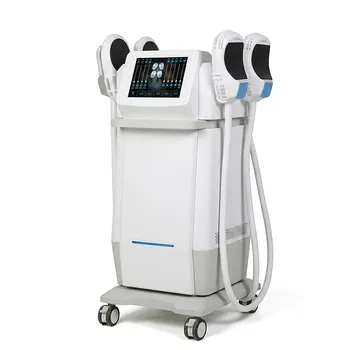
Use RF as the tissue-tightening foundation, not as a replacement for volume restoration. Volumetric radiofrequency (RF) can improve dermal firmness, elasticity, fine lines, and mild-to-moderate laxity in the midface and periorbital region. It is most effective in a multi-modal protocol: RF addresses skin and dermal support, neuromodulators reduce dynamic muscle activity, and fillers correct selected areas of static volume loss.
The central principle is layer-based treatment: use RF to tighten and remodel the skin, neuromodulators to relax hyperfunctional muscles, and fillers only where persistent structural volume deficiency remains.
Build the Protocol Around the Patient’s Anatomy
Separate dynamic, static, and laxity-related changes
A proper assessment should distinguish between:
- Dynamic lines, produced by repetitive muscle contraction.
- Static folds or hollows, caused by volume loss and established skin changes.
- Skin laxity and redundancy, caused by reduced dermal support and collagen remodeling.
- Contour changes, particularly through the malar, submalar, and preauricular regions.
No single modality reliably corrects all four findings. The protocol should therefore match each treatment to the tissue layer and mechanism involved.
Identify appropriate RF candidates
Volumetric RF is most appropriate for patients with mild-to-moderate laxity, fine lines, and reduced skin firmness who want a non-surgical or minimally invasive approach.
Patients with substantial skin redundancy, pronounced tissue descent, severe photodamage, or major volume loss may require a different strategy, including surgical consultation or carefully staged combination treatment.
Establish a baseline before treatment
Document skin laxity, eyelid and brow position, malar projection, submalar hollowing, tear trough appearance, and facial asymmetry.
Standardized photography and a review of prior injectables or surgery are particularly important because post-treatment tightening and swelling can temporarily change the appearance of contours.
Use RF to Create a Tighter Cutaneous Foundation
Treat the midface along structural vectors
For midface contouring, RF heating can be directed along the submalar and preauricular vectors to improve dermal firmness and support the appearance of elevation through the malar region.
The objective is not to mechanically reposition deep facial structures in the same way as surgery. Rather, RF improves the overlying tissue envelope so that subsequent contouring can be achieved with less reliance on filler.
Address periorbital skin redundancy conservatively
Around the eyes, RF can target fine lines, mild laxity, and skin redundancy when appropriate equipment, technique, and safety protocols are used.
The periorbital region is anatomically delicate. Treatment parameters, applicator choice, thermal monitoring, and treatment margins must be determined according to the specific device and the patient’s anatomy.
Allow collagen remodeling to develop
RF produces an immediate contraction of existing collagen fibers and stimulates fibroblast activity associated with later collagen remodeling.
The visible result is therefore not solely an immediate tightening effect. Patients should understand that improvement develops progressively and may require a treatment series or maintenance sessions, depending on the device and protocol.
Add Neuromodulators for Dynamic Periorbital Lines
Treat the muscle when muscle activity is the driver
Hyperfunctional orbicularis activity contributes to dynamic periorbital lines. A neuromodulator can reduce this repetitive contraction while RF addresses the quality and laxity of the overlying skin.
This combination is complementary: neuromodulation reduces movement, while RF supports dermal remodeling and firmness.
Avoid using neuromodulators to solve structural problems
Neuromodulators do not replace correction of static volume loss, skin redundancy, or significant contour deficiency.
Treatment should remain conservative around the eyes because excessive muscle weakening can produce unwanted changes in expression, eyelid support, or lower-eyelid dynamics.
Sequence according to the treatment objective
Clinicians may stage RF and neuromodulator treatment rather than performing everything in one visit. A common planning principle is to establish the skin-tightening strategy first, then reassess dynamic lines and residual laxity before adding or adjusting neuromodulation.
The exact sequence should account for the device, treatment intensity, injection sites, swelling, and the clinician’s experience with the region.
Use Fillers for Residual Static Volume Loss
Correct volume deficits selectively
After evaluating the response to RF, fillers can be used for persistent deep static rhytids, tear trough deformities, localized hollowing, or malar volume deficiency.
The goal is targeted structural correction, not compensating for untreated laxity with progressively larger filler volumes.
Consider RF before deep volumetric filler placement
Pre-treating midface skin laxity with RF can create a firmer, more elevated tissue foundation before deep volumetric filler is placed.
This may allow the clinician to achieve smoother contours with less filler, while reducing the risk of an overfilled appearance.
Avoid treating every irregularity with filler
Some apparent hollows are partly caused by shadowing, skin laxity, or altered tissue vectors rather than true volume deficiency.
A staged reassessment helps distinguish what remains after tightening from what genuinely requires volume restoration.
Integrate the Modalities in a Staged Workflow
Stage 1: Assessment and treatment planning
Begin with a full facial assessment, including:
- Skin quality and degree of laxity.
- Periorbital muscle activity.
- Malar and submalar support.
- Tear trough and other static depressions.
- Prior surgery, fillers, and energy-based treatments.
- Patient tolerance for downtime and number of sessions.
The clinician should also define the primary endpoint: improved skin quality, reduced dynamic lines, better midface support, or correction of a specific volume deficit.
Stage 2: RF skin tightening
Apply volumetric RF to the selected midface and periorbital zones using device-specific parameters and appropriate thermal control.
For the midface, vector-based treatment can be planned through the submalar and preauricular regions. For the periorbital area, treatment should be conservative and anatomically controlled.
Stage 3: Reassessment after tissue response
Allow sufficient time for acute treatment effects to settle and for early remodeling to become evident before making major volumizing decisions.
This reassessment reveals whether the patient still needs neuromodulation, filler, additional RF, or a different intervention altogether.
Stage 4: Add targeted injectables
Use neuromodulators for residual dynamic orbicularis activity and fillers for clearly defined static volume loss.
Injectables should be placed with a conservative, anatomy-led approach, particularly in the periorbital region where small changes can produce visible functional or aesthetic effects.
Stage 5: Maintain the result
RF remodeling and injectable effects have different time courses. Establish a maintenance plan based on the patient’s skin laxity, muscle activity, filler behavior, and response to previous treatment.
Maintenance should be guided by reassessment rather than by automatically repeating every modality at the same interval.
Understanding the Trade-offs
RF is not equivalent to surgical lifting
RF can improve dermal firmness and create subtle vector lifting, but it does not reproduce the repositioning and tissue excision achieved with surgery.
Patients with advanced laxity or substantial eyelid skin excess should receive realistic counseling about the likely magnitude of improvement.
More heat is not necessarily better
RF outcomes depend on controlled energy delivery, adequate tissue contact, and appropriate temperature management.
Excessive energy or poor control can increase the risk of pain, burns, unwanted tissue injury, or irregular results. Device settings should never be generalized across platforms.
Combination treatment increases planning complexity
RF, neuromodulators, and fillers affect different tissues and have different onset times. Treating them indiscriminately in one session can make swelling, asymmetry, and early results difficult to interpret.
Staging is often preferable when the patient has significant laxity, uncertain volume needs, prior procedures, or limited tolerance for risk.
The periorbital region requires heightened caution
The skin around the eyes is thin and closely associated with muscles, eyelids, and critical ocular structures.
Only appropriately trained clinicians should treat this region, using the device’s validated indications, protective measures, and contraindication screening. Any patient with concerning ocular symptoms or unexpected post-treatment changes requires prompt clinical evaluation.
Filler reduction is a possibility, not a guarantee
RF may reduce the amount of filler needed by improving the tissue foundation, but it cannot replace filler when true structural volume loss is present.
The correct endpoint is balanced correction, not minimizing filler volume at all costs.
How to Apply This to Your Protocol
A practical protocol should remain anatomy-led, staged when necessary, and specific to the RF platform being used.
- If your primary focus is periorbital fine lines: Use conservative periorbital RF for dermal remodeling, then consider neuromodulation for persistent dynamic orbicularis activity.
- If your primary focus is midface laxity: Use vector-based RF through the submalar and preauricular regions before reassessing the need for deep malar or midface filler.
- If your primary focus is tear trough or static hollowing: Tighten and reassess the skin envelope first, then use targeted filler only for residual, anatomically confirmed volume deficiency.
- If your primary focus is a non-surgical alternative to lifting: Present RF as a method for improving firmness and contour quality, while explaining that substantial tissue descent may require surgical evaluation.
- If your primary focus is treatment safety: Use device-specific parameters, conservative periorbital technique, careful staging, and thorough documentation of baseline anatomy and prior procedures.
When each modality is assigned to the tissue problem it is best equipped to solve, multi-modal rejuvenation becomes more precise, natural, and predictable.
Summary Table:
| Layer | Primary Modality | Target Issue | Key Consideration |
|---|---|---|---|
| Skin & dermis | Volumetric RF | Mild-to-moderate laxity, fine lines, reduced firmness | Progressive collagen remodeling; device-specific parameters |
| Muscle | Neuromodulators | Dynamic periorbital lines | Conservative dosing; avoid overweakening |
| Volume | Fillers | Residual static volume loss (e.g., tear trough) | Targeted placement; reassess after RF |
Elevate your practice with BELIS's professional-grade aesthetic devices. Our advanced RF systems, combined with lasers, IPL, and body sculpting technologies, support precise multi-modal protocols for facial rejuvenation. Contact us today to discover comprehensive solutions that enhance patient outcomes and grow your business.
Related Products
- 4D 12D HIFU Machine Device for Skin Tightening and Lifting
- Ultrasonic Cavitation Radiofrecuency Machine for Body Slimming
- 4D 12D HIFU Machine Device for Skin Tightening
- 22D HIFU Machine Device Facial Machine
- Clinic Use IPL SHR ND YAG Laser Hair Removal RF Skin Tightening Machine
People Also Ask
- What is the mechanism of HIFU devices for facial lifting? Unlock Non-Surgical SMAS Tightening Secrets
- How do non-invasive skin tightening devices such as HIFU and microneedle RF compare to surgical rhytidectomy for facial lifting? Discover the key differences in results, longevity, and recovery.
- What are the technical principles behind HIFU for facial tightening? Master Deep SMAS Lifting Technology
- What is the primary anatomical mechanism of micro-focused ultrasound (HIFU) skin lifting devices compared to traditional superficial thermal treatments? Deep tissue tightening explained
- Is HIFU skin tightening safe? Ensure Your Safety with a Qualified Professional