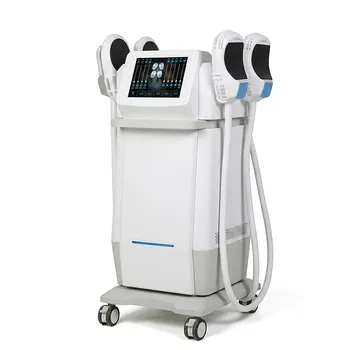
An effective equipment budget must cover the entire ownership lifecycle, not just the purchase price. Clinic managers should build the budget from historical financial data, separate fixed and variable costs, forecast realistic patient demand, set spending limits, and compare actual results with the plan every month. ROI should be evaluated against total ownership costs—including consumables, maintenance, compliance, staffing, insurance, and marketing—not against equipment price alone.
The central principle: Treat every device as a small business investment with its own revenue forecast, cost structure, utilization target, and ongoing performance review.
Build the Budget Around the Equipment’s Full Economic Life
Start with historical financial data
Gather historical income, procedure volume, treatment pricing, supply costs, payroll, facility expenses, marketing expenditure, and equipment-related costs.
This establishes a realistic baseline. It also prevents managers from relying on optimistic assumptions about demand or treatment profitability.
Separate fixed and variable costs
Fixed costs generally remain stable regardless of treatment volume. They may include facility rent, equipment lease payments, software, insurance, and certain administrative expenses.
Variable costs increase with each procedure or patient. These may include disposable tips, treatment consumables, medical supplies, payment processing, and procedure-specific staffing time.
This distinction is essential because a treatment can appear profitable based on its selling price while producing weak margins after variable costs are included.
Include costs beyond the purchase price
The equipment budget should account for:
- Hardware purchase or lease payments
- Installation and onboarding
- Routine maintenance and service agreements
- Extended warranties and potential repair fees
- Disposable tips and other recurring consumables
- Regulatory and safety compliance
- Medical record-keeping and clinical documentation
- Liability insurance and risk management
- Staff training and time away from treatment delivery
- Marketing and consultation costs
These costs form the equipment’s total cost of ownership. Omitting them can materially overstate expected ROI.
Forecast Demand Before Approving the Purchase
Evaluate the local market
Assess local competition, prevailing treatment prices, patient demographics, and demand for the specific procedure.
A technologically advanced device does not guarantee adequate utilization. If competing clinics have already driven prices down, projected revenue may be lower than the vendor’s business case suggests.
Use historical volume as the starting point
Forecast expected treatments using the clinic’s existing patient volume, conversion patterns, repeat-visit behavior, and capacity.
Market trends can inform the forecast, but they should supplement—not replace—evidence from the clinic’s own operating history.
Connect demand to capacity
Estimate how many treatments the clinic can actually deliver with its available rooms, providers, assistants, and operating hours.
The forecast should reflect realistic appointment capacity, not merely the maximum number of procedures the device can technically perform.
Establish a utilization and profitability target
Before purchase, define what successful performance means. This may include target treatment volume, minimum contribution margin per procedure, acceptable consumable cost, and a review point for reassessing the investment.
The objective is not simply to keep the device busy. It is to generate sustainable net revenue after all relevant costs are considered.
Create Financial Controls Before Spending Begins
Set defined expenditure limits
Establish approved limits for the initial acquisition and for recurring categories such as consumables, maintenance, repairs, training, and marketing.
Limits should be specific enough to trigger management action when spending begins to drift.
Create an equipment-specific budget
Do not bury device-related expenses in broad clinical or administrative categories. Track each major device separately so managers can compare its revenue and costs over time.
This makes it easier to identify whether a problem comes from weak demand, excessive supply usage, underpricing, staffing inefficiency, or unexpected service costs.
Use procurement strategically
Group purchasing options can reduce the cost of treatment consumables and improve purchasing consistency.
However, lower unit cost should not be the only criterion. Managers should also consider product suitability, reliability, safety, availability, and the effect of purchasing commitments on cash flow.
Define approval rules for exceptions
Require review before unplanned repairs, emergency purchases, significant marketing expansions, or changes in treatment pricing.
Clear approval rules reduce reactive spending and ensure that deviations are evaluated against the device’s financial objectives.
Monitor Actual Performance Every Month
Compare budgeted and actual results
At least monthly, compare planned revenue and expenses with actual results.
Review both total variance and individual line items, including medical supplies, consumables, staffing, maintenance, clinical overhead, and marketing.
Investigate the cause of each material variance
A spending difference is not automatically a problem. It may reflect higher treatment volume, an unexpected repair, lower-than-expected patient demand, or inefficient use of supplies.
Managers should identify the cause before deciding whether to reduce spending, revise the forecast, change pricing, or adjust operations.
Track revenue quality, not only sales
Gross revenue can conceal weak profitability. Review collected revenue, procedure-level costs, and net revenue per patient encounter.
Metrics such as net collected revenue per full-time equivalent physician can provide additional insight into whether staffing resources and equipment capacity are being used productively.
Compare results with external benchmarks
Internal profit-and-loss statements show the clinic’s own trajectory. External industry benchmarks can provide context for evaluating overhead, supplies, staffing productivity, and marketing expenditure.
Benchmarks should guide investigation rather than replace local judgment, because market conditions and service mixes vary between clinics.
Evaluate ROI as an Ongoing Operating Decision
Calculate profitability using total costs
The relevant question is not, “How quickly will the machine pay for itself?” It is, “What net contribution will the device generate after all acquisition and operating costs?”
Include recurring consumables, maintenance, warranties, repairs, compliance, insurance, staffing time, and marketing when evaluating the investment.
Assess treatment-level margins
Determine the revenue collected for each procedure and subtract the costs directly associated with delivering it.
Disposable tips and other per-client supplies deserve particular attention because small recurring costs can substantially reduce margins as treatment volume grows.
Review pricing against market conditions
Pricing must reflect both the clinic’s cost structure and the local competitive environment.
Setting prices too low may devalue the treatment and prevent the device from covering its ownership costs. Setting prices too high may reduce demand and leave capacity underused.
Reassess the investment after launch
The original business case is a forecast, not a guarantee. Reevaluate performance after sufficient operating experience has accumulated and continue reviewing it through the monthly budgeting process.
If demand, pricing, consumable costs, or maintenance requirements differ materially from expectations, management should revise the operating plan.
Support Financial Performance Through Clinical Readiness
Train staff for safe, consistent delivery
Staff training is an operating cost, but it also affects treatment quality, patient confidence, utilization, and risk.
Whenever feasible, staff should experience treatments firsthand. Understanding patient sensations and expected outcomes helps practitioners provide clearer consultations and more empathetic post-procedure care.
Connect training to the budget
Budget for the time clinicians spend in training, including time that could otherwise have been used for patient care.
Training should also cover equipment operation, safety procedures, documentation, maintenance responsibilities, and escalation processes.
Protect the patient experience
A device investment produces value only when the clinic can deliver consistent outcomes and communicate them accurately.
Poor consultations, inconsistent protocols, or inadequate aftercare can reduce repeat business and weaken the revenue assumptions supporting the equipment purchase.
Understanding the Trade-offs
Lower upfront cost can mean higher operating cost
A less expensive device may carry higher consumable, maintenance, repair, or training costs.
Conversely, a higher initial investment may be justified if it produces reliable clinical results and manageable long-term operating expenses. The comparison must be based on total cost of ownership and expected utilization.
Group purchasing can create commitment risk
Bulk purchasing may reduce consumable prices, but it can also tie up cash or create excess inventory.
Purchasing commitments should be matched to realistic treatment volume, product shelf life, and the clinic’s cash-flow capacity.
Aggressive utilization can strain operations
Pursuing more treatments to improve ROI may increase staffing pressure, documentation demands, maintenance needs, and patient-service risk.
Growth should remain within the clinic’s capacity to provide safe, compliant, and consistent care.
Cutting costs indiscriminately can damage profitability
Reducing training, maintenance, compliance, or patient support may lower short-term expenses while increasing operational and reputational risk.
Cost control should target waste and inefficiency, not the activities required for safe delivery and dependable outcomes.
Vendor projections require independent validation
Vendor forecasts may not reflect the clinic’s actual patient base, competitive pricing, staffing model, or supply costs.
Managers should validate assumptions using internal historical data, local market analysis, and conservative operating scenarios.
How to Apply This to Your Equipment Plan
Begin with a six-step cycle: gather historical data, classify costs, forecast demand, set expenditure limits, compare monthly actuals with the budget, and make timely adjustments.
- If your primary focus is controlling operating costs: Track fixed and variable costs separately, monitor consumables and maintenance monthly, and use purchasing controls to reduce avoidable expenditure.
- If your primary focus is maximizing equipment ROI: Evaluate expected net revenue against total cost of ownership, treatment-level margins, realistic utilization, and local competitive pricing.
- If your primary focus is deciding whether to acquire equipment: Build a conservative forecast from historical volume and capacity, then validate the vendor’s assumptions against market demand and clinic resources.
- If your primary focus is protecting long-term profitability: Combine financial monitoring with staff training, regulatory compliance, accurate documentation, and consistent patient care.
A disciplined budget turns medical aesthetic equipment from a costly asset into a measurable, manageable operating investment.
Summary Table:
| Key Step | Action | Purpose |
|---|---|---|
| Historical Data | Gather past financials & volumes | Establish realistic baseline |
| Cost Classification | Separate fixed & variable costs | Identify true profitability |
| Total Cost of Ownership | Include all lifecycle costs | Avoid hidden expenses |
| Demand Forecasting | Assess market & capacity | Ensure realistic utilization |
| Budget Controls | Set limits & track per device | Prevent overspending |
| Monthly Monitoring | Compare actual vs. budget | Enable timely adjustments |
| ROI Evaluation | Analyze margins & total costs | Measure true return |
| Training & Readiness | Budget for training & patient care | Protect outcomes & satisfaction |
Maximize your equipment ROI with BELIS's advanced aesthetic devices. Our portfolio includes laser systems (Diode, Alexandrite, CO2, Erbium, Nd:YAG, Pico), IPL, PDT, HIFU, and body sculpting solutions, designed for clinics and premium salons. We provide OEM/ODM support, certifications, and reliable supply. Contact us today for a consultation!
Related Products
- Cryolipolysis Fat Freezing Machine and Ultrasonic Cavitation Device
- Tri Laser Diode Hair Removal Machine Professional Beauty Equipment
- 22D HIFU Machine Device Facial Machine
- Hydrofacial Machine Facial Clean Face and Skin Care Machine
- Hydrofacial Machine with Facial Skin Analyzer and Skin Tester
People Also Ask
- What are the main benefits of using a fat freezing machine? Achieve Permanent, Non-Surgical Body Sculpting
- What anatomical factors determine whether a patient with submental fullness should be treated with cryolipolysis fat-reduction devices versus energy-based skin tightening modalities?
- What are the potential side effects and risks associated with fat freezing? Safety Profile & Rare Risks Explained
- What are the technical advantages of using lower temperatures and shorter durations in cryolipolysis fat reduction?
- How is a cryolipolysis procedure performed? A Step-by-Step Guide to Non-Invasive Fat Freezing