
Yes, shaving before every IPL treatment is a mandatory step. This is not an optional guideline; it is fundamental to how the technology works and is critical for both the effectiveness of the treatment and the safety of your skin. Failing to shave properly will lead to poor results and can increase the risk of skin burns.
The core principle of IPL is to deliver a pulse of light energy down the hair shaft to disable the follicle at the root. Shaving creates the ideal condition for this by removing surface hair—which would otherwise absorb and waste the energy—while leaving the root intact beneath the skin as the perfect target.
How IPL Actually Works: Targeting the Root
To understand why shaving is essential, you must first understand the mechanism of Intense Pulsed Light (IPL). It is a process that relies on a very specific target.
The Role of Melanin
IPL devices emit broad-spectrum light, which is absorbed by melanin—the pigment that gives hair its color. When the melanin in the hair follicle absorbs this light, the energy is converted to heat.
This heat then damages or disables the key structures within the follicle, inhibiting its ability to grow new hair.
Why Surface Hair Is a Problem
If hair is present on the surface of the skin during treatment, it will also absorb the light energy. This is highly inefficient and counterproductive.
The energy that should be traveling down to the root is instead wasted burning the hair on the surface. This not only significantly reduces the treatment's effectiveness but also generates unpleasant heat directly on your skin, increasing the risk of pain and burns.
The "Perfect Target" Created by Shaving
Shaving cuts the hair at the skin's surface. Crucially, it leaves the hair shaft and the root intact just below the epidermis.
This creates the perfect conduit. The IPL's light energy is absorbed by the pigmented hair just below the surface and is guided directly to the follicle where it is needed most, maximizing the heat delivery and ensuring an effective treatment.
Understanding the Trade-offs and Best Practices
Simply knowing you have to shave is not enough. The method and timing are just as important for a successful outcome.
Why You Must Not Wax, Epilate, or Tweeze
Methods like waxing, epilating, and tweezing work by pulling the entire hair out from the root. If you use these methods, you remove the target for the IPL.
Without the hair root present, there is no melanin-rich structure to absorb the light and transfer heat. The IPL treatment will be completely ineffective. You must stop these methods for at least 4-6 weeks before starting IPL to allow the follicles to regrow.
The Ideal Timing for Your Shave
Shaving makes your skin more sensitive. The reference is correct that skin is "fragile after shaving" due to the micro-abrasions caused by the razor.
For this reason, do not shave immediately before your IPL session. The best practice is to shave the target area 12 to 24 hours prior to treatment. This gives your skin time to calm down, reducing the chance of irritation from the IPL's heat.
What If I Don't Shave?
If you skip shaving, you will experience two primary consequences. First, the treatment will be largely ineffective. Second, you will feel more heat on your skin and smell burning hair, which is a clear sign the energy is being wasted on the surface rather than disabling the root.
Making the Right Choice for Your Goal
Proper preparation is the difference between a successful IPL journey and a frustrating one. Follow these guidelines based on your priority.
- If your primary focus is maximum effectiveness: Always shave 12-24 hours before your session. This ensures the maximum amount of light energy is delivered directly to the hair follicle.
- If your primary focus is safety and comfort: Never treat unshaven skin, and avoid shaving immediately before a session to prevent heightened skin sensitivity and potential burns.
- If you currently wax or epilate: Stop all root-removal methods at least four weeks before your first IPL session to ensure the hair follicles have grown back and can be targeted effectively.
Ultimately, proper preparation is not a suggestion but a requirement for achieving the results you want safely.
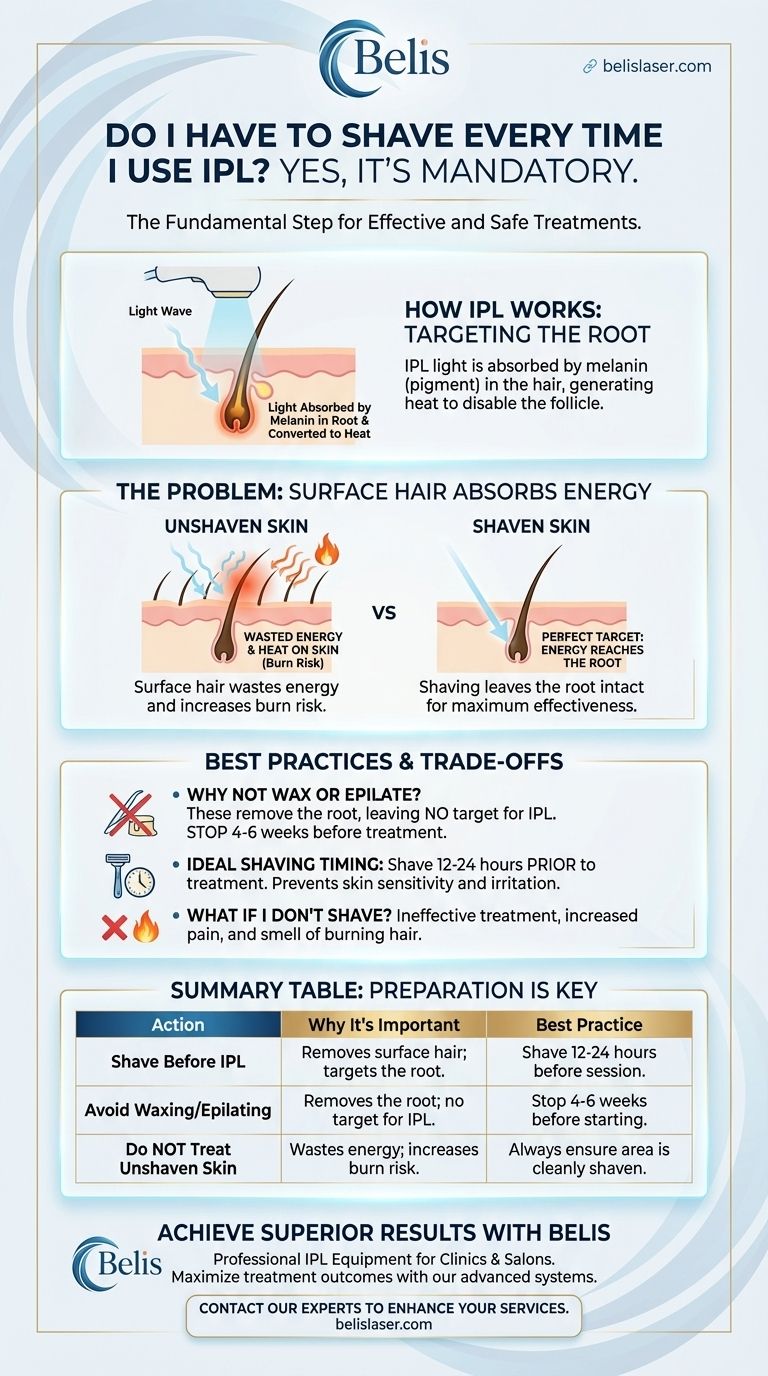
Summary Table:
| Action | Why It's Important | Best Practice |
|---|---|---|
| Shave Before IPL | Removes surface hair so light energy targets the root, not the shaft. | Shave 12-24 hours before your session. |
| Avoid Waxing/Epilating | These methods remove the root, leaving no target for the IPL light. | Stop 4-6 weeks before starting IPL treatments. |
| Do NOT Treat Unshaven Skin | Surface hair absorbs energy, reducing effectiveness and increasing burn risk. | Always ensure the treatment area is cleanly shaven. |
Achieve Superior, Safe Hair Removal with Professional IPL Equipment
For medical aesthetics clinics and premium beauty salons, delivering consistent, safe, and effective results is paramount. At BELIS, we specialize in professional-grade medical aesthetic equipment designed to maximize treatment outcomes while prioritizing client safety.
Our advanced IPL systems are engineered for precision and reliability, helping you build client trust and grow your business.
Ready to enhance your service offerings?
Contact our experts today to discover the right professional IPL solution for your clinic.
Visual Guide
Related Products
- IPL SHR Hair Removal Machine for Permanent Hair Removal
- Clinic Use IPL SHR ND YAG Laser Hair Removal RF Skin Tightening Machine
- Multifunctional Laser Hair Growth Machine Device for Hair Growth
- Cryolipolysis Fat Freezing Machine Cavitation Lipo Laser Machine
- Clinic Use IPL and SHR Hair Removal Machine with Nd Yag Laser Tattoo Removal
People Also Ask
- How does an IPL SHR machine achieve long-term hair reduction compared to traditional methods? Professional Tech Guide
- How does the frequency of IPL SHR sessions compare to traditional laser hair removal? Maximize Comfort and Efficiency
- How does IPL SHR technology accommodate a wide range of skin types and hair colors? Safe Solutions for All Skin Tones
- How does the safety mechanism of IPL SHR technology protect the surrounding skin tissue? Advanced Protection Guide
- Why is the IPL SHR hair removal process described as painless and comfortable for the patient? Discover the Tech.
















