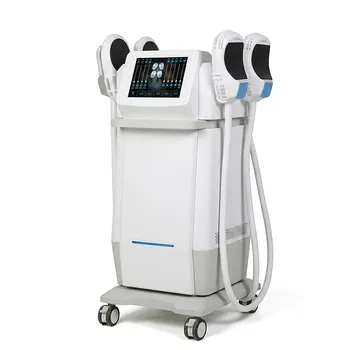
RF achieves three-dimensional skin tightening by heating tissue beneath the surface, not merely treating the visible epidermis. High-frequency electrical energy generates heat through tissue impedance, allowing RF to warm the deep dermis and subcutaneous fibroseptae—the connective-tissue structures that anchor skin to deeper fascia. This controlled volumetric heating contracts existing collagen and stimulates longer-term collagen remodeling, drawing lax tissue closer to underlying structures.
The key distinction is energy geometry: surface optical lasers primarily deliver chromophore-targeted energy across the skin’s surface, while RF can create controlled heat within a deeper three-dimensional tissue volume. That deeper treatment can improve laxity and contour without epidermal ablation.
How RF Creates Tightening Below the Surface
It uses tissue impedance rather than a surface chromophore
RF devices deliver high-frequency alternating electrical energy through electrodes. As the current encounters the electrical resistance, or impedance, of tissue, energy is converted into heat.
This differs from optical lasers, which rely on light being absorbed by specific targets called chromophores, such as melanin, hemoglobin, or water. RF heating is therefore substantially less dependent on epidermal pigment.
It heats a volume of tissue
The RF field can be configured to heat the dermis and, depending on the device and applicator, deeper connective-tissue structures. The treatment is not limited to the point where energy meets the surface.
The depth and shape of heating depend on factors such as electrode geometry, current configuration, contact, and delivered energy. This makes RF capable of producing a three-dimensional thermal zone rather than only a superficial treatment plane.
It can involve the fibroseptae
The subcutaneous fibroseptae are fibrous connective-tissue bands that help anchor skin to deeper fascial structures. Heating these structures can contribute to contraction and improved tissue support.
This is an important part of the “three-dimensional” concept: tightening is not limited to the outer skin layer but can affect the connective framework that influences how skin drapes over the face or body.
What the Heat Does to Collagen
Existing collagen contracts
Controlled thermal exposure alters and contracts existing collagen bundles. This can produce an early tightening effect, although the visible result varies with treatment parameters, anatomy, and the degree of laxity.
The effect is not the same as mechanically removing excess skin. RF contracts and remodels tissue; it does not replace surgical excision when substantial redundant skin is present.
Remodeling develops over time
Thermal stimulation activates a wound-healing response in the dermis. Fibroblasts can increase production and organization of new collagen, leading to gradual improvement in firmness and texture.
This later remodeling is why RF results are often progressive rather than limited to the immediate post-treatment appearance.
Collagen is the principal structural target
RF is commonly described as stimulating both collagen and elastin. The most established tightening mechanism, however, is collagen contraction and remodeling; claims of substantial new elastin formation should be interpreted more cautiously.
Why This Differs From Surface Optical Laser Treatment
Optical lasers are absorption-driven
Optical lasers deliver light at selected wavelengths. Their effects depend on how that light is absorbed by a target chromophore and converted into heat or other tissue effects.
Many laser treatments are designed primarily to address the epidermis or superficial dermis, for example by resurfacing the skin or treating pigment and vascular features. Their main clinical effect may therefore be improved surface quality rather than repositioning lax tissue over deeper structures.
RF is chromophore-independent
Because RF transfers electrical energy through tissue rather than relying on optical absorption, epidermal melanin does not determine whether the energy can be delivered. This can make RF useful across a wider range of skin tones, provided the device and treatment settings are appropriate.
“Chromophore-independent” does not mean risk-free. RF can still cause burns or unwanted fat changes if energy delivery, temperature, contact, or treatment technique is poorly controlled.
The distinction is depth and geometry, not simply “laser versus RF”
Not every laser is purely superficial. Some nonablative optical systems can heat deeper tissue, and some RF devices are designed mainly for superficial treatment.
The more accurate comparison is that surface optical treatments generally emphasize optical absorption and surface area, whereas RF tightening is designed to produce controlled heating through a deeper tissue volume. The device’s wavelength, electrode design, power, pulse duration, cooling, and treatment technique all matter.
Why Cooling Helps Preserve the Surface
Cooling protects the epidermis
Many RF systems use surface cooling or another form of epidermal temperature control. This helps keep the outer skin within a safer temperature range while energy heats deeper tissue.
The result is a controlled temperature gradient: relatively protected epidermis above a therapeutically heated dermis or subcutaneous target.
Cooling does not make energy harmless
Protection depends on real-time temperature control, adequate contact, correct settings, and appropriate patient selection. Excessive or uneven heating can still injure the epidermis or deeper structures.
For that reason, RF treatment should be evaluated according to the specific device and protocol rather than the general label “RF.”
Understanding the Trade-offs
RF improves laxity but does not recreate surgical lifting
RF can improve mild to moderate laxity and skin quality, but it cannot reliably duplicate the repositioning and tissue removal achieved by surgery. The deeper the laxity and the greater the skin excess, the more limited a nonsurgical tightening approach becomes.
More heat is not automatically better
Increasing energy does not guarantee a stronger result. Excess heat can increase the risk of pain, burns, prolonged inflammation, pigmentary changes, or unwanted injury to subcutaneous fat.
Effective treatment depends on achieving a controlled thermal dose at the intended depth—not simply maximizing temperature.
“Three-dimensional” does not mean uniform tightening everywhere
An RF treatment’s depth and distribution are shaped by the applicator and anatomy. Areas with thin tissue, bony contours, variable contact, or nearby sensitive structures require particular care.
The phrase describes the volume of energy delivery, not a guarantee of perfectly uniform contraction or contour correction.
Making the Right Choice for Your Goal
The appropriate technology depends on whether the primary concern is surface quality, laxity, or substantial tissue excess.
- If your primary focus is skin texture, pigment, or superficial resurfacing: An appropriately selected optical laser may be more suitable because it targets surface chromophores and skin layers directly.
- If your primary focus is mild to moderate laxity and contour tightening: RF may be preferable because it can heat the dermis and supporting connective tissue volumetrically without epidermal ablation.
- If your primary focus is substantial sagging or redundant skin: Seek a clinical assessment for whether nonsurgical RF can meet the goal or whether a surgical lifting procedure is more appropriate.
- If your primary focus is treatment safety across different skin tones: RF’s chromophore-independent mechanism can be advantageous, but device-specific settings and qualified technique remain essential.
RF’s three-dimensional effect comes from controlled volumetric heating of the deeper skin-supporting network, followed by collagen contraction and remodeling rather than surface resurfacing alone.
Summary Table:
| Aspect | RF Aesthetic Devices | Surface Optical Laser Treatments |
|---|---|---|
| Mechanism | Tissue impedance generates heat | Light absorption by chromophores |
| Target depth | Deep dermis & subcutaneous fibroseptae | Epidermis & superficial dermis |
| Chromophore dependence | Independent | Dependent on melanin, hemoglobin, etc. |
| Main effect | Volumetric collagen contraction & remodeling | Surface resurfacing & pigment/vascular treatment |
| Skin tone suitability | Wider range (with proper settings) | Limited by pigment-related risks |
| Suitability for laxity | Mild to moderate laxity | Primarily surface quality |
Discover the right RF or laser device for your clinic's skin-tightening needs. At BELIS, we offer a comprehensive range of professional-grade aesthetic equipment, including advanced RF systems, designed to deliver safe, effective, and profitable treatments. Contact our experts today to explore our solutions and elevate your practice. Contact us now!
Related Products
- Ultrasonic Cavitation Radiofrecuency Machine for Body Slimming
- EMS Body Sculpting Slimming Machine EMSlim Body Slimming Machine
- Cryolipolysis Fat Freezing Machine and Ultrasonic Cavitation Device
- IPL SHR+Radio frecuency machine
- 22D HIFU Machine Device Facial Machine
People Also Ask
- What are the pros and cons of the ultrasonic cavitation slimming treatment? A Guide to Painless Body Contouring
- Does an ultrasonic cavitation machine also tighten the skin? Achieve Total Body Contouring with RF Synergy
- How does radiofrequency technology in slimming machines promote fat reduction? The Science of Non-Invasive Sculpting
- How should one prepare for an ultrasonic cavitation appointment? 5 Essential Tips for Maximum Fat Loss Results
- What areas of the body are targeted for ultrasonic cavitation? Best Zones for Effective Body Contouring