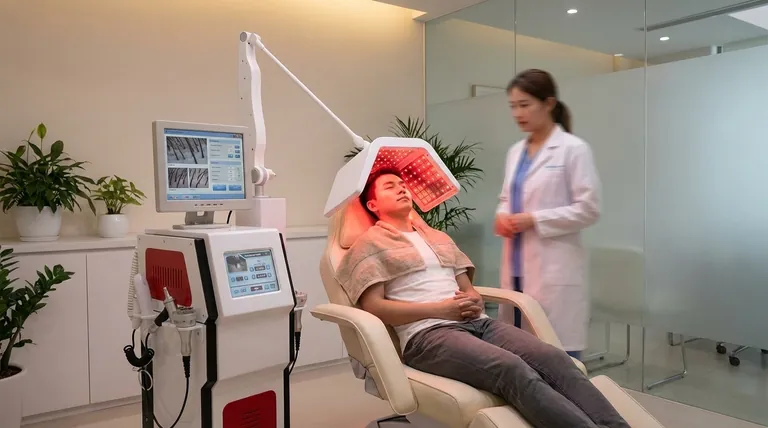
The Misconception of the "One-Time Fix"
We often approach problems with a transactional mindset. We want a single solution for a single issue. But when it comes to biological processes like hair loss, this thinking fails us. Conditions like androgenetic alopecia aren't acute events to be "fixed"; they are chronic conditions to be managed.
This is the most critical psychological hurdle in hair restoration. Success isn’t found in a single powerful treatment, but in a sustained, rhythmic conversation with your body's own cellular machinery. The central question isn't just "how often," but "why does this specific cadence matter so much?"
Your Hair Follicles Run on a Biological Clock
The frequency of low-level light therapy (LLLT) is not arbitrary. It's a protocol designed to work in harmony with two fundamental biological processes: cellular energy production and the natural hair growth cycle.
A Conversation with Your Cells
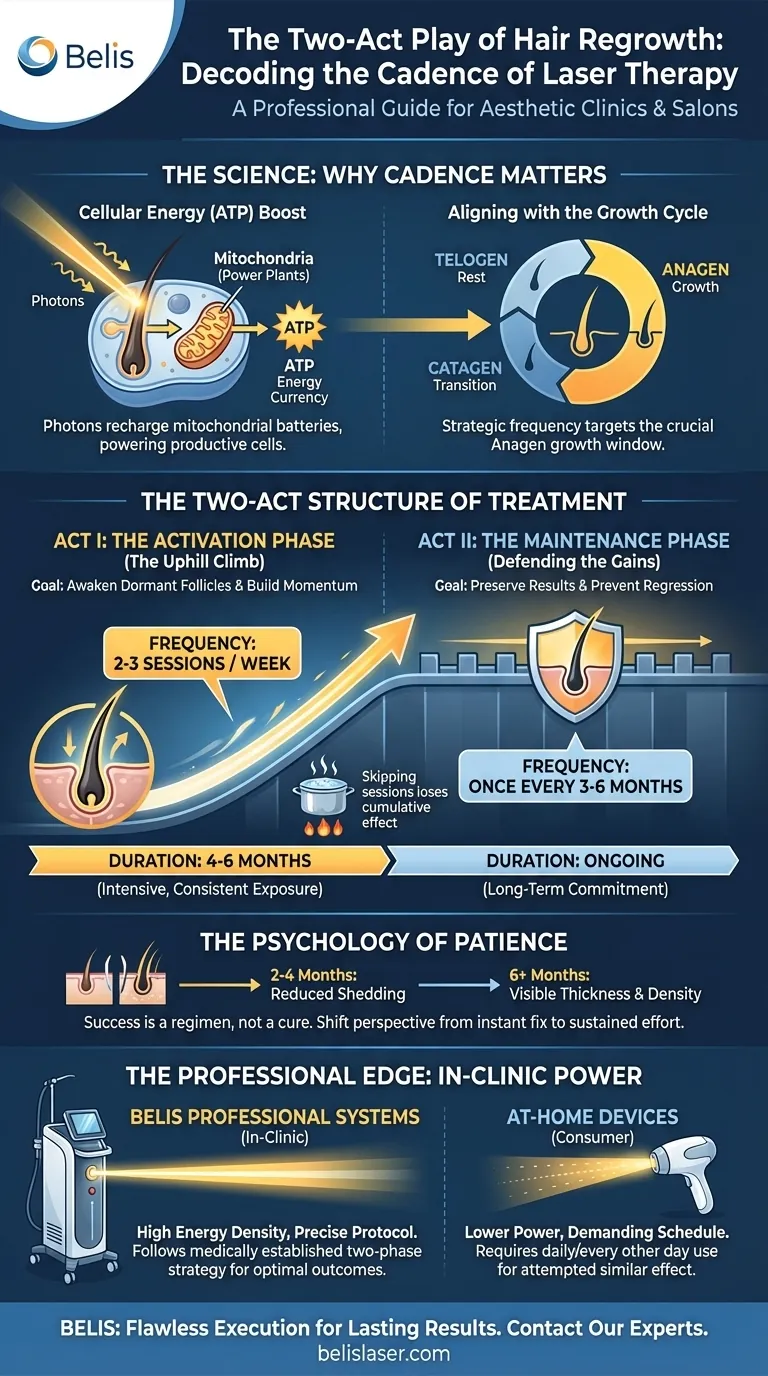
At its core, laser therapy is about energy. Photons of light penetrate the scalp and are absorbed by mitochondria, the tiny power plants inside your hair follicle cells. This process boosts the production of ATP (adenosine triphosphate), the cell's main energy source.
Think of it as recharging a battery. An energized cell is a productive cell, better equipped to build strong, healthy hair. But this energy boost isn't permanent. The cells need consistent recharging to maintain peak performance, which is why sporadic treatment is ineffective.
Aligning with the Growth Cycle
Hair growth is a marathon, not a sprint, unfolding in three main phases: anagen (growth), catagen (transition), and telogen (rest). Laser therapy is most effective during the anagen phase.
A strategic treatment schedule increases the probability of stimulating follicles as they enter this crucial growth window. The goal is to encourage more follicles to enter the anagen phase and to keep them there for longer.
The Two-Act Structure of Treatment
Effective laser therapy is a narrative in two acts. Each act has a distinct purpose, pace, and intensity, designed to first initiate growth and then to defend it.
Act I: The Activation Phase (The Uphill Climb)
This is the intensive, foundational stage. The primary goal is to deliver enough cumulative light energy to awaken dormant or weakening hair follicles.
- Typical Frequency: 2-3 sessions per week.
- Duration: 4 to 6 months.
This consistent exposure is non-negotiable. It builds the necessary cellular momentum to overcome follicular miniaturization and push the cells back into a productive state. Skipping sessions here is like trying to boil water by repeatedly turning the stove on and off—the cumulative effect is lost.
Act II: The Maintenance Phase (Defending the Gains)
Once you've reached peak improvement, the strategy shifts from activation to preservation. Because the underlying condition causing hair loss is progressive, the gains are not permanent without continued effort.
- Typical Frequency: Once every 3 to 6 months.
- Duration: Ongoing.
These less frequent sessions act as a defensive measure. They provide just enough energy to keep the awakened follicles in the anagen phase and prevent them from slipping back into dormancy. It’s the long-term commitment that protects your initial investment of time and effort.
The Psychology of Patience
The greatest challenge in laser hair therapy isn't technical; it's psychological. The process demands a level of consistency that our desire for instant gratification often struggles with.
Results are subtle at first. You may notice reduced shedding in two to four months, but visible changes in thickness and density can take over six months. This delay between effort and reward is where most people falter.
Success requires shifting your perspective from seeking a cure to adopting a regimen, much like exercise or a healthy diet.
In-Clinic Power vs. At-Home Convenience
The required cadence also depends on the device. Professional, in-clinic systems like those from BELIS are engineered for power and precision. They deliver a higher energy density, allowing them to follow the medically established two-phase protocol of intensive activation followed by infrequent maintenance. This makes them the gold standard for clinics aiming to provide clients with the most effective, science-backed treatment path.
At-home devices, being less powerful, require a more demanding, long-term schedule (e.g., every other day) to attempt a similar cumulative effect.
A Summary of Your Journey
Understanding the timeline and commitment is key to success.
| Treatment Phase | Typical Frequency | Duration / Goal |
|---|---|---|
| Initial Activation | 2-3 times per week | 4-6 months to stimulate dormant follicles |
| Long-Term Maintenance | Once every 3-6 months | Ongoing to preserve results and prevent regression |
Ultimately, the power of laser therapy lies not in the beam of light itself, but in the disciplined application of that light over time, in perfect rhythm with the body's own elegant biology. For medical aesthetic clinics and salons dedicated to delivering genuine, lasting results, adopting this structured approach is paramount.
BELIS provides the professional-grade medical aesthetic equipment necessary to execute this two-act strategy flawlessly, ensuring your clients achieve the best possible outcomes. Contact Our Experts
Visual Guide
Related Products
- Multifunctional Laser Hair Growth Machine Device for Hair Growth
- Multifunctional Laser Hair Growth Machine Device for Hair Growth
- Clinic Use IPL SHR ND YAG Laser Hair Removal RF Skin Tightening Machine
- Diode Tri Laser Hair Removal Machine for Clinic Use
- Clinic Diode Laser Hair Removal Machine with SHR and Trilaser Technology
Related Articles
- How to Optimize LLLT Hair Regrowth: A Science-Backed 3-Step Protocol
- How to Combine Hair Loss Treatments for Maximum Regrowth: A Science-Backed Guide
- The Clinician's Guide to LLLT: From Cellular Mechanics to Client Confidence
- How IPL Treats Multiple Body Areas Safely: A Dermatologist-Approved Guide
- Optimizing IPL for All Skin Types: Safety, Alternatives, and Expert Strategies













