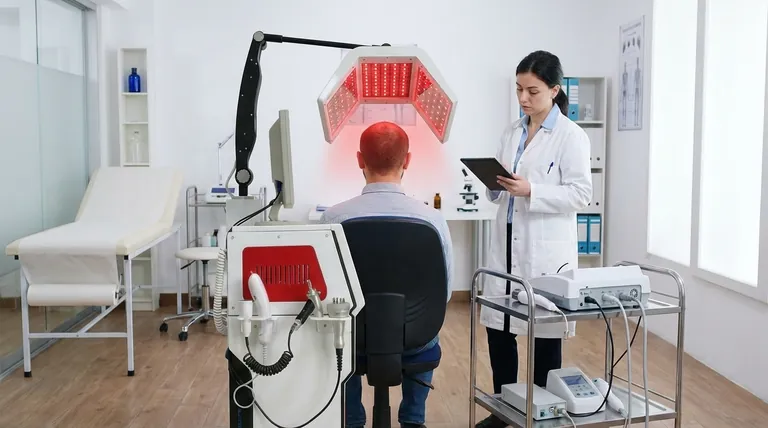
The Anatomy of a Promising Signal
In the search for solutions to hair loss, the human mind craves a simple answer—a magic number. For many exploring non-invasive therapies, that number has become "50 Hz."
This specific frequency of low-frequency electromagnetic field (EMF) therapy has emerged from research as a promising agent for hair follicle stimulation.
But the number itself is not the solution. It is merely a single parameter in a complex biological conversation. The real story lies in the underlying physics, the cellular response, and, most importantly, the precision of the technology used to deliver that signal.
How a Subtle Field Can Nurture a Follicle
To understand the promise of 50 Hz, we must move past the number and look at the mechanism. How can an invisible field influence a biological process as complex as hair growth?
Non-Invasive, Not Insignificant
Low-frequency EMF is non-ionizing. It doesn’t carry enough energy to damage cells or DNA. Instead of acting with brute force, it works like a subtle conductor's baton, orchestrating the body's own electrical and chemical signals.
The theory is that this specific frequency helps improve local blood circulation. This delivers more oxygen and nutrients to the scalp, creating a healthier, more robust environment for the hair follicles to thrive. It's a process of nurturing, not forcing.
The Biological Resonance at 50 Hz
The 50 Hz frequency is one of the most studied in the world, largely due to its use in AC power grids across many countries. This scientific convenience has produced a wealth of data on its biological effects.
Research suggests that this frequency resonates well with cellular mechanisms that promote healing and activity, similar to how EMF is used to accelerate the mending of bone fractures. It appears to gently "wake up" the cells, encouraging them back into a state of productivity.
The Gap Between a Number and a Result
Herein lies the critical challenge. Knowing the right frequency is like knowing the right ingredients for a recipe. But without the right tools and technique, the outcome is left to chance.
This is the vast and often misunderstood gap between the findings of a controlled clinical study and the results from a consumer device.
The Clinical Standard: Precision and Calibration
In a clinical setting, success is built on repeatability. The equipment used in research is meticulously engineered to deliver a precise, stable, and consistent 50 Hz field. Key parameters are controlled:
- Waveform Purity: Ensuring the signal is clean and free of harmonic distortion.
- Field Strength: Calibrating the exact energy delivered to the target tissue.
- Consistent Delivery: Maintaining performance without fluctuation over the entire treatment duration.
This is the engineer's romance: the pursuit of a perfect signal, reliably delivered. It’s this dedication to precision that generates trustworthy data and, ultimately, effective treatments.
The Consumer Variable: The Illusion of Control
At-home devices often promise the same benefits but operate without the same engineering rigor. The psychological trap is potent: a person believes they are applying the "50 Hz" from the studies, but they may be getting an unstable frequency, an incorrect field strength, or an inconsistent output.
This discrepancy doesn't just lead to poor results; it can erode trust in the technology itself. When a treatment fails, it's difficult to know whether the principle was flawed or if the instrument was simply incapable of performing its task.
Diagnosis First, Technology Second
Effective treatment is not just about applying a signal; it's about applying the right signal to the right problem. Hair loss is a symptom, not a singular disease. Its causes range from genetics and hormones to stress and nutrition.
For professional clinics, the pathway to reliable results follows a clear and logical order.
A Framework for Clinical Success
| Priority | Action | Rationale |
|---|---|---|
| Client Trust | Begin with a thorough diagnosis. | Establishes the root cause, sets realistic expectations, and builds the foundation for a successful plan. |
| Treatment Efficacy | Select technology that addresses the diagnosis. | EMF therapy is for stimulating follicles, not correcting a hormonal imbalance. The tool must match the job. |
| Technological Integrity | Invest in professional, calibrated equipment. | Ensures the therapy delivered is consistent, repeatable, and safe, matching the parameters of clinical research. |
Engineering Confidence Into Your Practice
The promise of 50 Hz EMF therapy is real, but it is accessible only through technological integrity. The difference between hope and a predictable clinical outcome is the quality and precision of the instrument in the practitioner's hands.
For medical aesthetics clinics and premium salons dedicated to delivering scientifically-backed results, the equipment is an extension of their expertise. BELIS specializes in providing professional medical aesthetic equipment built on the principles of precision, reliability, and performance, empowering you to turn scientific promise into client success.
Ensure your treatments are as effective in practice as they are in theory. Contact Our Experts
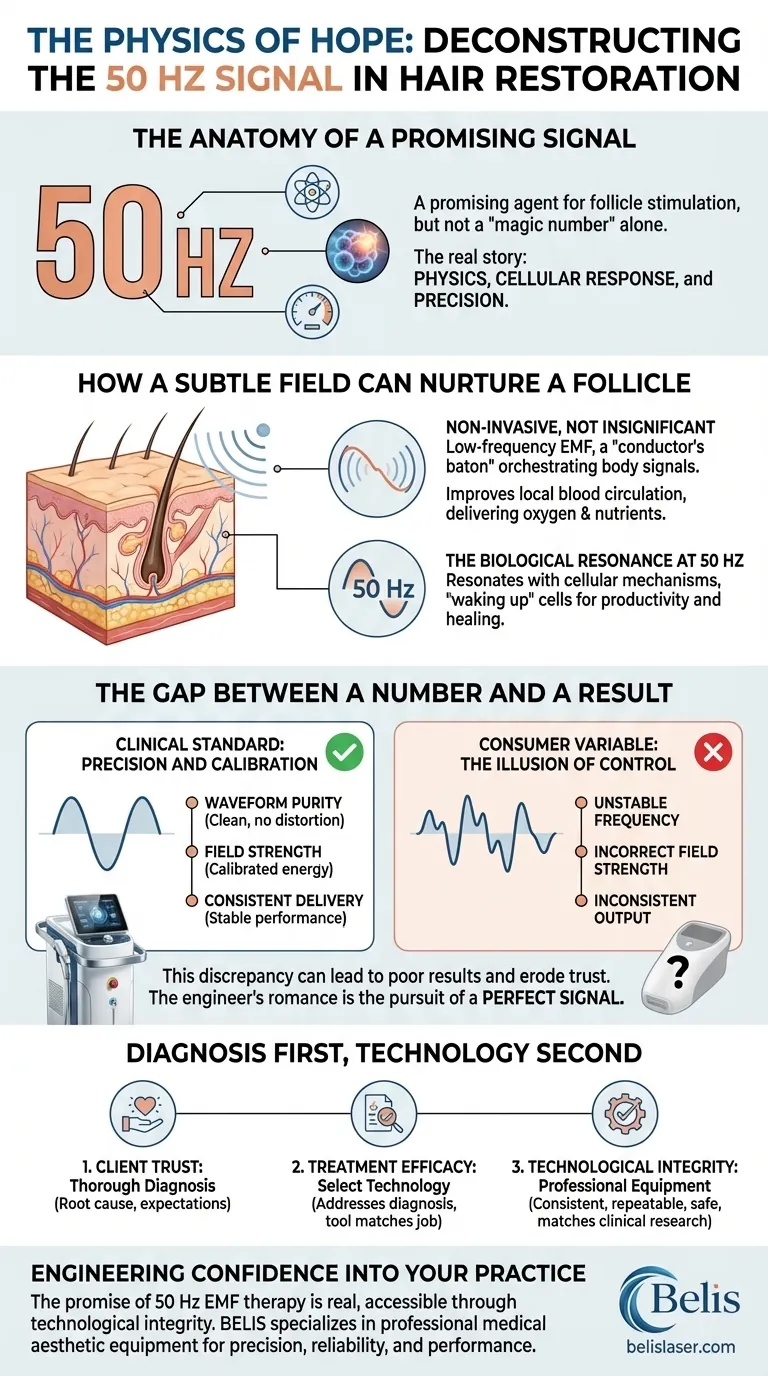
Visual Guide
Related Products
- IPL SHR Hair Removal Machine for Permanent Hair Removal
- Multifunctional Laser Hair Growth Machine Device for Hair Growth
- Multifunctional Laser Hair Growth Machine Device for Hair Growth
- Clinic Use IPL and SHR Hair Removal Machine with Nd Yag Laser Tattoo Removal
- Clinic Use IPL SHR ND YAG Laser Hair Removal RF Skin Tightening Machine
Related Articles
- The Science Behind IPL’s Gradual Results: Why 12 Sessions Matter for Permanent Change
- Why IPL Can't Deliver Permanent Hair Removal (And How to Get Closer)
- The Science Behind SHR Sessions: Why Multiple Treatments Deliver Lasting Results
- How SHR Outperforms Traditional IPL for Sensitive Skin & Stubborn Hair Removal
- Why SHR Requires Multiple Sessions: The Science Behind Personalized Hair Removal


















