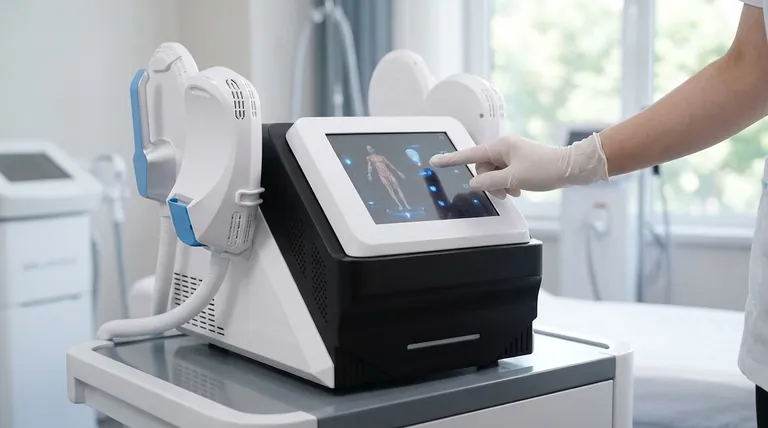
The Illusion of the "Magic Box"
In the world of medical aesthetics, a powerful new device can feel like a silver bullet. A machine that promises to "melt fat" non-invasively seems to simplify a complex biological problem into a mere technical procedure.
This is a dangerous illusion.
The safety of a body contouring device is not inherent in its hardware. True safety is an emergent property of a system—a delicate interplay between the patient's physiology, the device's mechanism, and the practitioner's judgment. To focus only on the machine is like admiring a scalpel without respecting the surgeon who wields it.
"Fat Melting" is a Misnomer
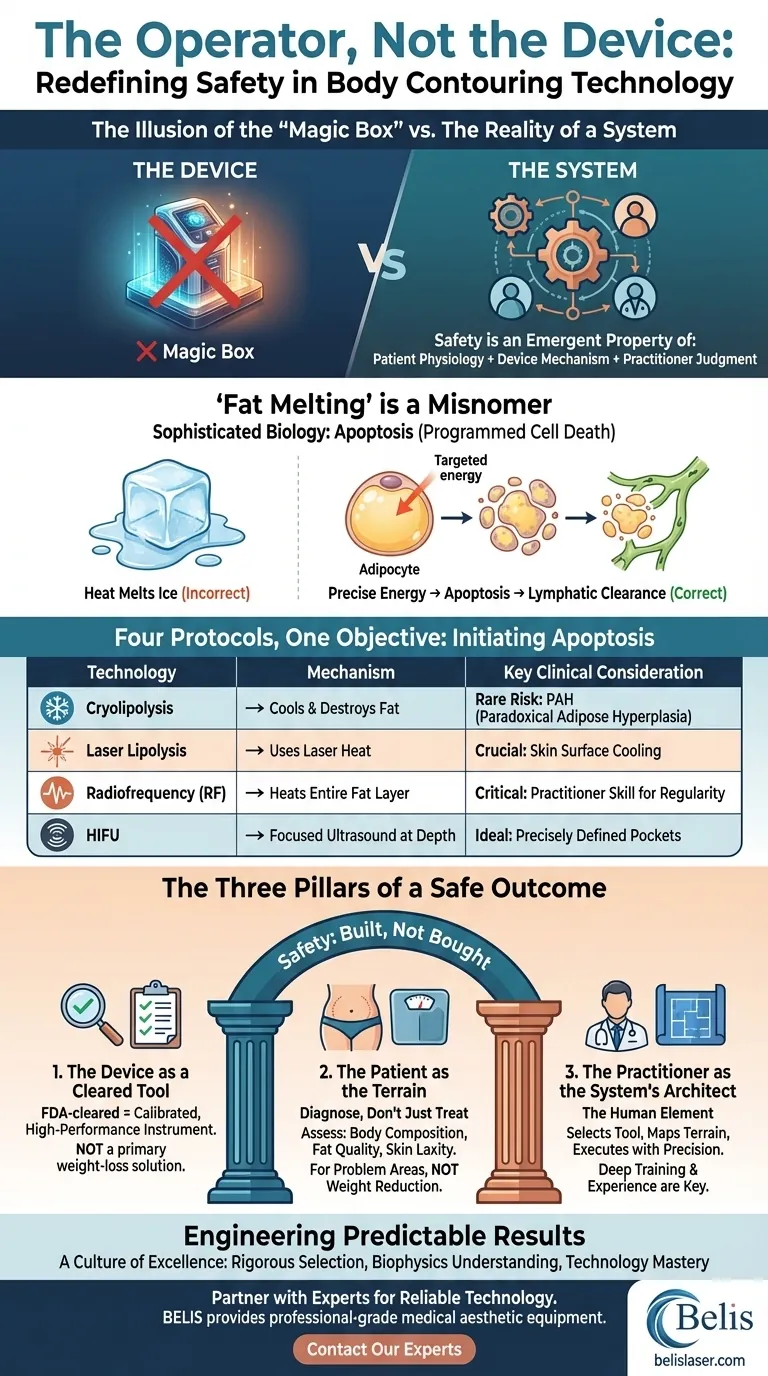
The colloquial term "fat melting" masks the sophisticated biology at play. These treatments don't liquefy fat in the way heat melts ice. Instead, they induce a process called apoptosis—a quiet, programmed cell death.
By applying a precise dose of energy, the technology damages adipocytes (fat cells) beyond repair, triggering them to self-destruct. The body’s lymphatic system then gradually clears away the cellular debris over weeks and months. It's less like melting and more like carefully targeted biological signaling.
Four Protocols, One Objective
While the goal is the same—initiating apoptosis in fat cells—the methods for delivering that energy vary significantly. Each has a unique profile of strengths and considerations.
- Cryolipolysis (Controlled Freezing): Uses extreme cold to crystallize and destroy fat cells. Its primary appeal is avoiding heat, but it carries a rare risk of Paradoxical Adipose Hyperplasia (PAH), where fat in the treated area grows larger.
- Laser Lipolysis (Focused Heat): Employs a specific wavelength of laser to heat adipocytes to a non-viable temperature. Effective application requires sophisticated skin-cooling mechanisms to protect the epidermis.
- Radiofrequency (Bulk Heating): Delivers energy that heats the entire fat layer, not just a focal point. A key benefit is its potential to stimulate collagen, leading to skin tightening. However, this broad application demands exceptional operator skill to ensure even, consistent results.
- High-Intensity Focused Ultrasound (HIFU): Uses sound waves to generate thermal energy at a precise depth, destroying fat cells while leaving the skin and surrounding tissue completely unaffected. It offers surgical precision without an incision.
| Technology | Mechanism of Action | Key Clinical Consideration |
|---|---|---|
| Cryolipolysis | Cools and destroys fat cells | Rare risk of Paradoxical Adipose Hyperplasia (PAH) |
| Laser Lipolysis | Uses laser heat to eliminate fat cells | Skin surface cooling is crucial to prevent burns |
| Radiofrequency (RF) | Heats the entire fat layer | Practitioner skill is critical for contour regularity |
| HIFU | Focused ultrasound destroys fat at depth | Ideal for precisely defined, stubborn fat pockets |
The Three Pillars of a Safe Outcome
A device's FDA clearance is a starting point, not a guarantee. It confirms the tool is safe for its intended purpose. But a successful outcome depends on a system built on three pillars.
1. The Device as a Cleared Tool
Think of an FDA-cleared device as a calibrated, high-performance instrument. It has been proven to work reliably under specific conditions. But like any advanced tool, using it outside its intended parameters—for example, as a primary weight-loss solution—is not just ineffective; it's irresponsible.
2. The Patient as the Terrain
These technologies are designed for "problem areas"—localized fat deposits on an individual who is already near their ideal body weight. They are sculpting tools, not weight-reduction solutions.
A practitioner's first job is not to treat, but to diagnose. They must assess the "terrain"—the patient's body composition, fat quality, skin laxity, and expectations. Applying the most powerful technology to the wrong terrain will inevitably lead to failure or complications. This assessment is the most critical step in risk management.
3. The Practitioner as the System's Architect
This is the human element that binds the system together. The practitioner is the architect of the treatment. They select the right tool (technology), map the terrain (patient assessment), and execute the plan with precision.
In the hands of an untrained operator, the same energy that safely triggers apoptosis can cause burns, scarring, or uneven divots. The difference between a beautiful result and a complication is often measured in millimeters and degrees—a margin of error that only deep training and experience can navigate.
Engineering Predictable Results
Ultimately, safety isn't something you buy; it's something you build. It's a culture of excellence centered on rigorous patient selection, a deep understanding of biophysics, and the mastery of a chosen technology.
For clinics and salons dedicated to building such a system, choosing the right equipment partner is the foundational step. Professional-grade, reliable technology is the non-negotiable prerequisite for any safe and effective treatment protocol. At BELIS, we provide the caliber of medical aesthetic equipment that allows experts to deliver the results their patients deserve.
To build a practice founded on safety and efficacy, you need tools you can trust. Contact Our Experts
Visual Guide
Related Products
- Fat Freezing Cryolipolysis Machine for Body Contouring
- Fat Freezing Cryolipolysis Machine for Body Contouring
- EMS Body Sculpting Machine for Body Slimming and Sculpting
- 7D 12D 4D HIFU Machine Device
- Cryolipolysis Fat Freezing Machine with Cavitation and Laser Lipolysis
Related Articles
- From Crystal to Clearance: The Biological Journey of a Fat Cell After Cryolipolysis
- The Physics of Stubborn Fat: A Cold, Hard Look at Abdominal Contouring
- The Biological Contract: The Physics and Psychology of Permanent Fat Reduction
- Beyond the Freeze: The Science and Psychology of Cryolipolysis
- The Cryolipolysis Paradox: Why the First Week's Success is Invisible













