The Inevitable Day 2 Phone Call
Every seasoned aesthetic practitioner knows the call. It usually comes about 48 hours after a CO2 laser resurfacing procedure. The patient’s voice is tight with anxiety: "My face is swollen, red, and weeping. It looks worse than yesterday. Is this normal?"
This moment is a critical juncture. It’s where patient trust is either solidified or eroded.
The answer, of course, is that not only is it normal, but it's a sign that the treatment is working exactly as designed. The challenge isn't medical; it's psychological. It lies in framing the patient's journey through the valley of recovery.
The Biological Blueprint of Healing
Ablative laser treatment is a controlled, therapeutic injury. We are intentionally resetting the skin's canvas to stimulate a profound healing response. Understanding the logic of this response is key to managing the experience.
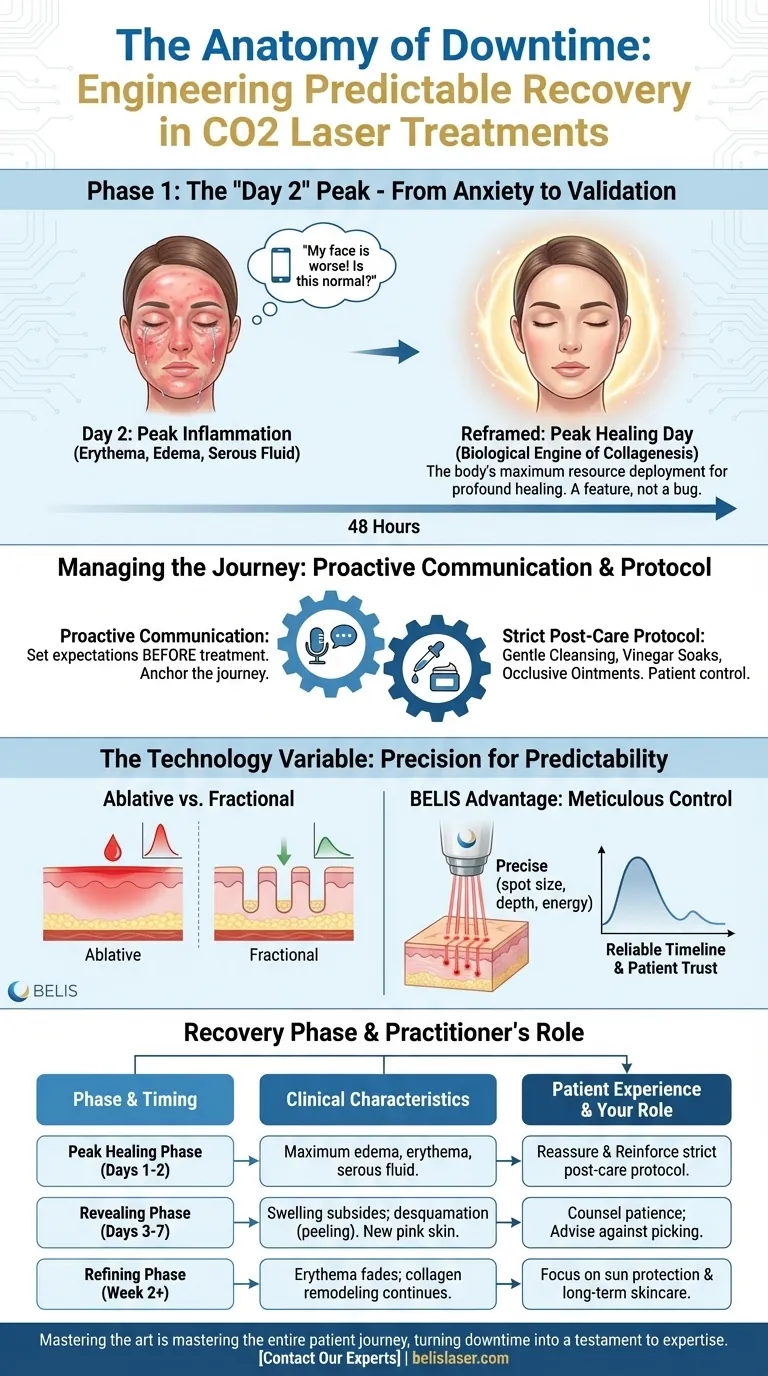
Phase 1: The Peak Inflammatory Response
The first 48 hours are defined by a powerful, purposeful cascade. The body rushes restorative cells, growth factors, and fluids to the site of the controlled injury. This creates the classic signs of inflammation: redness (erythema), swelling (edema), and fluid secretion (serous fluid).
This process isn't a side effect; it's the entire point. It is the biological engine of collagenesis.
Why Day 2 is the Apex
The swelling and oozing that peak around the 48-hour mark are not a bug in the system; they are a feature of its remarkable efficiency. This is the moment of maximum resource deployment before the reconstruction phase begins.
When you explain this to a patient beforehand, you transform the narrative. The "worst day" is reframed as the "peak healing day"—a sign of a robust and successful procedure.
From Biological Logic to Patient Trust
Managing downtime is less about preventing discomfort and more about providing a predictable map of the journey ahead. Confidence comes from knowing what to expect.
The Power of Proactive Communication
The most important part of the recovery happens before the laser is ever turned on. It happens in the consultation room.
By clearly outlining the recovery timeline, you anchor the patient's expectations. You explain that they will look their worst on Day 2, precisely because their body is working its hardest. This preemptive guidance turns a moment of potential panic into a moment of validation.
Navigating the Peak
Strict adherence to post-care protocol is most critical during this peak phase. Simple steps become profoundly important:
- Gentle Cleansing: To prevent bacterial buildup.
- Vinegar Soaks: To gently debride crust and soothe the skin.
- Occlusive Ointments: To keep the new epidermis protected and hydrated, preventing scarring and minimizing discomfort.
This protocol isn't just for healing; it gives the patient a sense of control during a vulnerable time.
The Technology Variable: Calibrating the Experience
The intensity and duration of this recovery arc are not fixed. They are directly influenced by the precision and capability of the technology used.
The Spectrum of Treatment
A fully ablative treatment will always induce a more intense recovery than a fractional one. Fractional lasers, by leaving bridges of intact tissue, create a framework for faster re-epithelialization and a less dramatic inflammatory peak.
The ability to finely tune the depth, density, and energy of the laser is paramount. This is where the quality of your equipment becomes a cornerstone of the patient experience.
The BELIS Advantage: Precision for Predictability
Advanced CO2 laser systems, like those engineered by BELIS, provide practitioners with meticulous control over treatment parameters. This precision isn't just about achieving superior clinical results; it's about engineering a more predictable recovery.
When your technology delivers precisely the energy you intend, with consistent spot size and depth, your recovery timelines become more reliable. This allows you to set patient expectations with a high degree of confidence, knowing that the "peak healing day" will arrive and subside just as you described.
| Recovery Phase | Clinical Characteristics | Patient Experience & Your Role |
|---|---|---|
| Days 1-2 (Peak) | Maximum edema, erythema, serous fluid. | The "Peak Healing" phase. Reassure and reinforce the importance of strict post-care. |
| Days 3-7 (Peeling) | Swelling subsides; desquamation begins. New pink skin. | The "Revealing" phase. Counsel patience and advise against picking at flaking skin. |
| Week 2+ | Erythema fades; collagen remodeling continues. | The "Refining" phase. Focus on sun protection and long-term skincare to protect the investment. |
Ultimately, mastering the art of CO2 laser resurfacing is about mastering the entire patient journey. It's about seeing the beauty in the biological process and using superior technology to make that process as predictable and positive as possible.
This approach transforms a week of downtime into a testament to your clinic's expertise and care. To equip your practice with technology that enables this level of precision and patient trust, Contact Our Experts.
Visual Guide
Related Products
- Fractional CO2 Laser Machine for Skin Treatment
- Fractional CO2 Laser Machine for Skin Treatment
- Cryolipolysis Fat Freezing Cavitation Lipo Laser Machine
- Cryolipolysis Fat Freezing Machine Cavitation Lipo Laser Machine
Related Articles
- Beyond the Beam: A Clinician's Guide to the CO2 Laser Recovery Arc
- The 10-Year Promise: Deconstructing the Physics and Psychology of CO2 Laser Rejuvenation
- The Paradox of Healing: Why CO2 Laser Downtime Is the Feature, Not the Bug
- Controlled Chaos: How CO2 Lasers Harness Biology for Skin Renewal
- How Alexandrite Lasers Revolutionize Trilaser Hair Removal for Fine Hair & Large Areas



