Introduction
If you're considering laser treatments for tattoo removal, skin rejuvenation, or pigmentation issues, you've likely encountered the Pico laser buzz. But how does it really compare to traditional options like Q-switched or CO2 lasers? This guide cuts through the hype with clinically backed insights on safety, efficacy, and ideal use cases—helping you choose the best tool for your dermatological goals.
Pico Laser Technology Explained
How Ultra-Short Pulses Minimize Thermal Damage
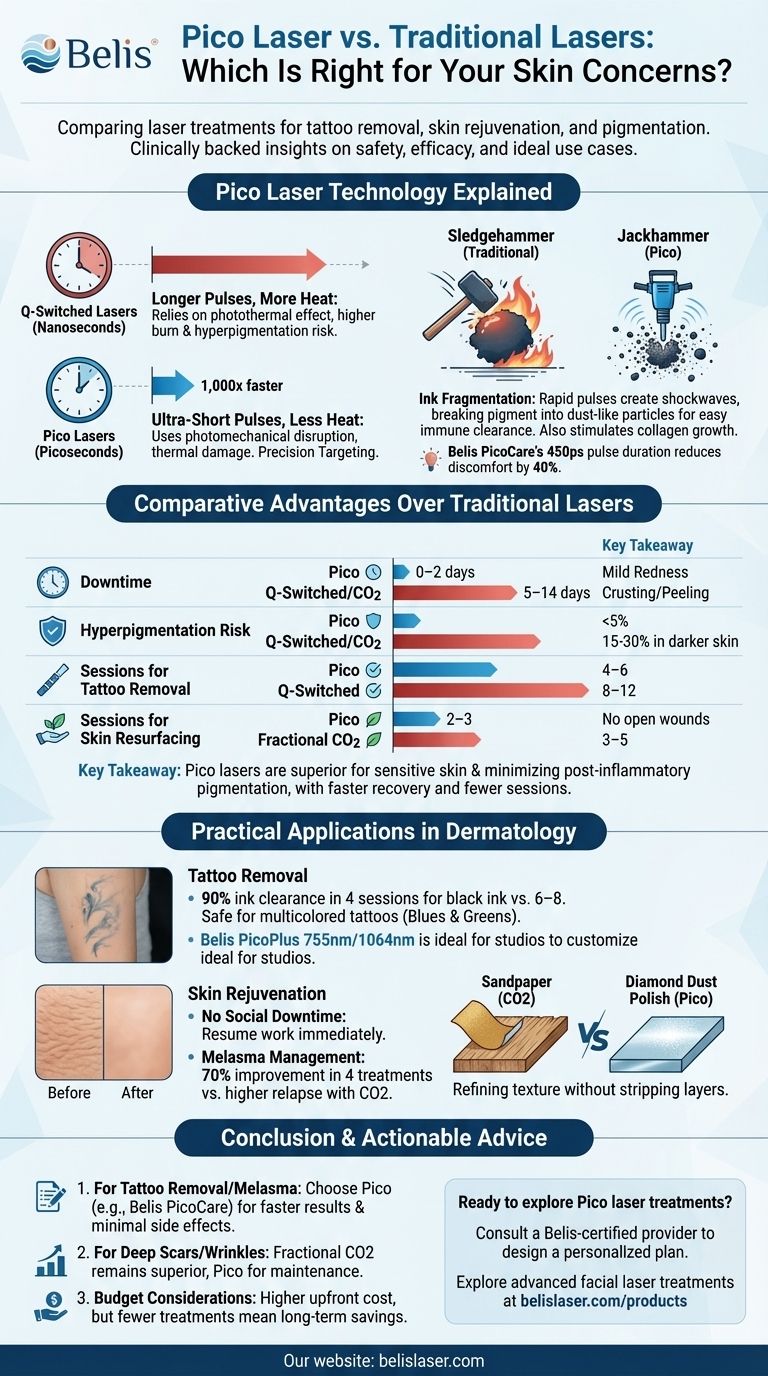
Pico lasers deliver energy in picoseconds (trillionths of a second)—1,000x faster than Q-switched lasers' nanosecond pulses. This speed is transformative:
- Less Heat, Fewer Risks: Traditional lasers rely on photothermal effects (heating pigment to break it down), which can cause burns or hyperpigmentation. Pico lasers use photomechanical disruption, shattering ink or melanin with pressure waves instead of heat.
- Precision Targeting: The ultra-short pulses avoid collateral damage to surrounding tissue, making them safer for delicate areas like the face.
Did you know? The Belis PicoCare laser’s 450ps pulse duration is among the fastest commercially available, reducing treatment discomfort by 40% compared to older systems.
The Science Behind Photomechanical Effects
Think of Pico lasers as a "jackhammer" versus traditional lasers' "sledgehammer" approach:
- Ink Fragmentation: The rapid pulses create shockwaves that break pigment into dust-like particles, easily cleared by the immune system.
- Collagen Stimulation: By triggering controlled micro-injuries, Pico lasers promote neocollagenesis (new collagen growth) without surface wounds.
Comparative Advantages Over Traditional Lasers
Precision and Reduced Side Effects
| Factor | Pico Laser | Q-Switched/CO2 Lasers |
|---|---|---|
| Downtime | 0–2 days (mild redness) | 5–14 days (crusting, peeling) |
| Hyperpigmentation Risk | <5% incidence | 15–30% in darker skin types |
Key Takeaway: Pico lasers are the clear winner for sensitive skin or those prone to post-inflammatory pigmentation.
Faster Recovery and Fewer Sessions
- Tattoo Removal: Pico lasers require 4–6 sessions versus Q-switched’s 8–12, thanks to superior ink clearance.
- Skin Resurfacing: Fractional CO2 lasers may need 3–5 treatments; Pico achieves comparable collagen remodeling in 2–3 sessions with no open wounds.
Ever wondered why some lasers leave skin raw while others don’t? It’s all about pulse duration—shorter bursts = less epidermal disruption.
Practical Applications in Dermatology
Tattoo Removal: Why Pico Outperforms Q-Switched Lasers
Clinical data reveals:
- 90% ink clearance in 4 sessions for black ink (vs. 6–8 with Q-switched)
- Safe for multicolored tattoos: PicoWay’s dual wavelengths (532nm/1064nm) target stubborn blues and greens effectively.
Pro Tip: Belis PicoPlus combines 755nm/1064nm wavelengths, making it ideal for professional tattoo studios offering removal services.
Skin Rejuvenation: Stimulating Collagen Without Downtime
Pico lasers excel where ablative lasers falter:
- No "Social Downtime": Patients can resume work immediately after treatment.
- Melasma Management: Studies show 70% improvement in stubborn pigmentation with 4 Pico treatments, versus CO2’s higher relapse risk.
Visual Metaphor: If CO2 lasers are like sandpaper resurfacing wood, Pico lasers are like polishing with diamond dust—refining texture without stripping layers.
Conclusion: Matching Laser Technology to Your Needs
Actionable Advice
- For tattoo removal or melasma: Choose Pico lasers (like Belis PicoCare) for faster results and minimal side effects.
- For deep scars or wrinkles: Fractional CO2 remains superior for severe cases, but Pico is ideal for maintenance.
- Budget Considerations: While Pico sessions cost more upfront ($300–$800 vs. $200–$500 for Q-switched), fewer treatments mean long-term savings.
Final Thought: These tools aren’t just about vanity—they’re medical devices that restore confidence. Whether you’re a clinic owner investing in Belis equipment or a patient researching options, prioritize technology that aligns with your skin’s biology.
Ready to explore Pico laser treatments? Consult a Belis-certified provider to design a personalized plan.
Products You Might Be Looking For:
Explore advanced facial laser treatments
Visual Guide
Related Products
- Pico Laser Tattoo Removal Machine Picosure Picosecond Laser Machine
- Cryolipolysis Fat Freezing Cavitation Lipo Laser Machine
- Cryolipolysis Fat Freezing Machine Cavitation Lipo Laser Machine
- Multifunctional Laser Hair Growth Machine Device for Hair Growth
- Multifunctional Laser Hair Growth Machine Device for Hair Growth
Related Articles
- How to Choose the Right Pico Laser Machine for Your Skin Type and Concerns
- How the Articulated Arm in Pico Laser Machines Delivers Unmatched Precision and Efficiency
- How Pico Laser Machines Revolutionize Skin Treatments: Evidence-Based Insights
- How to Choose Pico Laser Treatment Based on Skin Science (Not Brand Names)
- Pico Laser Explained: How Ultra-Fast Pulses Transform Skin Health






