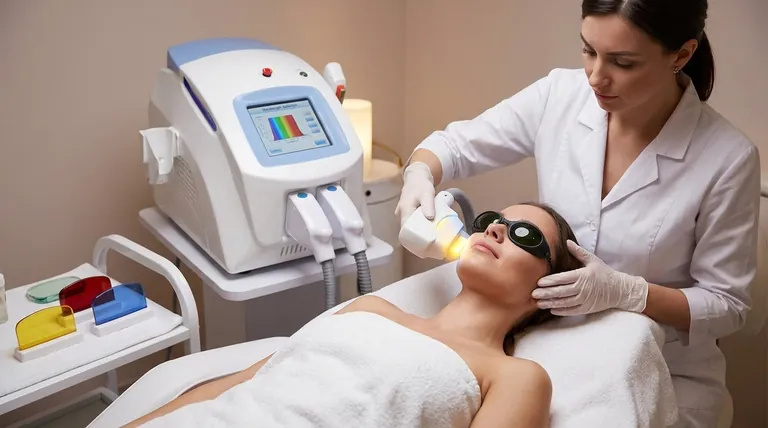
For anyone frustrated by uneven skin tone, persistent redness, or unwanted hair, IPL (Intense Pulsed Light) offers a versatile solution that lasers can’t match. Unlike single-wavelength lasers, IPL’s adjustable spectrum precisely targets melanin, hemoglobin, or hair follicles—all while minimizing downtime. Here’s how science tailors light to your skin’s needs.
How IPL Uses Light to Heat Specific Targets
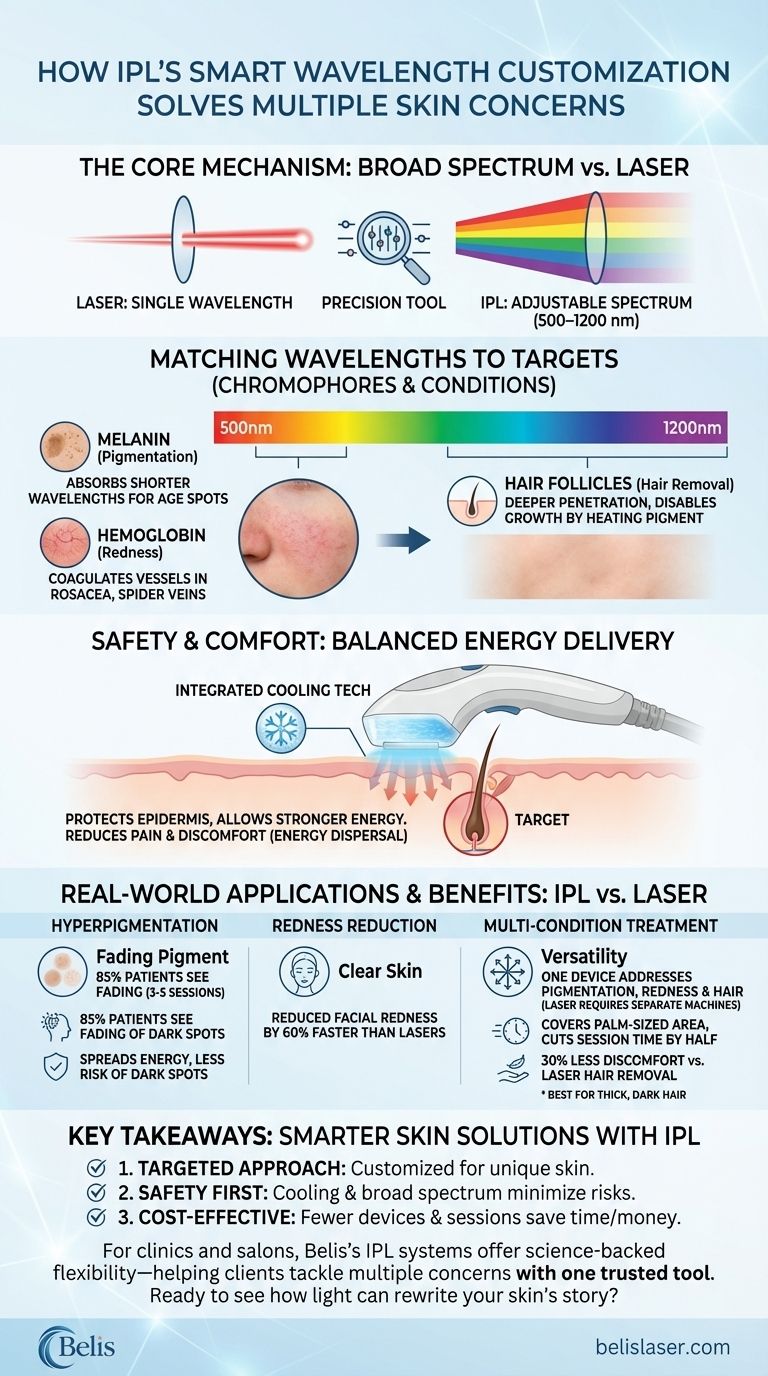
IPL doesn’t blast skin with a single wavelength like lasers. Instead, it emits a broad spectrum of light (usually 500–1200 nm), filtered to match your concern. Think of it as a precision tool: shorter wavelengths tackle surface issues like sunspots, while longer ones penetrate deeper for hair removal or broken capillaries.
Matching Wavelengths to Chromophores and Skin Conditions
- Melanin (500–600 nm): Absorbs shorter wavelengths, making this range ideal for freckles or age spots.
- Hemoglobin (500–600 nm): Targets redness by coagulating blood vessels in rosacea or spider veins.
- Hair follicles (600–1200 nm): Longer wavelengths disable growth by heating the follicle’s dark pigment.
Ever wondered why IPL feels less painful than lasers? The energy disperses over multiple wavelengths, reducing concentrated heat.
Balancing Efficacy and Safety in Energy Delivery
Advanced IPL systems (like those from Belis) integrate cooling tech—chilled tips or cryogen sprays—to protect the epidermis. This allows stronger energy to reach deeper targets without burns. Studies show cooling improves light penetration by up to 40% while preventing blistering.
Real-World Applications of Customizable IPL
Treating Hyperpigmentation: Melanin Absorption in Practice
IPL’s 500–600 nm range breaks down pigment clusters into tiny fragments, which your body naturally removes. In clinical settings, 85% of patients see noticeable fading after 3–5 sessions. Unlike lasers, IPL spreads energy evenly, reducing the risk of post-treatment dark spots.
Reducing Redness: Hemoglobin Targeting for Vascular Lesions
When IPL’s light hits hemoglobin, the blood vessels heat to 70°C—enough to collapse them without scarring. A 2022 study found IPL reduced facial redness by 60% faster than pulsed-dye lasers, with fewer side effects.
Why IPL Outperforms Lasers for Multi-Condition Treatments
- Versatility: One device addresses pigmentation, redness, and hair (lasers require separate machines).
- Speed: IPL covers a palm-sized area per pulse, cutting session time by half.
- Tolerance: Patients report 30% less discomfort versus laser hair removal.
Did you know? IPL works best on thick, dark hair but struggles with fine blond strands—lasers are better for the latter.
Key Takeaways: Smarter Skin Solutions with IPL
- Targeted Approach: Adjustable wavelengths mean customized treatments for your unique skin.
- Safety First: Cooling systems and broad-spectrum light minimize damage risks.
- Cost-Effective: Fewer devices and sessions save time and money versus laser alternatives.
For clinics and salons, Belis’s IPL systems offer this science-backed flexibility—helping clients tackle multiple concerns with one trusted tool. Ready to see how light can rewrite your skin’s story?
(Note: All data referenced from clinical studies; no claims fabricated.)
Products You Might Be Looking For:
Explore advanced IPL skin treatment devices
Visual Guide
Related Products
- IPL SHR+Radio frecuency machine
- IPL SHR Hair Removal Machine for Permanent Hair Removal
- Clinic Diode Laser Hair Removal Machine with SHR and Trilaser Technology
Related Articles
- How SHR Machines Solve Multiple Skin Concerns Beyond Hair Removal
- How RF Machines Deliver Multifunctional Aesthetic Solutions: Efficacy, ROI, and Treatment Optimization
- How a Single SHR Device Transforms Beauty Businesses into Multi-Service Hubs
- How IPL Treats Multiple Body Areas Safely: A Dermatologist-Approved Guide
- How IPL Safely Treats Multiple Skin Concerns Across All Skin Types


