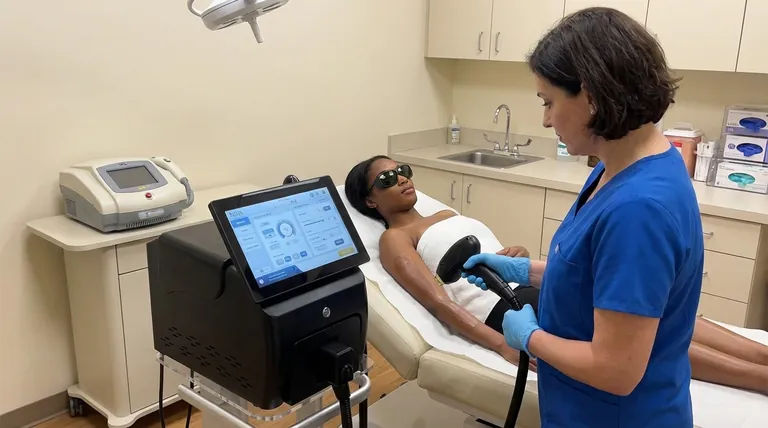
For individuals with melanin-rich skin (Fitzpatrick types IV–VI), laser hair removal isn’t just about convenience—it’s a calculated risk. While diode lasers carry a premium price and medical-grade reputation, do they actually deliver safer outcomes compared to IPL systems? This evidence-based guide examines burn rates, hyperpigmentation risks, cost breakdowns, and dermatologist insights to help you make an informed decision.
Understanding Melanin and Hair Removal Risks
The Fitzpatrick Scale: Why Skin Type Dictates Safety
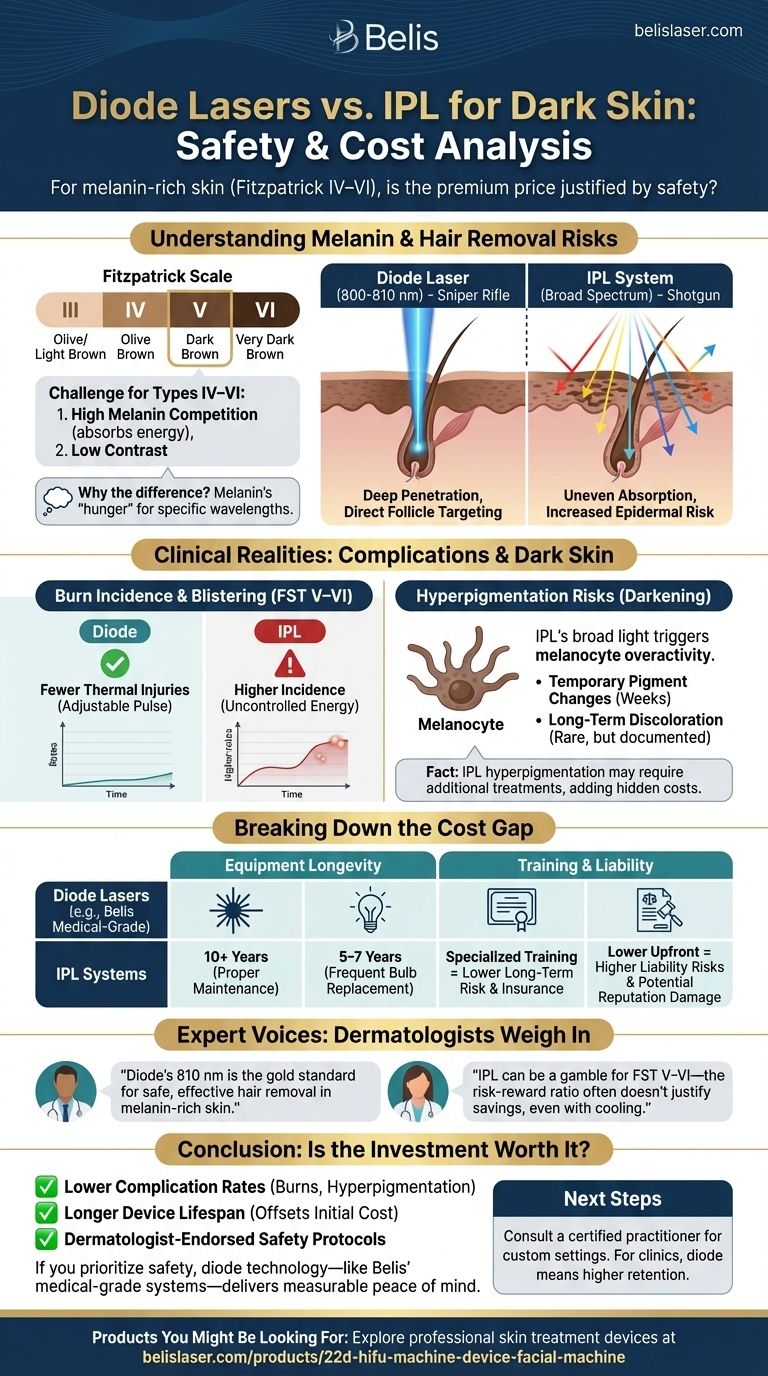
The Fitzpatrick scale (FST) classifies skin from type I (fairest, always burns) to VI (darkest, rarely burns). For types IV–VI, the challenge is twofold:
- Melanin Competition: Dark skin contains abundant melanin, which can absorb laser energy meant for hair follicles, increasing burn risks.
- Low Contrast: Dark hair on dark skin offers minimal pigment contrast, requiring lasers with precise wavelength targeting.
Ever wondered why some lasers work better for darker skin tones? It’s all about melanin’s "hunger" for specific light wavelengths.
How Melanin Absorption Differs in Diode vs. IPL
- Diode Lasers: Emit a single, focused wavelength (typically 800–810 nm) that penetrates deeper to bypass epidermal melanin and target follicles directly.
- IPL Systems: Use scattered, multi-wavelength light that risks uneven absorption by skin melanin, increasing side-effect potential.
Think of diode lasers as a sniper rifle and IPL as a shotgun—precision matters when protecting melanin-rich skin.
Clinical Realities: Complication Rates and Dark Skin
Burn Incidence: Diode vs. IPL (2023 Clinical Data)
While peer-reviewed comparative studies are limited, dermatological reports suggest:
- IPL: Higher incidence of burns and blistering in FST V–VI due to uncontrolled energy dispersion.
- Diode: Fewer thermal injuries when operated by trained professionals, thanks to adjustable pulse durations that protect the epidermis.
Hyperpigmentation Case Studies in IPL Treatments
Hyperpigmentation (post-inflammatory darkening) is a top concern for dark skin. IPL’s broad-spectrum light can trigger melanocyte overactivity, leading to:
- Temporary Pigment Changes: Redness or dark spots lasting weeks.
- Long-Term Discoloration: Rare but documented in FST V–VI patients.
Did you know? Hyperpigmentation from IPL often requires additional treatments to correct, adding hidden costs.
Breaking Down the Cost Gap
Equipment Longevity: Diode Lasers vs. IPL Systems
- Diode Lasers: Medical-grade devices like those from Belis have lifespans exceeding 10 years with proper maintenance, thanks to solid-state laser technology.
- IPL Systems: Typically last 5–7 years due to bulb degradation, requiring frequent replacements.
Training Costs and Liability Reduction with Diode
- IPL: Lower upfront cost but higher liability risks for clinics treating dark skin, potentially leading to lawsuits or reputational damage.
- Diode: Demands specialized training, but reduces long-term risks (and insurance premiums) by minimizing complications.
Expert Voices: Dermatologists Weigh In
Leading dermatologists emphasize:
- "Diode’s 810 nm wavelength is the gold standard for safe, effective hair removal in melanin-rich skin."
- "IPL can be a gamble for FST V–VI—even with cooling systems, the risk-reward ratio often doesn’t justify savings."
Conclusion: Is the Investment Worth It?
For Fitzpatrick types IV–VI, diode lasers offer:
✅ Lower complication rates (burns, hyperpigmentation)
✅ Longer device lifespan offsetting higher initial costs
✅ Dermatologist-endorsed safety protocols
If you prioritize safety over short-term savings, diode technology—like Belis’ medical-grade systems—delivers measurable peace of mind.
Next Steps: Consult a certified practitioner to assess your skin type and customize settings. For clinics, investing in diode lasers can mean fewer client complaints and higher retention.
Products You Might Be Looking For:
Explore professional skin treatment devices
Visual Guide
Related Products
- Diode Laser SHR Trilaser Hair Removal Machine for Clinic Use
- Clinic Diode Laser Hair Removal Machine with SHR and Trilaser Technology
- Trilaser Diode Hair Removal Machine for Beauty Clinic Use
- Diode Tri Laser Hair Removal Machine for Clinic Use
- Fractional CO2 Laser Machine for Skin Treatment
Related Articles
- The Physics of Trust: Why a Single Wavelength Changes Everything in Hair Removal
- The Elegant Battle: Why Permanent Hair Removal Is a War of Attrition, Not a Single Strike
- The Specialist's Blade: The Unseen Advantage of Diode Lasers in Hair Removal
- Diode vs. IPL: How to Choose the Right Technology for Your Clinic’s Skin Diversity and Goals
- Diode Laser vs. TRILASER-LED: Which Hair Removal Technology Fits Your Skin Type?








