The Allure of the Simple Answer
In any field governed by complex systems, from economics to engineering, we are psychologically drawn to simple, universal answers. In aesthetics, the HydraFacial often plays this role. It's a globally recognized brand promising a quick, gentle, and satisfying glow with minimal downtime.
For a clinic or salon, its appeal is obvious: a repeatable, high-demand service. But the most skilled practitioners know that the most popular tool is not always the right tool. An elegant wrench is useless on a nail. Understanding a technology's boundaries is the first step toward true mastery and delivering exceptional client outcomes.
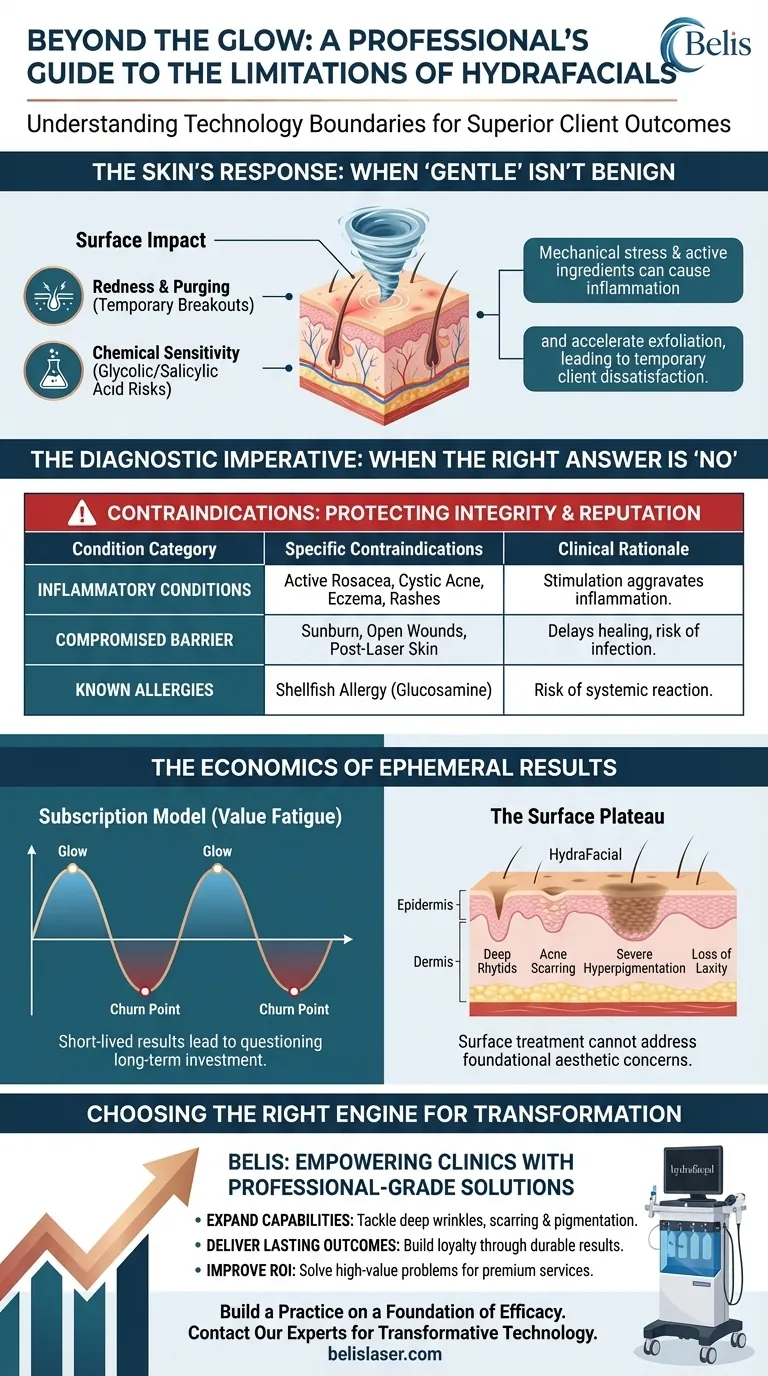
The Skin's Response: When "Gentle" Isn't Benign
A HydraFacial is an active treatment. The combination of vortex suction, physical exfoliation, and chemical serums creates a predictable, yet not always desirable, biological response. For professionals, managing this response is key to managing client trust.
The Physiology of Redness and Purging
Mild, transient redness is a common outcome, resulting from the mechanical stress of the vortex tip and the vasodilation caused by active ingredients. More disruptive is the phenomenon of "skin purging," where the treatment accelerates the skin's exfoliation cycle, bringing underlying congestion and micro-comedones to the surface as temporary breakouts.
While technically a sign the treatment is "working," from a client's perspective, new blemishes following a costly facial are a significant psychological drawback. It's a clinical outcome that can feel like a personal failure.
The Chemical Boundary
The treatment's serums utilize glycolic and salicylic acids. While typically in low concentrations, they create a risk for clients with sensitive skin, rosacea, or specific allergies (like an aspirin allergy, related to salicylates). An unexpected reaction doesn't just irritate the skin; it erodes the client's confidence in the practitioner's expertise.
The Diagnostic Imperative: When the Right Answer is "No"
The most significant disadvantage of a HydraFacial isn't a side effect; it's its list of contraindications. For a professional, the decision to withhold a popular treatment is a hallmark of integrity and protects both the client's skin and the clinic's reputation.
Applying this tool to the wrong problem can actively cause harm.
| Condition Category | Specific Contraindications | Clinical Rationale |
|---|---|---|
| Inflammatory Conditions | Active Rosacea, Cystic Acne, Eczema, Rashes | Stimulation from suction and exfoliation will aggravate inflammation and worsen the condition. |
| Compromised Barrier | Sunburn, Open Wounds, Post-Laser Skin | The treatment can delay healing, introduce bacteria, and cause significant irritation to vulnerable tissue. |
| Known Allergies | Shellfish Allergy (due to glucosamine) | Poses a risk of a systemic allergic reaction, which is a critical liability for any practice. |
The Economics of Ephemeral Results
Beyond the clinical limitations, the business model built on HydraFacials presents a more subtle challenge: the psychology of value. Clients are paying a premium for a result that is, by design, temporary.
The Client Lifetime Value Dilemma
The recommended 4-6 week treatment cycle creates a subscription-like model. However, if the client's underlying issues aren't being resolved, this recurring cost can lead to "value fatigue." They may enjoy the immediate glow, but question the long-term investment when they see the same foundational issues—fine lines, texture, or laxity—return each month. This can lead to churn.
The Plateau of Surface-Level Care
Here lies the fundamental limitation. A HydraFacial is a surface treatment. It excels at hydration and superficial exfoliation. It cannot effectively address the concerns that drive clients to seek out medical aesthetic professionals in the first place:
- Deep Rhytids (Wrinkles)
- Significant Acne Scarring
- Severe Hyperpigmentation
- Loss of Skin Laxity
Attempting to treat these with a surface-level tool is like trying to fix a building's foundation by washing its windows. You achieve a temporary shine, but the structural problems remain.
Choosing the Right Engine for Transformation
Delivering profound, lasting change is what separates a standard beauty service from a trusted medical aesthetic clinic. This requires moving beyond surface-level treatments to technologies engineered for deeper impact. It's about building a toolkit that can address the root cause of a client's concerns, not just the symptoms.
BELIS provides professional-grade medical aesthetic equipment that empowers clinics to deliver these transformative results. Our systems are designed for practitioners who aim to solve complex dermatological challenges, building a practice on a foundation of efficacy and trust. We help clinics:
- Expand Capabilities: Offer treatments for deep wrinkles, scarring, and pigmentation that surface-level devices cannot address.
- Deliver Lasting Outcomes: Build client loyalty through results that are both visible and durable.
- Improve ROI: Invest in technology that solves high-value client problems, justifying premium services and securing long-term relationships.
To build a practice founded on transformative results that go beyond the surface, you need technology designed for the task. Contact Our Experts
Visual Guide
Related Products
- Hydrafacial Machine with Facial Skin Analyzer Skin Tester
- Hydrofacial Machine with Facial Skin Analyzer and Skin Tester
- Hydrofacial Machine Facial Clean Face and Skin Care Machine
- 12D HIFU Machine Device for Facial HIFU Treatment
- 9D 7D HIFU Vaginal RF Lifting Treatment
Related Articles
- The Physics of a Fleeting Glow: Why Skin Maintenance is a Systems Problem
- The Physics of a Flawless Finish: How Vortex-Fusion Redefined the Facial
- One System, Every Skin: The Engineering of Personalized Skincare
- The System Beneath the Glow: Deconstructing the HydraFacial Protocol
- The Consistency Paradox: Why Not All Water-Based Facials Are Created Equal





