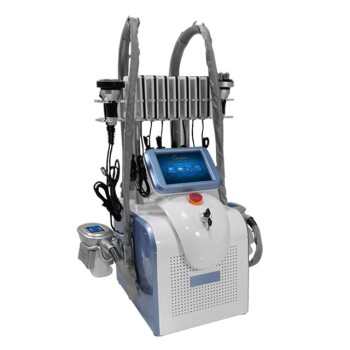
Monitoring laser penetration depth is the cornerstone of clinical safety and procedural efficacy. Accurate depth control ensures that high-energy thermal delivery is confined to target adipose tissue while preserving the integrity of the surrounding dermal and subdermal structures. This balance is critical for achieving fat reduction without causing collateral damage to nerves, blood vessels, or the skin barrier.
Core Takeaway: Precise regulation of laser penetration depth is essential to maximize fat disruption while ensuring thermal energy attenuates before reaching deep-seated vital structures, thereby preventing irreversible tissue damage and shortening recovery times.
Protecting Deep-Seated Anatomical Structures
Safeguarding Nerves and Blood Vessels
High-energy lasers used in lipolysis can cause permanent damage if the thermal energy extends beyond the intended subcutaneous fat layer. Monitoring depth ensures that heat delivery remains localized, preventing interference with the underlying vascular systems and neural pathways.
The Role of Wavelength-Specific Attenuation
Utilizing specific wavelengths, such as the 1444nm laser, allows for high-efficiency fat reduction with controlled energy spread. These wavelengths are designed to attenuate rapidly below a certain depth, acting as a built-in safety mechanism for deep-tissue protection.
Maintaining Dermal Integrity
While the goal is fat reduction, the laser must pass through or interact near the dermis. Monitoring ensures that the thermal gradient does not rise to a level that compromises the structural proteins of the skin, which could lead to necrosis.
Clinical Risk Mitigation and Patient Outcomes
Preventing Thermal Injuries and Dyschromia
Without strict limits on penetration and power, improper use of high-energy devices can lead to severe skin burns. Furthermore, uncontrolled depth can trigger inflammatory responses that result in long-term hyperpigmentation or scarring.
Optimizing Postoperative Recovery
Precise energy delivery minimizes unnecessary inflammation and trauma to non-target tissues. By focusing energy strictly within the adipose layer, practitioners can significantly shorten the patient's recovery period and reduce postoperative pain.
Necessity of Qualified Oversight
Because these devices can penetrate the skin barrier and affect deep tissues, they are classified as high-risk operations. Regulation ensures that only qualified personnel, capable of adjusting settings based on a patient’s specific skin condition, perform these procedures.
Understanding the Trade-offs and Pitfalls
Energy Intensity vs. Control
There is a constant tension between using higher power to speed up fat emulsification and the need for safety. Increasing power without monitoring penetration depth exponentially increases the risk of "thermal tunneling," where heat travels further than anticipated.
Patient Variability Challenges
Skin thickness and fat density vary significantly between individuals and even different body areas. A "one-size-fits-all" approach to laser depth often leads to either under-treatment (poor results) or over-penetration (tissue damage).
The Risk of Equipment Over-Reliance
Practitioners must not rely solely on device presets. Failure to manually verify and monitor tissue response during the procedure can lead to localized overheating if the laser tip remains in one area for too long, regardless of the programmed depth.
Applying Depth Monitoring to Clinical Goals
When evaluating the effects of laser lipolysis, the primary objective dictates how depth parameters should be managed and monitored.
- If your primary focus is patient safety and risk management: Prioritize the use of wavelengths like 1444nm that offer rapid thermal attenuation to protect underlying nerves and vessels.
- If your primary focus is rapid recovery and aesthetic refinement: Ensure penetration is strictly limited to the subcutaneous layer to prevent dermal burns and unnecessary inflammation.
- If your primary focus is treating diverse patient profiles: Implement a protocol for real-time parameter adjustment based on localized skin thickness and fat volume to avoid over-penetration.
Mastering the balance between energy depth and tissue interaction is the only way to ensure laser lipolysis is both transformative and safe.
Summary Table:
| Monitoring Focus | Safety Benefit | Efficacy Impact |
|---|---|---|
| Subcutaneous Depth | Protects underlying nerves and blood vessels | Confines energy to target adipose tissue |
| Thermal Gradient | Prevents dermal burns and necrosis | Ensures structural protein integrity |
| Energy Attenuation | Avoids "thermal tunneling" to deep structures | Maximizes fat emulsification efficiency |
| Patient Variability | Reduces risk of over-penetration | Customizes treatment for different skin types |
Elevate Your Clinic’s Precision with BELIS Professional Aesthetic Solutions
Achieving transformative results in body sculpting requires equipment that balances high-energy efficacy with uncompromising safety. BELIS specializes in professional-grade medical aesthetic equipment designed exclusively for clinics and premium salons.
From advanced laser systems (Diode, Alexandrite, CO2, Nd:YAG, Pico) to cutting-edge body sculpting solutions like Cryolipolysis, EMSlim, and RF Cavitation, our technology empowers practitioners to monitor treatment parameters with precision, ensuring optimal penetration depth and patient comfort.
Why Partner with BELIS?
- Precision Engineering: Advanced thermal control to protect vital anatomical structures.
- Versatile Portfolio: Includes HIFU, Microneedle RF, and specialized care devices like Hydrafacial systems.
- Clinical Excellence: Reliable equipment that minimizes recovery time and maximizes aesthetic outcomes.
Ready to upgrade your practice with the industry's most reliable laser and body contouring systems?
Contact Our Experts Today to Request a Quote
References
- Jong‐In Youn. A Comparison of Wavelength Dependence for Laser-assisted Lipolysis Effect Using Monte Carlo Simulation. DOI: 10.3807/josk.2009.13.2.267
This article is also based on technical information from Belislaser Knowledge Base .
Related Products
- Cryolipolysis Fat Freezing Cavitation Lipo Laser Machine
- Cryolipolysis Fat Freezing Machine with Cavitation and Laser Lipolysis
- Cryolipolysis Fat Freezing Machine Cavitation Lipo Laser Machine
- Cryolipolysis Fat Freezing Machine and Ultrasonic Cavitation Device
- Cryolipolysis Fat Freezing Machine Ultrasonic Cavitation Fat Reducing Device
People Also Ask
- What are the main benefits of using a fat freezing machine? Achieve Permanent, Non-Surgical Body Sculpting
- Do fat freezing machines really work? Achieve Non-Invasive Body Contouring
- What are the potential side effects and risks associated with fat freezing? Safety Profile & Rare Risks Explained
- What is the treatment principle of cryolipolysis fat freezing? Science-Backed Fat Reduction and Body Contouring
- What is the recommended treatment course for different body parts using the cryolipolysis machine? Expert Fat Loss Tips