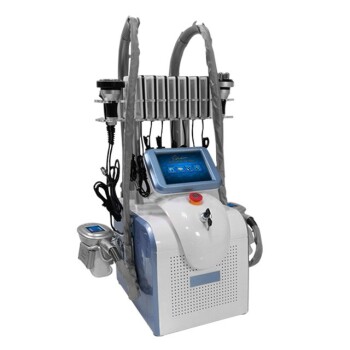
Integrated epidermal cooling is essential because it protects the skin surface while allowing sufficient laser energy to reach deeper targets. During high-fluence procedures, epidermal melanin can absorb part of the laser energy before it reaches structures such as hair follicles, blood vessels, or tattoo pigments. Cooling removes heat from the epidermis before, during, and immediately after the pulse, reducing the risk of burns, blistering, scarring, and postinflammatory hyperpigmentation while permitting clinically effective fluence levels.
High-fluence laser treatment requires a controlled separation between the desired thermal injury in the target tissue and unwanted thermal injury in the epidermis. Integrated cooling helps create that separation, particularly when treating patients with higher epidermal melanin.
Why High Fluence Increases Epidermal Risk
Laser energy does not reach the target exclusively
When treating a dermal structure, laser light must pass through the epidermis first. Epidermal melanin may absorb some of that light and convert it into heat near the skin surface.
This creates competitive absorption: energy intended for a vascular, follicular, or pigment target can also raise epidermal temperature.
Darker skin types require greater thermal control
Higher epidermal melanin concentrations increase the likelihood of superficial energy absorption. As fluence rises, the resulting heat accumulation can push the epidermis beyond its threshold for reversible stress and into thermal injury.
This makes surface protection especially important when treating patients with more heavily pigmented skin.
High fluence is often necessary for effective treatment
Deep or resistant targets may require higher fluences and carefully selected pulse durations to achieve the desired thermal effect. Without epidermal protection, increasing energy to improve target destruction may also increase the risk of surface injury.
Cooling allows clinicians to pursue an effective treatment endpoint while reducing the thermal burden on the epidermis.
How Integrated Cooling Protects the Epidermis
Cooling removes heat from superficial tissue
Contact cooling, cryogen spray, and forced cold air lower the temperature of the epidermis and, to some extent, the superficial dermis. Heat is extracted before, during, or immediately after laser exposure, depending on the technology and treatment protocol.
The goal is to keep the skin surface below the temperature at which burns and other irreversible injury occur.
Selective cooling preserves deeper treatment targets
Effective epidermal cooling is intended to protect the surface without excessively cooling the deeper structure being treated. This preserves the temperature differential between the epidermis and the target tissue.
That distinction is important: the epidermis should be protected, while the follicle, vessel, or pigment target still receives enough energy for the intended photothermal effect.
Cooling reduces procedure discomfort
Lower epidermal temperatures reduce the sensation of heat associated with high-fluence pulses. This can make treatment more tolerable and may help clinicians maintain appropriate treatment parameters rather than reducing energy solely because of patient discomfort.
Comfort, however, is a secondary benefit. The primary purpose is prevention of thermal injury.
Cooling Technologies Used in Laser Systems
Contact cooling
A chilled sapphire or metal tip conducts heat away from the treatment surface. It can provide cooling before, during, and after pulse delivery, depending on the system design and operating technique.
Contact cooling also stabilizes the skin surface during repeated pulses, but the handpiece must maintain appropriate contact and movement to cool consistently.
Dynamic cryogen spray
Automated cryogen spray delivers a precisely timed burst immediately before the laser pulse. This rapidly cools the superficial skin layer while limiting the duration of exposure.
Timing is critical because the spray must cool the epidermis without unnecessarily affecting the deeper target or interfering with laser delivery.
Forced cold air
Cold-air systems provide continuous cooling across the treatment area. They are useful when ongoing surface temperature management is needed during procedures such as hair removal or vascular treatment.
Their effectiveness depends on airflow, distance, treatment duration, and consistent coverage of the treated skin.
What Cooling Enables Clinically
Safer use of higher fluences
By reducing epidermal temperature, cooling expands the margin between the fluence needed for target treatment and the fluence that causes surface injury. This gives clinicians greater flexibility when selecting energy settings.
Cooling does not make every high-fluence setting safe. It supports appropriate parameter selection within the limits of the device, treatment area, skin type, and clinical indication.
More effective treatment of deeper structures
When the epidermis is protected, more energy can be delivered for absorption by deeper targets without causing unacceptable surface damage. This can improve the likelihood of adequately heating vascular walls, hair follicles, or other dermal structures.
The benefit is better control of where thermal injury occurs, rather than simply increasing energy indiscriminately.
Lower risk of unwanted pigmentary change
Epidermal injury can trigger postinflammatory hyperpigmentation, hypopigmentation, or scarring. These complications are particularly significant in darker skin, where pigmentary changes may be more visible and persistent.
Maintaining epidermal integrity reduces, but does not eliminate, these risks.
Understanding the Trade-offs
Cooling is not a substitute for clinical judgment
A cooling system cannot compensate for an unsuitable wavelength, excessive fluence, incorrect pulse duration, poor technique, or treatment of an inappropriate candidate. Skin assessment, conservative parameter selection, test spots where appropriate, and adherence to device instructions remain essential.
Cooling is one part of a complete safety strategy.
Excessive cooling can affect treatment delivery
If cooling penetrates too deeply or is applied for too long, it may reduce the temperature achieved in the intended target. This can weaken the desired photothermal effect, particularly when the target is relatively superficial.
The cooling method and timing must therefore be matched to the target depth and treatment objective.
Coverage and timing matter
Uneven contact, insufficient spray coverage, interrupted airflow, or incorrect synchronization can leave portions of the epidermis inadequately protected. A system may be integrated into the platform, but its protection still depends on correct operation and maintenance.
Clinicians should verify that cooling is being delivered consistently across the treatment area.
Patient response can vary
Skin thickness, pigmentation, vascularity, treatment location, hair density, and prior treatments all influence heat accumulation. A setting and cooling protocol that is tolerated in one patient may be inappropriate for another.
The endpoint should be assessed clinically rather than inferred from the cooling system alone.
How to Apply This to Your Project
The appropriate approach depends on the clinical objective and the patient’s risk profile.
- If your primary focus is patient safety: Use integrated cooling together with appropriate wavelength, fluence, pulse duration, skin assessment, and treatment monitoring to keep epidermal temperature below the injury threshold.
- If your primary focus is treatment efficacy: Use cooling to protect the epidermis while delivering the fluence and pulse duration required to thermally affect the deeper target.
- If your primary focus is treating darker skin types: Give particular attention to epidermal melanin absorption, conservative testing, consistent cooling coverage, and the risk of postinflammatory dyspigmentation.
- If your primary focus is patient comfort: Select a cooling method that provides reliable surface temperature control throughout pulse delivery and repeated passes.
Integrated epidermal cooling is the control mechanism that allows high-fluence laser energy to remain therapeutically aggressive toward the target while remaining protective of the skin surface.
Summary Table:
| Benefit | Description |
|---|---|
| Burn Prevention | Cooling removes heat from epidermis, preventing burns and blistering during high-fluence pulses. |
| Improved Efficacy | Enables higher fluence for deeper targets while protecting skin surface, enhancing treatment outcomes. |
| Enhanced Safety for Darker Skin | Reduces risk of hyperpigmentation and scarring by controlling epidermal temperature. |
| Patient Comfort | Lowers heat sensation, making procedures more tolerable. |
| Controlled Thermal Injury | Creates temperature differential between epidermis and target, ensuring precise treatment. |
Ready to elevate your practice with high-fluence laser safety? At BELIS, we offer professional-grade systems with integrated cooling for optimal protection and efficacy. Our advanced laser platforms include diode, Alexandrite, CO2 fractional, and more. Contact us today to learn how BELIS can empower your clinic with safe, effective solutions. Get in touch with our experts.
Related Products
- Hydrofacial Machine with Facial Skin Analyzer and Skin Tester
- Professional IPL SHR Hair Removal Machine for Laser and IPL Hair Removal
- Fat Freezing Cryolipolysis Machine for Body Contouring
- Fat Freezing Cryolipolysis Machine for Body Contouring
- Cryolipolysis Fat Freezing Machine Cavitation Lipo Laser Machine
People Also Ask
- What is a HydroFacial treatment? Discover the Secret to Instant, Radiant Skin with Vortex-Fusion Technology
- What is the first step of a hydro-facial treatment? Master the Art of Professional Cleansing & Exfoliation
- Is a HydraFacial machine worth it? Achieve Instant Glow with No Downtime
- What are the business benefits of a spa or salon owning a Hydrafacial machine? Drive Revenue and Loyalty
- What is a Hydrafacial machine and what are its unique features? Elevate Your Clinic with Vortex-Fusion Tech