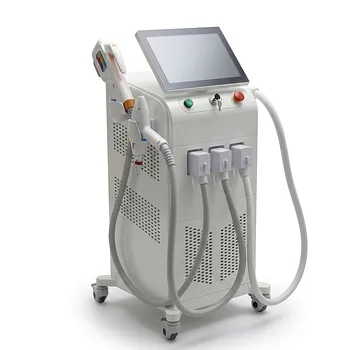
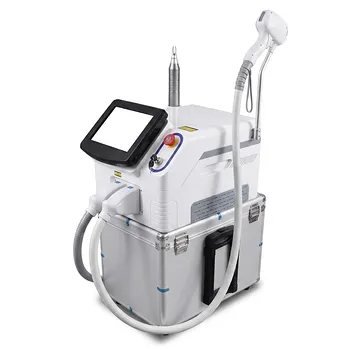
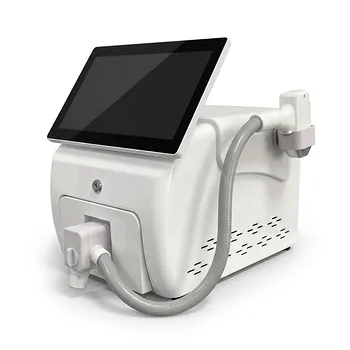
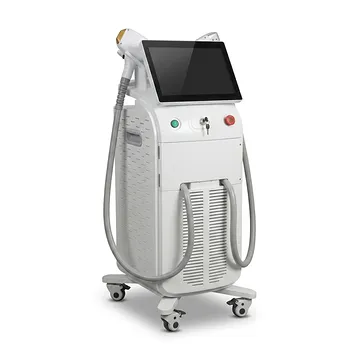
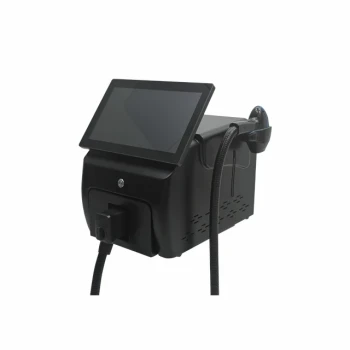
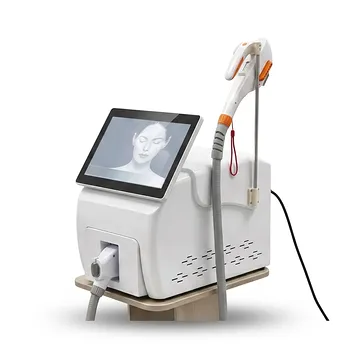
Integrated epidermal cooling is a safety-critical part of high-fluence laser treatment. In diode hair removal and vascular laser therapy, epidermal melanin absorbs some of the laser energy intended for deeper targets, creating a risk of burns, blistering, pigmentary change, and scarring. Cooling lowers the epidermal temperature, reduces pain, and creates a safer margin for delivering the fluence needed to heat hair follicles or blood vessels effectively.
Cooling is not merely a comfort feature. It protects the epidermis from both direct laser absorption and delayed heat returning from deeper tissue, while allowing sufficient energy to reach the intended dermal target.
Why High-Fluence Laser Treatment Challenges the Epidermis
Epidermal melanin competes for laser energy
Laser energy is absorbed by chromophores. In hair removal, the intended chromophore is primarily melanin in the follicle; in vascular treatment, the target is blood-related absorption in vessels.
However, epidermal melanin also absorbs light, particularly increasing the safety challenge when there is substantial pigmentation. That absorption converts optical energy into heat near the skin surface.
The dermo-epidermal junction is vulnerable
When surface heat accumulates, the epidermis and the dermo-epidermal junction may reach injury thresholds before the deeper target has received adequate thermal exposure.
The possible consequences include epidermal burns, vesiculation, blistering, scarring, and post-inflammatory pigmentary changes. This is why simply increasing fluence is not a complete solution to inadequate treatment response.
Deeper targets require sufficient fluence
Hair follicles and blood vessels are located beneath the epidermis. Effective treatment requires enough energy to penetrate and produce the desired thermal effect at those targets.
Cooling helps separate the safety limits of the epidermis from the treatment requirements of the deeper structure. In practical terms, it can make the epidermis more tolerant while the follicle or vessel receives the necessary energy.
How Cooling Protects During Diode Hair Removal
It protects follicular treatment from surface injury
In diode hair removal, follicular melanin is heated to damage the follicle’s functional structures. Some of the same optical energy may also be absorbed by epidermal melanin.
Contact cooling, cold air, or other integrated systems reduce superficial skin temperature so that follicular heating can be pursued with less risk of epidermal overheating.
It improves tolerability
Laser hair removal can produce substantial heat and discomfort, especially at fluences required for meaningful follicular injury.
Cooling provides a local analgesic effect and reduces irritation, allowing patients to tolerate treatment more consistently. Better tolerance can also support accurate placement and appropriate treatment parameters.
It supports treatment across different skin pigmentation levels
The safety margin is generally narrower when epidermal melanin absorbs more of the delivered energy. Cooling does not eliminate that risk, but it helps protect the superficial layers while the clinician selects parameters appropriate to the patient and treatment area.
Why Cooling Matters in High-Fluence Vascular Laser Systems
Vascular targets can retain and transfer heat
In vascular treatment, the laser heats blood vessels within the dermis. Because these structures may remain hot after the pulse, heat can conduct back toward the epidermis.
This creates a delayed thermal risk: the surface may continue to heat even after the laser has stopped emitting.
Cooling limits collateral epidermal heating
Surface cooling reduces the temperature of the epidermis and superficial dermis before and around laser exposure. This limits the likelihood that heat generated in or near the surface will exceed the tissue’s damage threshold.
The goal is not to cool the vessel indiscriminately. It is to protect the superficial tissue while preserving adequate thermal exposure at the vascular target.
High fluence increases the importance of thermal control
Higher fluence can improve target heating, but it also increases the total thermal burden imposed on surrounding tissue. Integrated cooling therefore becomes increasingly important as treatment intensity rises.
Cooling cannot compensate for an unsuitable wavelength, pulse duration, spot size, fluence, or skin assessment. It is a protective component of a complete treatment strategy, not a substitute for parameter selection.
Why Cooling Timing Determines Safety
Cooling has different effects depending on when it is delivered. Pre-cooling, parallel cooling, and post-cooling address different phases of heat generation and transfer.
Pre-cooling lowers the starting temperature
Cooling immediately before the pulse lowers the initial temperature of the epidermis. This increases the amount of energy the surface can absorb before reaching a thermal injury threshold.
Pre-cooling is particularly valuable when the epidermis contains more melanin or when the planned fluence creates a narrow safety margin.
Parallel cooling controls active heat deposition
Cooling during or closely synchronized with the laser pulse helps remove heat as energy is being deposited. This limits temperature rise in the superficial layers while the laser is actively treating the follicle or vessel.
The timing must be coordinated with laser emission. Cooling that is delayed or poorly coupled to the pulse may provide less protection against the peak temperature generated during exposure.
Post-cooling prevents delayed heat injury
After the pulse, deeper structures may remain hot. In vascular treatment especially, heat can move from a treated vessel toward the epidermis through conduction.
Post-cooling reduces this retrograde heat transfer and dissipates residual surface heat. It is therefore not optional simply because the laser pulse has ended; delayed heating can still produce erythema, blistering, or other thermal injury.
Understanding the Trade-offs
Excessive cooling can reduce treatment efficiency
Cooling is intended to be selective, but excessive or poorly applied cooling may lower the temperature of superficial target regions or alter the intended thermal profile.
The clinical objective is controlled protection of the epidermis, not indiscriminate cooling of all tissue. Cooling intensity and duration must remain compatible with the target depth and treatment protocol.
Cooling does not make excessive fluence safe
A cooling handpiece cannot fully protect skin from inappropriate energy settings, excessive overlap, unsuitable pulse duration, or treatment of recently tanned or otherwise vulnerable skin.
Cooling increases the safety margin; it does not remove the need for conservative parameter selection, skin assessment, and observation of tissue response.
The system must be integrated and consistently coupled
Contact cooling depends on adequate contact with the skin. Cold-air systems depend on appropriate positioning and continuous delivery, while dynamic sprays depend on correct synchronization with the laser pulse.
Gaps, inconsistent coverage, or incorrect timing can create localized hot spots. The cooling system should therefore be assessed as part of the handpiece and treatment workflow, not as an afterthought.
Pain reduction is not a reliable safety signal
Cooling can reduce discomfort, but a comfortable treatment is not automatically a safe treatment. Conversely, pain may be influenced by multiple factors and should be interpreted alongside visible tissue response and the selected parameters.
Operators should use cooling for protection and comfort while still monitoring for excessive erythema, whitening, blistering, or other signs of injury.
How to Apply This to Your Project
The correct cooling design depends on whether the priority is surface protection, high-fluence performance, patient comfort, or control of delayed heat.
- If your primary focus is epidermal safety: Use cooling before, during, and after emission so the skin is protected from initial heat, active pulse heating, and delayed heat transfer.
- If your primary focus is high-fluence efficacy: Choose a system that protects the epidermis without unnecessarily cooling the deeper follicular or vascular target.
- If your primary focus is patient comfort: Favor a cooling method that provides consistent surface temperature reduction and analgesia throughout the treatment sequence.
- If your primary focus is vascular treatment safety: Give particular attention to post-cooling, because heated vessels can continue transferring heat toward the epidermis after the pulse.
- If your primary focus is reliable operation: Ensure the cooling method is properly coupled and synchronized with laser delivery rather than applied inconsistently by hand.
Effective cooling is a timed thermal-control system that protects the epidermis while preserving the energy needed to treat deeper hair and vascular targets.
Summary Table:
| Cooling Phase | Key Benefit | Risk if Not Applied |
|---|---|---|
| Pre-cooling | Lowers epidermal temperature, increasing safety margin | Higher risk of burns from initial heat absorption |
| Parallel cooling | Controls heat during pulse, limiting surface temperature rise | Inadequate protection during energy deposition |
| Post-cooling | Prevents delayed heat injury from vessel conduction | Erythema, blistering, or scarring from residual heat |
Ready to enhance your laser treatments with advanced cooling technology? At BELIS, we offer professional-grade aesthetic equipment designed for clinics and premium salons. Our systems integrate precise cooling mechanisms to maximize safety and efficacy. Contact us today to find the perfect solution for your practice — let's elevate patient care together! [Get in touch] (#ContactForm).
Related Products
- 808nm Diode Laser Hair Removal Machine 755+808+1064nm Mixed Wavelength Professional Equipment
- 808nm Diode Laser Hair Removal Machine and Equipment with Picolaser Arm
- Tri Laser Diode Hair Removal Machine Professional Beauty Equipment
- Clinic Diode Laser Hair Removal Machine with SHR and Trilaser Technology
- Diode Laser SHR Trilaser Hair Removal Machine for Clinic Use
People Also Ask
- How do 800/810 nm diode hair removal lasers compare to 1064 nm long-pulsed Nd:YAG lasers? Discover the Best for Your Patients
- How do broad-spectrum noncoherent light sources compare to single-wavelength diode lasers in aesthetic hair removal applications? Find the best fit for your clinic.
- How can aesthetic practitioners prevent side effects like paradoxical hair regrowth and thermal burns when performing diode laser hair removal on dark skin? Master safe protocols for Fitzpatrick IV–VI skin.
- Why is monitoring the revenue rate per hour per physician essential when deciding to invest in high-throughput aesthetic technology like diode hair removal lasers or multi-applicator body sculpting machines? Optimize your practice's profitability
- How do different energy fluences in professional diode hair removal lasers affect hair follicle tissue at the cellular level? Unlock Optimal Safety and Efficacy