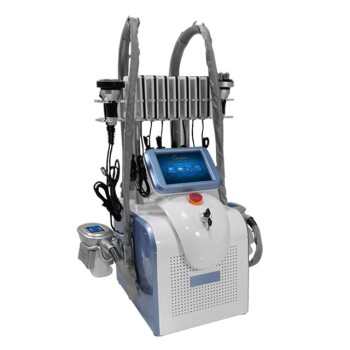
Direct physical contact between the device’s hardware and the skin is the sole mechanism for viral transmission during IPL or laser hair removal. While the light energy itself is sterile and cannot carry pathogens, the solid components of the device—specifically the treatment heads and cooling tips—act as surfaces where viruses can reside and transfer if sanitation protocols fail.
Core Takeaway The optical energy beam used in hair removal is incapable of transmitting infection; the risk is entirely mechanical. Viral inoculation occurs when contaminated instrument tips act as physical vectors, transferring pathogens like HPV or Molluscum Contagiosum between patients or different body areas.
The Separation of Energy and Hardware
To understand the risk, you must distinguish between the technology's output (the light) and its delivery system (the instrument).
The Sterility of the Beam
The energy emitted by professional-grade laser or IPL systems operates on the principle of selective photothermolysis.
This involves specific wavelengths of light targeting melanin in the hair follicle to generate heat. Because this is pure photonic energy, the beam itself is physically incapable of carrying or transmitting infectious particles.
The Component as a Vector
While the light is safe, the delivery requires proximity and precision.
The optical treatment heads and cooling tips are solid, physical objects that must press against the skin. In medical terms, if these components are not sterilized, they become fomites—inanimate objects capable of carrying infectious agents.
Mechanisms of Viral Inoculation
The structure of the equipment facilitates two distinct types of viral transmission during a session.
Patient-to-Patient Transmission
This occurs when the equipment retains viral particles from a previous client.
If the optical head or cooling tip contacts a viral lesion on one patient and is not rigorously sterilized, it acts as a physical vector. The device then deposits the virus onto the skin of the next patient during contact.
Autoinoculation (Self-Transmission)
Transmission can also occur within a single session on one individual.
If the device treats an infected area (such as the bikini line where HPV or Molluscum Contagiosum may be present) and is then moved to a clean area (like the legs) without intermediate cleaning, the equipment spreads the virus across the patient's own body.
Understanding the Operational Trade-offs
The risk of contact is an inherent trade-off required for the efficacy of professional hair removal.
The Necessity of Contact
You cannot simply remove the contact requirement to eliminate the risk.
To achieve effective photothermolysis, the energy must precisely destroy the hair bulb and bulge located 1 to 7mm deep. Direct contact is often required to focus this energy and, crucially, to apply cooling tips that protect the surrounding skin structures from thermal damage.
The Reliance on Protocol
Because contact is functionally necessary for safety and results, the biological safety of the procedure relies entirely on human behavior.
The hardware is designed for performance, not inherent self-sterilization. Therefore, the strict sterilization of tips between every site change is the only barrier against inoculation.
Ensuring Safety in Procedures
Whether you are a practitioner managing protocols or a patient evaluating a clinic, understanding the vector of transmission dictates your safety checks.
- If your primary focus is Patient Safety: Ensure that the practitioner visibly disinfects or changes the treatment tip before the session begins and between treating different body areas.
- If your primary focus is Clinical Efficacy: Recognize that while contact is required for the best optical results, it introduces a strict requirement for high-level disinfection protocols to prevent liability and infection.
The technology is precise, but the hygiene must be absolute.
Summary Table:
| Aspect | Detail |
|---|---|
| Transmission Vector | Physical hardware (treatment heads & cooling tips) |
| Energy Safety | Photonic energy is sterile; the beam cannot carry pathogens |
| Common Pathogens | HPV, Molluscum Contagiosum, and other contact-based viruses |
| Transmission Types | Patient-to-patient or autoinoculation (self-transmission) |
| Critical Prevention | High-level disinfection/sterilization of all contact surfaces |
Elevate Your Clinic’s Safety with BELIS Medical Aesthetic Solutions
At BELIS, we understand that patient safety is as vital as clinical results. Our professional-grade medical aesthetic equipment—including Advanced Diode Laser Hair Removal systems, CO2 Fractional Lasers, and Nd:YAG/Pico technology—is designed for precision and durability in premium salons and clinics.
We don't just provide high-performance laser systems, HIFU, Microneedle RF, and body sculpting solutions (EMSlim, Cryolipolysis); we empower your practice with equipment that supports rigorous hygiene standards and superior outcomes. From specialized Hydrafacial systems to skin testers, BELIS provides the comprehensive portfolio you need to stay ahead.
Ready to upgrade your clinic with industry-leading technology?
Contact Us Today to Request a Quote and Consultation
References
- Ronni Wolf, Batya B. Davidovici. Laser and Intense Pulsed Light for Hair Removal Cannot Cause Virus Inoculation—Think Again. DOI: 10.1111/j.1540-9740.2007.05015.x
This article is also based on technical information from Belislaser Knowledge Base .
Related Products
- IPL SHR+Radio frecuency machine
- IPL SHR Hair Removal Machine for Permanent Hair Removal
- Clinic Use IPL SHR ND YAG Laser Hair Removal RF Skin Tightening Machine
- Clinic Use IPL and SHR Hair Removal Machine with Nd Yag Laser Tattoo Removal
- Trilaser Diode Hair Removal Machine for Beauty Clinic Use
People Also Ask
- In what ways is an IPL SHR machine considered a cost-effective solution for hair removal? Maximize Your Clinic's ROI
- What is the typical downtime and recovery period associated with IPL SHR treatments? Zero-Downtime Guide
- What types of skin rejuvenation concerns can be addressed using IPL SHR machines? Master Photofacials & Anti-Aging
- What factors contribute to the speed and efficiency of IPL SHR treatments for large body areas? Boost Clinic Throughput
- What are the technical advantages of using the SHR mode in IPL systems? Discover Pain-Free, Safe Hair Removal