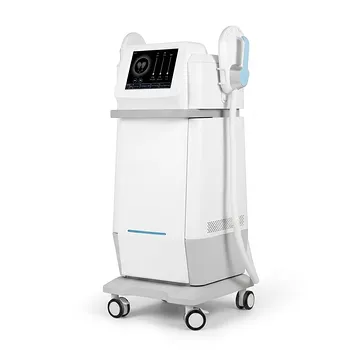
For localized fat reduction, RF Cavitation and Cryolipolysis generally offer more standardized, lower-risk planning than autologous adipose tissue transfer—but they do not replace grafting when the goal is to add structural volume. Non-invasive treatments reduce selected subcutaneous fat gradually, while autologous adipose tissue transfer (ATT) relocates harvested fat to create augmentation or correction. ATT can provide substantial, targeted volume, but resorption and donor-site limitations make the final result less predictable.
The central distinction is treatment intent: non-invasive body sculpting is usually a staged fat-reduction and contour-refinement process, whereas ATT is a surgical volume-transfer procedure with greater correction potential but more variables, risks, and uncertainty.
How the Treatment Objectives Differ
Non-invasive sculpting reduces localized fat
Cryolipolysis uses controlled cooling to induce adipocyte injury in a selected fat bulge. The treated cells are cleared gradually, so contour changes typically develop over several weeks rather than immediately.
RF-based systems and ultrasound cavitation systems use energy delivered through the skin to address localized fat and, depending on the device, improve skin laxity or tissue texture. These technologies should not be treated as interchangeable: RF is commonly used for thermal tissue remodeling and tightening, while “cavitation” generally refers to acoustic energy intended to affect fat tissue.
ATT adds volume to a defined anatomical area
ATT involves harvesting fat from a donor site, processing it, and injecting it into a recipient site. It is therefore suited to augmentation, asymmetry correction, and structural contour restoration, not simply reduction of a fat deposit.
The clinician may need to correct specific anatomical axes or compartments—for example, the medial and lateral aspects of the calf—rather than treating a broad, superficial fat layer.
Predictability and Result Control
Non-invasive treatment has more predictable logistics
The treatment mechanism, applicator placement, treatment area, and interval between sessions can be defined in advance. This makes the process relatively straightforward to schedule and repeat for mild-to-moderate localized contour concerns.
However, “predictable” does not mean guaranteed. Results vary with fat thickness, treatment area, device characteristics, patient selection, and biological response. Non-invasive treatment is best described as more predictable in process and risk profile, not perfectly predictable in final volume reduction.
ATT has greater volumetric uncertainty
A portion of transferred fat may be resorbed after grafting. The resorption rate is difficult to determine precisely for an individual patient, so the final retained volume may be less predictable than the initial injected volume.
Protocols may require one to four treatment sessions, depending on the degree of correction, the recipient site, the donor reserve, and the amount of volume that persists after healing.
The procedures solve opposite contour problems
Non-invasive modalities generally make an area smaller or tighter. ATT makes an area fuller or more projected.
This difference matters during treatment planning: a patient seeking calf augmentation, tissue replacement, or correction of a volume deficit cannot be managed with a fat-reduction device alone.
Session Planning and Clinical Workflow
Planning non-invasive treatment
A typical plan focuses on:
- Identifying a localized, pinchable fat deposit.
- Confirming that the patient seeks modest contour refinement rather than major weight reduction.
- Selecting the appropriate modality, applicator, energy settings, and treatment area.
- Allowing time for the biological response before judging the result.
- Scheduling additional sessions only when the response and residual contour justify them.
Cryolipolysis is particularly oriented toward stubborn localized fat bulges. RF-based treatment may be more appropriate when skin laxity or texture is also a central concern.
Planning ATT
ATT requires substantially more preoperative analysis. The clinician must assess:
- The desired correction and the specific anatomical planes involved.
- Available donor fat and its distribution.
- Skin quality and the capacity of the recipient bed.
- Expected resorption and whether staged correction is preferable.
- Harvesting, processing, injection, anesthesia, and postoperative care.
The recipient site is especially important. A tight or poorly tolerant cutaneous bed may not safely accommodate the intended graft volume.
Different timelines require different patient expectations
Non-invasive contouring is usually a gradual refinement strategy. Patients must understand that the visible effect develops over time and may require staged treatment.
ATT can create an immediate postoperative volume change, but the early appearance does not represent the final result because swelling and graft resorption alter the contour during healing.
Procedural Risks and Recovery
Risks associated with non-invasive modalities
Non-invasive treatments avoid incisions, fat harvesting, tissue-piercing cannulas, and general or tumescent anesthesia. They also generally involve little or no downtime.
Their risks are not zero. Depending on the technology, patients may experience temporary pain, erythema, swelling, bruising, altered sensation, or thermal injury. Cryolipolysis also has a rare risk of paradoxical adipose hyperplasia, in which the treated area enlarges rather than decreases.
Device selection, treatment parameters, applicator positioning, and appropriate patient screening remain essential. A non-invasive label does not eliminate the need for trained clinical judgment.
Risks associated with ATT
ATT combines the risks of fat harvesting with those of injection and wound healing. Relevant concerns include:
- Unpredictable graft resorption.
- Donor-site contour irregularity.
- Infection, bleeding, and postoperative pain.
- Skin or soft-tissue necrosis in vulnerable recipient beds.
- Insufficient donor fat for the desired correction.
- Need for revision or repeat grafting.
The risk of necrosis is particularly relevant when grafting is performed beneath a tight cutaneous envelope or when tissue perfusion is compromised.
Recovery is materially different
Non-invasive body sculpting is designed to minimize recovery and allow patients to return quickly to normal activities, subject to the specific device and treatment area.
ATT requires surgical recovery and postoperative monitoring. The burden may include wound care, activity restrictions, swelling management, and follow-up to assess both donor and recipient sites.
Understanding the Trade-offs
Non-invasive does not mean suitable for every patient
Cryolipolysis and RF-based treatments are generally intended for localized, mild-to-moderate contour concerns, not substantial fat removal or treatment of obesity.
They may also produce results that are too subtle for patients seeking major debulking or dramatic anatomical reshaping.
ATT offers stronger correction but less certainty
ATT can address volume deficits that energy-based devices cannot. It is more capable of producing three-dimensional augmentation and precise structural correction.
That advantage comes with greater planning complexity, surgical morbidity, variable fat survival, and a higher likelihood that additional procedures may be needed.
Avoid comparing “sessions” as though they were equivalent
A non-invasive session is usually a repeatable energy-treatment event. An ATT session is a surgical procedure involving donor-site harvesting and recipient-site grafting.
Therefore, one ATT operation should not be compared with one device session solely by appointment count. The relevant comparison includes treatment objective, retained volume, recovery, revision probability, and total procedural burden.
Results remain dependent on patient selection
Neither approach guarantees a uniform outcome. Body composition, skin elasticity, tissue thickness, vascularity, healing response, and adherence to aftercare all influence the result.
A careful consultation should establish whether the primary need is fat reduction, skin tightening, volume addition, or anatomical reconstruction before selecting a technology or operation.
Making the Right Choice for Your Goal
The appropriate option depends first on whether the desired change is reduction or augmentation.
- If your primary focus is localized fat reduction: Consider cryolipolysis or an appropriate RF/cavitation protocol when the concern is mild-to-moderate and you prefer gradual improvement with minimal downtime.
- If your primary focus is skin laxity or tissue texture: RF-based treatment may be more relevant because thermal remodeling can complement contour improvement.
- If your primary focus is volume augmentation or structural correction: ATT is the relevant category, but plan for donor-site assessment, possible resorption, and potentially staged treatment.
- If your primary focus is minimizing procedural risk and recovery: Non-invasive treatment generally avoids the harvesting, anesthesia, incision, and graft-related risks associated with ATT, while still requiring proper screening and realistic expectations.
Choosing well begins with matching the procedure to the desired biological change: reduce tissue with non-invasive sculpting, or add tissue with carefully planned grafting.
Summary Table:
| Aspect | Non-Invasive Sculpting (RF, Cryolipolysis) | Autologous Fat Transfer |
|---|---|---|
| Primary Intent | Reduce localized fat | Add structural volume |
| Predictability | More predictable in process, gradual results | Less predictable due to resorption |
| Session Planning | Multiple staged sessions, simple scheduling | One to four sessions, complex planning |
| Procedural Risks | Low, minimal downtime | Surgical risks, resorption, infection |
| Recovery | Minimal to none | Surgical recovery required |
| Suitability | Mild-to-moderate contour concerns | Volume deficits or augmentation |
Ready to choose the right body sculpting solution for your clinic? At BELIS, we provide advanced non-invasive devices like RF Cavitation and Cryolipolysis, as well as surgical-grade technologies for comprehensive contouring. Our expert team supports you with device selection, training, and after-sales service to ensure optimal patient outcomes. Contact us today to elevate your practice and meet your patients' aesthetic goals!
Related Products
- EMSlim RG Laser Body Sculpting and Slimming Machine
- EMS Body Sculpting Slimming Machine EMSlim Body Slimming Machine
- EMS Body Sculpting Machine for Body Slimming and Sculpting
- EMSlim Neo Nova Body Sculpting EMS Sculpting Machine
- EMSlim Body Slimming Machine for Muscle Building and Beauty
People Also Ask
- How long does it take to see results from EMSlim? A Realistic Timeline for Lasting Body Contouring
- Can I do EMSlim everyday? Why Daily Sessions Can Hinder Your Results
- How do these treatments improve muscle definition? Unlock the Science of Advanced Body Sculpting
- How does this body contouring treatment achieve muscle toning and shaping? Unlock High-Efficiency Sculpting Results
- Value of EMSlim & Cryolipolysis for Acne with Obesity? Improve Metabolic Health and Results