Minimizing thermal injury during laser lipolysis relies heavily on a dual-approach of continuous manual palpation and real-time skin temperature monitoring to establish safe clinical endpoints. By strictly adhering to specific tactile feedback—specifically when the tissue becomes less dense, softer, and more pliable—practitioners can gauge effective lipolysis while preventing the excessive heat accumulation that leads to burns.
Safety in laser lipolysis is defined by the combination of objective metrics and tactile feedback. The primary endpoints to prevent injury are maintaining safe skin surface temperatures and identifying the physical transition of tissue texture from firm to pliable.
Establishing Clinical Endpoints
To ensure safety, the procedure relies on specific physical changes in the tissue rather than just time or energy settings.
Continuous Palpation
The most immediate indicator of safety and efficacy is the feel of the tissue. Throughout the lasing process, the treatment area is continually palpated by the operator.
Tactile Changes
The endpoint is reached when the tissue undergoes a distinct textural shift. The surgeon looks for the fat to become less dense, softer, and more pliable, signaling that liquefaction has occurred without overheating surrounding structures.
Temperature Monitoring
While tactile feedback is critical, it is paired with the monitoring of skin temperature. This objective metric acts as a safety barrier to ensure surface heat remains within a non-damaging range.
The Pinching Technique for Depth Control
The "pinching" technique is a critical maneuver used to manage the depth of the laser, protecting the skin while maximizing results.
Isolating Deep Fat
The skin is pinched up effectively to pull the tissue away from vulnerable underlying structures. This allows the application of laser energy specifically to the deep subcutaneous fat layers.
Treating the Superficial Dermis
Once the deep fat is treated, the pinch is released. This allows the surgeon to treat more superficially at the deep dermis level, which is essential for promoting neocollagenesis (new collagen production) without burning the epidermis.
Ensuring Uniformity
Pinching is not only used during energy delivery but also immediately after treatment. This post-lasing check ensures the removal of fatty tissue is smooth and even, preventing irregularities or thermal hot spots.
Understanding the Trade-offs
While these techniques are effective, they introduce specific variables that must be managed carefully.
Dependence on Operator Sensitivity
Because the primary endpoints are tactile (softness, pliability), the safety of the procedure is heavily dependent on the operator's manual sensitivity. Unlike automated systems, this requires continuous, active physical assessment.
Balancing Heat and Safety
There is a fine line between generating enough heat to stimulate collagen (neocollagenesis) and causing thermal injury. The "release" technique for superficial treatment requires precise timing to avoid overheating the thinner dermis layer.
Making the Right Choice for Your Goal
To achieve the best outcomes with laser lipolysis, the focus must shift between safety and aesthetic precision depending on the stage of the procedure.
- If your primary focus is preventing thermal injury: Prioritize continuous temperature monitoring and stop immediately when tissue density drops and becomes pliable.
- If your primary focus is skin tightening and contour: Ensure the pinching technique is utilized to treat the deep dermis superficially after the deep fat has been addressed.
Effective laser lipolysis is a dynamic process where manual feedback is just as critical as the technology itself.
Summary Table:
| Technique/Endpoint | Function & Description | Clinical Goal |
|---|---|---|
| Continuous Palpation | Real-time manual assessment of tissue texture. | Detect softness and pliability. |
| Temperature Monitoring | Monitoring skin surface heat during lasing. | Prevent burns and thermal damage. |
| Pinching Technique | Lifting tissue to isolate deep subcutaneous fat. | Protect skin and underlying structures. |
| Neocollagenesis | Controlled heating of the deep dermis. | Promote skin tightening and collagen. |
| Tactile Shift | Transition from firm to less dense, pliable tissue. | Signal the end of effective lipolysis. |
Elevate Your Clinic’s Precision with BELIS Medical Aesthetic Solutions
At BELIS, we understand that patient safety and aesthetic excellence depend on the synergy between advanced technology and clinical expertise. Our professional-grade medical aesthetic equipment—including high-performance Nd:YAG and Pico laser systems, CO2 Fractional lasers, and Diode Hair Removal—is designed specifically for premium clinics and salons requiring the highest safety standards.
Whether you are performing body sculpting with our EMSlim, Cryolipolysis, or RF Cavitation devices, or enhancing skin vitality with HIFU and Microneedle RF, BELIS provides the tools to ensure uniform results and minimize thermal risks.
Ready to upgrade your practice? Contact us today to discover how our specialized laser systems and skin care devices can help you achieve superior clinical outcomes.
Related Products
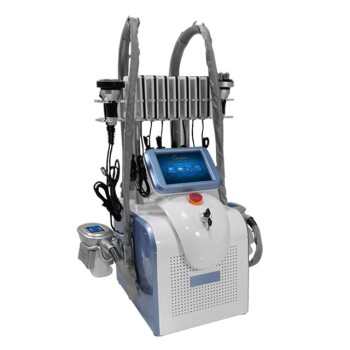
- Cryolipolysis Fat Freezing Cavitation Lipo Laser Machine
- Cryolipolysis Fat Freezing Machine with Cavitation and Laser Lipolysis
- Cryolipolysis Fat Freezing Machine Cavitation Lipo Laser Machine
- Cryolipolysis Fat Freezing Machine and Ultrasonic Cavitation Device
- Cryolipolysis Fat Freezing Machine Ultrasonic Cavitation Fat Reducing Device
People Also Ask
- What are the main benefits of using a fat freezing machine? Achieve Permanent, Non-Surgical Body Sculpting
- Do fat freezing machines really work? Achieve Non-Invasive Body Contouring
- What are the potential side effects and risks associated with fat freezing? Safety Profile & Rare Risks Explained
- What is the treatment principle of cryolipolysis fat freezing? Science-Backed Fat Reduction and Body Contouring
- What is the recommended treatment course for different body parts using the cryolipolysis machine? Expert Fat Loss Tips