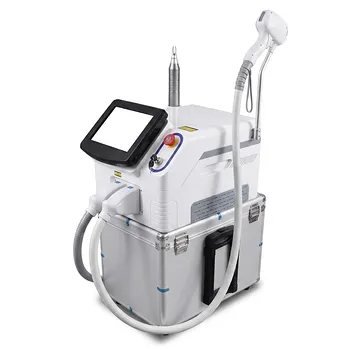
Laser protective eyewear must be matched to the exact laser system in use. Aesthetic clinics should select eyewear based on the device’s precise wavelength, operating mode, required Optical Density (OD), and applicable safety standard. Eyewear must be permanently labeled, correctly fitted, inspected before and after every treatment, and cleaned using the manufacturer’s approved method.
The central rule is simple: never use eyewear merely because it is marketed as “laser safety eyewear.” The protection must be appropriate for the specific wavelength and emission characteristics of the active device, and every person in the laser hazard area must wear it before irradiation begins.
Select Eyewear for the Laser Hazard
Match the Exact Wavelength
Protective eyewear must explicitly cover the laser’s emitted wavelength, expressed in nanometers. Eyewear intended for an 808 nm diode laser, for example, must not be assumed safe for a 1064 nm Nd:YAG, 755 nm Alexandrite, or 10,600 nm CO2 laser.
For systems with multiple wavelengths, the eyewear must protect against all wavelengths that may be emitted during the procedure. Unlabeled eyewear should not be used.
Verify the Optical Density
Optical Density describes how much laser energy the filter attenuates. An OD of 4 transmits approximately 1/10,000th of the incident radiation, while higher OD values provide greater attenuation.
OD 4 to OD 8 may be encountered in aesthetic practice, but there is no universal OD that is safe for every device. The required rating must be determined from the laser’s output, wavelength, pulse characteristics, exposure conditions, and the manufacturer’s safety documentation so that exposure remains below the applicable Maximum Permissible Exposure (MPE).
Match the Emission Mode
The eyewear rating must also correspond to how the laser operates. Continuous-wave, pulsed, and Q-switched or giant-pulse systems can present different hazards even when they use a similar wavelength.
Where applicable, verify the device and eyewear ratings against recognized requirements such as ANSI Z136.3 or DIN EN 207/208. The clinic’s laser safety officer or qualified safety professional should resolve any uncertainty before treatment begins.
Require Permanent, Legible Labels
Each pair of goggles, spectacles, or shields should permanently identify:
- The protected wavelength or wavelength range
- The Optical Density or applicable protection rating
- The manufacturer or product identification
- Relevant operating-mode or standard information, where applicable
Labels should remain legible throughout the product’s service life. A pair with missing, damaged, or ambiguous markings should be removed from service until its suitability is verified.
Protect Operators, Patients, and Staff
Use Side Protection for Operators
Operator and staff eyewear should include side shields or an equivalent design that limits peripheral exposure. This helps protect against scattered, reflected, or indirectly entering radiation.
Side protection does not compensate for an incorrect wavelength or OD rating. It is an additional design feature, not a substitute for correct optical performance.
Ensure a Secure Patient Fit
Patient goggles or shields must fit closely around the eyes and remain secure throughout treatment. Elastic bands, retention systems, or another reliable method should prevent movement and light leakage.
For facial and periorbital procedures, use dedicated opaque laser eye shields that cover the entire orbit when required by the device and treatment. Standard plastic eye shields or dark corneal protectors are not automatically safe; some can absorb laser energy and create serious thermal injury.
Control Entry to the Laser Area
Everyone within the Nominal Hazard Zone, including the operator, assistants, observers, and patient, should wear appropriately rated protection before the laser is activated. Eyewear should be readily available at the entrance to the laser room so it is put on before entry.
The clinic should also control access to the treatment area and prevent unprotected individuals from entering while the laser is capable of emission.
Follow a Per-Procedure Inspection Protocol
Inspect the Lens and Filter
Before every treatment, examine the attenuation material under adequate lighting. Look for:
- Scratches and abrasions
- Pitting or pinholes
- Crazing, cracks, or micro-cracks
- Discoloration
- Coating damage
- Signs of heat or chemical damage
- Light leaks around the lens or filter assembly
These defects can reduce attenuation or allow hazardous radiation to reach the eye. Any eyewear with questionable optical or structural integrity should be quarantined and evaluated or replaced.
Check the Frame
Confirm that the frame is mechanically stable and that the filters remain firmly seated. Look for loose components, distortion, broken hinges, gaps, or damage that could allow the eyewear to shift during treatment.
A structurally damaged frame can compromise protection even when the lens itself appears intact.
Check Straps and Retention Devices
Inspect elastic bands, head straps, and other retention systems for stretching, fraying, brittleness, or loss of tension. The eyewear must remain snug without requiring the patient or operator to hold it in place.
Replace worn retention components according to the manufacturer’s instructions. Do not improvise repairs that could change the fit or create gaps.
Inspect Again After Treatment
Repeat the inspection after each procedure, particularly when eyewear has been exposed to high-energy pulses, plume, cleaning chemicals, or physical handling. Post-use inspection can identify damage before the eyewear is returned to storage or issued to another patient.
Clean and Store Eyewear Correctly
Clean After Every Use
Sanitize reusable eyewear after every patient according to the manufacturer’s cleaning procedure. Use only approved solutions, contact times, temperatures, and wiping methods.
Abrasive materials, incompatible solvents, excessive heat, or aggressive wiping can scratch lenses or degrade specialized absorbing and reflective coatings.
Prevent Cross-Contamination
Use a cleaning workflow that separates used eyewear from disinfected eyewear. Allow items to dry fully before storage, and avoid placing cleaned lenses directly on contaminated surfaces.
Patient eye shields should receive particular attention because they contact the face and may be exposed to makeup, skin oils, treatment products, or bodily fluids.
Store to Prevent Damage
Store eyewear in a clean, dry, protected location where lenses cannot rub against hard surfaces. Avoid leaving goggles exposed to direct sunlight, excessive heat, chemicals, or equipment that could crush or deform them.
Keep different wavelength ratings clearly separated and identified. This reduces the risk of selecting the wrong pair when a clinic operates several laser systems.
Document the Protocol
Maintain an Eyewear Register
Record the eyewear assigned to each laser system, including its wavelength coverage, OD, product identifier, purchase date, and replacement status. The register should make it possible to determine quickly whether a pair is approved for a particular device.
This is especially important in clinics using diode, Nd:YAG, Alexandrite, CO2, IPL, or other systems with different emission profiles.
Train the Clinical Team
Staff should know how to read the eyewear label, identify the matching laser, perform the inspection, clean the item, and remove defective equipment from service. Training should cover the fact that blink reflexes and ordinary sunglasses do not provide adequate protection.
Invisible infrared wavelengths and ultrashort laser pulses can cause injury before a person can react. Eye protection must therefore be treated as a procedural control, not a matter of personal judgment.
Review Manufacturer and Safety Requirements
The clinic’s written protocol should incorporate the laser manufacturer’s instructions, the eyewear manufacturer’s limitations, and applicable laser safety standards. A qualified laser safety officer should review the selection and required OD when equipment, accessories, treatment parameters, or operating modes change.
Understanding the Trade-offs
Higher OD Is Not Automatically Better
A higher OD generally provides greater attenuation, but eyewear must still be suitable for the laser’s wavelength and operating mode. Excessively dark or inappropriate filters may impair visibility, affect treatment precision, or create a false sense of security.
The correct choice is the minimum validated protection that meets the hazard assessment, while also allowing the operator to work safely and accurately.
One Pair May Not Cover Every Device
Multi-wavelength eyewear can be useful when it is specifically rated for all relevant emissions. However, broader coverage should never be inferred from appearance or product marketing.
A clinic operating several lasers may need separate, clearly labeled eyewear sets. Mixing them or storing them together without identification increases the risk of a wavelength mismatch.
Inspection Does Not Replace Replacement
Routine inspection detects visible or obvious damage, but it cannot prove that a filter’s attenuation remains within specification after severe exposure, aging, chemical damage, or an impact. Follow the manufacturer’s replacement interval and discard criteria.
When the eyewear’s history, rating, or condition is uncertain, it should not be used for a patient or staff member.
Eye Protection Does Not Eliminate Other Controls
Protective eyewear is one part of a complete laser safety program. Clinics should also use controlled access, warning signs, appropriate room design, trained operators, procedural controls, and protection against reflected or scattered radiation.
Eyewear should never be used to justify unsafe positioning, unapproved treatment parameters, or inadequate laser-room controls.
Making the Right Choice for Your Goal
Use the following priorities when establishing or auditing a clinic eyewear program:
- If your primary focus is wavelength protection: Assign eyewear only after verifying the exact wavelength, operating mode, required OD, and permanent product labeling against the laser documentation.
- If your primary focus is patient safety: Use secure, procedure-appropriate shields that cover the required orbital area and prevent movement or light leakage.
- If your primary focus is staff protection: Provide side-shielded eyewear for everyone in the Nominal Hazard Zone and require it before entering or activating the laser.
- If your primary focus is infection control: Clean and sanitize reusable eyewear after every use with the manufacturer-approved method and keep clean items physically separated from used items.
- If your primary focus is regulatory readiness: Maintain an eyewear register, inspection records, staff training records, and written procedures aligned with applicable standards and manufacturer instructions.
- If your primary focus is equipment reliability: Inspect lenses, frames, straps, and coatings before and after every procedure, and remove any questionable eyewear from service immediately.
A disciplined, wavelength-specific eyewear program protects vision by making the correct choice and condition of every shield verifiable before treatment begins.
Summary Table:
| Specification | Key Requirements |
|---|---|
| Wavelength | Must match laser emission (nm) |
| Optical Density | OD 4-8, per hazard assessment |
| Operating Mode | CW, pulsed, Q-switched |
| Labeling | Permanent, with wavelength & OD |
| Side Protection | Required for operators |
| Patient Fit | Secure, close-fitting |
| Inspection | Before & after each use |
| Cleaning | Manufacturer-approved method |
| Storage | Clean, dry, protected |
| Replacement | Per manufacturer's guidelines |
Ensure your clinic meets laser safety standards with BELIS's professional-grade aesthetic equipment. Our advanced laser systems (Diode, Alexandrite, CO2, Nd:YAG, Pico) are designed with safety in mind. Contact our experts today for a free consultation on the right laser eyewear protocols that match our devices, ensuring optimal protection for your patients and staff. Get in touch with BELIS now!
Related Products
- Clinic Use IPL SHR ND YAG Laser Hair Removal RF Skin Tightening Machine
- Trilaser Diode Hair Removal Machine for Beauty Clinic Use
- 808nm Diode Laser Hair Removal Machine and Equipment with Picolaser Arm
- 808nm Diode Laser Hair Removal Machine 755+808+1064nm Mixed Wavelength Professional Equipment
- Hydrofacial Machine with Facial Skin Analyzer and Skin Tester
People Also Ask
- Why is the millisecond pulse width critical for laser hair removal on dark skin? Safety Guide for Dark Skin Treatments
- How does the combined application of laser devices and Eflornithine cream create a synergistic effect? Maximize Results
- What are the core hardware limitations of home hair removal devices? Why Professional Systems Deliver Superior Results
- Why is a 0–10 satisfaction scale used for hair management equipment? Elevate Your Clinic's Clinical Efficacy Metrics
- How many times a week should I use my laser hair removal machine? The Truth About Timing for Optimal Results