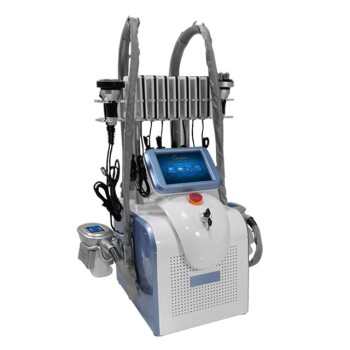
The precise coordination of spray duration and lag time constitutes the fundamental mechanism for safe and effective Dynamic Cooling System (DCS) operation. Spray duration dictates the specific quantity and intensity of the cooling agent applied to the skin, while lag time provides the critical interval required for that agent to evaporate before the laser is emitted.
In a Dynamic Cooling System, the relationship between these two parameters defines the boundary between safety and injury. You must deliver enough cryogen to chill the epidermis, yet provide enough time for it to clear the optical path to ensure uniform energy penetration.
Controlling Cooling Intensity via Spray Duration
Regulating Cryogen Quantity
Spray duration is the primary control for the volume of cryogen released onto the skin. The longer the valve remains open, the greater the quantity of cooling agent delivered to the target area.
Defining Epidermal Protection
This parameter determines the intensity of epidermal cooling. By adjusting the duration, you directly manipulate how aggressively the system lowers the temperature of the superficial tissue layers to counteract thermal damage.
The Function of Lag Time
The Evaporation Window
Lag time is the delay interval between the end of the cryogen pulse and the beginning of the laser pulse. Its primary purpose is to ensure the cryogen has sufficient time and space to vaporize completely.
Optical Path Clearance
A correctly calibrated lag time clears the "visual field" for the laser. It ensures that no liquid droplets remain on the skin or in the air, allowing the laser beam to travel without obstruction.
Risks of Improper Parameter Matching
Insufficient Lag Time
If the lag time is too short relative to the spray duration, cryogen droplets may interfere with the laser path. This scattering effect disrupts the laser beam, leading to uneven energy penetration and reduced treatment efficacy.
Excessive Lag Time
Conversely, if the lag time is too long, the cooling effect dissipates before the laser energy arrives. This results in insufficient epidermal protection, significantly increasing the risk of burns or thermal injury to the superficial tissues.
The Necessity of Millisecond Precision
Because these events happen on a millisecond scale, accurate parameter matching is essential. You must synchronize the maximum cooling effect with the exact moment of laser impact to maintain patient safety across different energy levels.
Optimizing Configuration for Clinical Outcomes
To ensure the Dynamic Cooling System functions as intended, consider your specific clinical objectives when adjusting these settings:
- If your primary focus is Epidermal Safety: Prioritize a spray duration adequate enough to counteract the specific fluence (energy level) being used to prevent surface burns.
- If your primary focus is Beam Integrity: Ensure the lag time is sufficiently long to allow for full evaporation, preventing liquid cryogen from absorbing or scattering the laser energy.
The ultimate goal is a harmonious cycle where the skin is cooled, the path is cleared, and energy is delivered without interference.
Summary Table:
| Parameter | Primary Function | Clinical Impact |
|---|---|---|
| Spray Duration | Controls cryogen volume and cooling intensity | Protects the epidermis from thermal damage |
| Lag Time | Allows for cryogen evaporation and path clearance | Prevents laser scattering and ensures uniform energy delivery |
| Insufficient Lag | Laser pulse occurs before droplets vaporize | Reduces treatment efficacy due to beam interference |
| Excessive Lag | Cooling effect dissipates before laser pulse | Increases risk of superficial skin burns |
Elevate Your Clinic’s Safety with BELIS Precision Engineering
Achieving the perfect balance between patient comfort and clinical results requires advanced technology. BELIS specializes in professional-grade medical aesthetic equipment designed exclusively for premium clinics and salons. Our advanced laser systems—including Diode Hair Removal, CO2 Fractional, Nd:YAG, and Pico lasers—incorporate sophisticated cooling configurations to ensure maximum epidermal protection without compromising energy delivery.
Whether you are expanding your portfolio with HIFU, Microneedle RF, or Body Sculpting (EMSlim, Cryolipolysis), BELIS provides the reliability and innovation your practice deserves. Partner with us to access industry-leading support and specialized care devices like Hydrafacial systems and skin testers.
Ready to upgrade your treatment standards? Contact us today to discover how BELIS equipment can transform your clinical outcomes!
References
- Noah Kawika Weisberg, Steven S. Greenbaum. Pigmentary Changes After Alexandrite Laser Hair Removal. DOI: 10.1046/j.1524-4725.2003.29098.x
This article is also based on technical information from Belislaser Knowledge Base .
Related Products
- Fat Freezing Cryolipolysis Machine for Body Contouring
- Fat Freezing Cryolipolysis Machine for Body Contouring
- Cryolipolysis Fat Freezing Machine Cavitation Lipo Laser Machine
- Cryolipolysis Fat Freezing Machine with Cavitation and Laser Lipolysis
- Hydrofacial Machine with Facial Skin Analyzer and Skin Tester
People Also Ask
- What are the main benefits of using a fat freezing machine? Achieve Permanent, Non-Surgical Body Sculpting
- Do fat freezing machines really work? Achieve Non-Invasive Body Contouring
- What are the potential side effects and risks associated with fat freezing? Safety Profile & Rare Risks Explained
- What are the clinical and safety risks of using uncertified or replicate cryolipolysis body contouring equipment? Avoid hyperpigmentation and legal exposure with certified systems.
- What maintenance and service aspects are important when purchasing a fat freezing machine? Maximize ROI & Reliability