High volume loss after autologous fat transfer is primarily a blood-supply problem. Transplanted fat has no immediate circulation and must survive by diffusion until new vessels grow into it. When the graft is too large, densely packed, or placed in a poorly vascularized tissue bed, central adipocytes become ischemic and die—potentially causing 50% or more volume loss during the first year. Non-invasive body-sculpting technologies avoid this graft-survival problem because they reduce or remodel existing tissue rather than implanting fragile, ischemia-prone fat.
Core takeaway: Fat transfer attempts to preserve transplanted living cells while they establish a blood supply, making outcomes biologically variable. Non-invasive contouring uses controlled energy to affect local adipose tissue or stimulate tightening, after which the body clears cellular debris through normal inflammatory and lymphatic pathways.
Why Large Fat Grafts Lose Volume
Transplanted fat initially lacks its own circulation
After injection, each fat parcel depends on oxygen and nutrients diffusing from the surrounding recipient tissue. New capillaries must then grow into the graft through revascularization.
This survival window is especially vulnerable because diffusion supports only relatively small distances. Cells in the center of a large or tightly compressed graft may remain under-supplied for too long.
Central ischemia causes adipocyte necrosis
When oxygen delivery is inadequate, central adipocytes undergo ischemic injury and may die. The body subsequently removes the damaged tissue through inflammation, phagocytosis, and remodeling.
This process reduces the original graft volume and can produce an outcome that differs substantially from the immediate postoperative appearance.
Graft size and packing affect survival
High-volume transfers create larger diffusion distances and more areas that are vulnerable to poor perfusion. Dense placement can also increase pressure within the graft and further restrict access to the surrounding vascular network.
For this reason, fat is commonly distributed across multiple tissue planes rather than placed as one large, compact mass. Even with careful technique, survival remains variable.
The recipient bed determines the biological outcome
A well-vascularized subcutaneous layer can support graft integration more effectively than scarred, irradiated, traumatized, or otherwise compromised tissue. Tissue quality, local circulation, mechanical pressure, and the condition of the recipient site all influence retention.
Fat injected into dense dermal tissue may also produce limited structural correction compared with fat placed in an appropriate subcutaneous plane.
Other Physiological and Procedural Sources of Loss
Harvesting and injection can injure fat cells
Autologous transfer requires tissue harvesting, suction, processing, and reinjection. Each step can expose adipocytes to mechanical stress, pressure changes, and handling-related injury before they are implanted.
The transferred material therefore begins with a mixture of potentially viable adipocytes, damaged cells, stromal components, and fluid. Only part of this material can contribute to durable volume.
Inflammation accelerates resorption
A graft with substantial cell injury can provoke a stronger inflammatory response. Macrophages and other immune cells remove nonviable material, while the tissue remodels around the surviving graft.
This is a normal biological response, but it contributes to volume reduction and can make the final contour less predictable.
Fat survival is not uniform across the treatment area
Some parcels may establish circulation and persist, while others may undergo necrosis and resorption. Uneven survival can cause asymmetry, contour irregularity, undercorrection, or the need for additional sessions.
Overcorrection is sometimes used to account for expected loss, but it cannot eliminate the underlying biological variability.
Surgical trauma adds another variable
Liposuction at the donor site and reinjection at the recipient site produce edema, bruising, inflammation, and temporary changes in contour. These effects can make early results difficult to interpret and introduce additional procedural risks.
Fat transfer remains valuable when the objective is genuine structural volume reconstruction, but it is not a fully predictable volumetric process.
How Non-Invasive Technologies Avoid Graft Survival Failure
They do not depend on transplanted-cell revascularization
Cryolipolysis, radiofrequency-based systems, ultrasound-based systems, and high-intensity electromagnetic devices act on tissue that is already connected to the body’s circulation and lymphatic network.
Because no fat parcel is detached and implanted, there is no central graft that must remain alive while new blood vessels grow into it. This directly removes the main mechanism responsible for graft resorption.
Cryolipolysis affects localized adipose tissue
Cryolipolysis exposes selected subcutaneous fat to controlled cooling. The treatment is designed to injure susceptible adipocytes while limiting damage to adjacent tissue.
The body then clears affected cellular material over time through an inflammatory and lymphatic process. The result is gradual localized fat reduction rather than immediate restoration of volume.
RF and ultrasound use controlled energy delivery
Radiofrequency systems deliver thermal energy to targeted tissue, while focused ultrasound devices can use focused acoustic energy to produce thermal or mechanical effects, depending on the device and protocol.
These approaches are intended to affect adipose tissue and, in some systems, stimulate collagen remodeling or tissue tightening. They avoid the need for harvesting, processing, and reinjecting living fat.
Energy treatments preserve the surrounding tissue when properly applied
The objective is selective treatment of the target layer while limiting injury to the skin, nerves, vessels, and other structures. This allows the body’s existing microvasculature and lymphatic system to participate in tissue clearance and healing.
“Non-invasive” does not mean risk-free or biologically inactive. Safety depends on device characteristics, treatment depth, energy settings, patient selection, and operator technique.
Electromagnetic systems address a different target
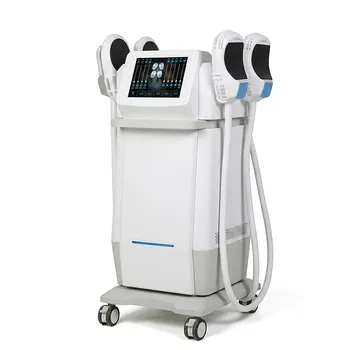
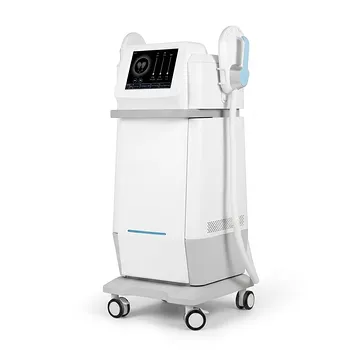
High-intensity electromagnetic muscle-stimulation systems primarily produce repeated muscle contractions. Their value is related to muscle activation, tone, or body-contour enhancement rather than transplanted-fat survival.
They can complement fat-reduction approaches, but they should not be described as a direct replacement for fat grafting when the patient needs restoration of a structural soft-tissue defect.
What “More Predictable” Actually Means
The treatment objective is reduction or remodeling
Fat transfer attempts to add durable tissue volume. Non-invasive body sculpting generally aims to reduce localized adipose tissue, improve circumference, enhance muscle definition, or tighten tissue.
Because the objective is different, these technologies should be selected for contour modification—not for replacing missing tissue in severe atrophy, deep scars, or post-traumatic defects.
Clearance occurs through existing biological pathways
After controlled adipocyte injury, residual material is processed through local inflammation and normal clearance mechanisms. The tissue is not required to generate a new blood supply to keep an implanted fat mass alive.
This makes the mechanism more standardized than graft retention, although individual responses still vary.
Results are gradual rather than immediate
The body requires time to remove damaged cellular material and remodel treated tissue. Patients should therefore evaluate results after the appropriate biological interval rather than comparing a final non-invasive outcome with the immediate fullness of a fresh fat graft.
Understanding the Trade-offs
Non-invasive treatment cannot replace major volume reconstruction
Energy-based contouring can reduce localized fat or improve tissue definition, but it does not reliably recreate a missing subcutaneous or subaponeurotic volume layer.
Patients with significant structural deficits may still require surgical reconstruction, including fat transfer or another volumizing procedure.
Over-treatment can create contour defects
Excessive fat reduction in one region can produce depressions, surface irregularities, or abrupt transitions between treated and untreated areas. Removed adipocytes do not simply regenerate in response to over-treatment.
Conservative treatment planning and attention to the deep subcutaneous layer help reduce this risk.
Lymphatic clearance is not an unlimited process
The body’s clearance mechanisms are central to the intended effect, but they do not make every form of adipocyte disruption safe. Invasive hypotonic lipotomy, for example, can leave cellular debris and free fatty acids that may contribute to fat necrosis, infection, abscess, burns, or worsening contour deformity.
This is one reason controlled, device-specific protocols are preferable to unmonitored tissue disruption.
Device categories are not interchangeable
“RF cavitation,” focused ultrasound, cryolipolysis, HIFU, and electromagnetic stimulation use different physical mechanisms and target different tissue layers. Claims about efficacy, depth, clearance, and safety must therefore be tied to the specific device and approved indication.
A clinic should not assume that results or safety parameters from one technology apply to another.
Skin tightening is a separate benefit
HIFU and some RF systems can target deeper dermal or fibromuscular layers to promote collagen remodeling and tightening. That may improve laxity, but tightening is not equivalent to adding fat volume.
The correct treatment depends on whether the primary problem is excess fat, lax skin, weak muscle definition, or true tissue loss.
How to Apply This to a Treatment Decision
The central question is whether the patient needs volume added or existing tissue reshaped.
- If your primary focus is structural volume restoration: Consider autologous fat transfer or another reconstructive strategy, while accounting for revascularization limits, donor-site surgery, variable retention, and the possibility of repeat treatment.
- If your primary focus is localized fat reduction: Consider a properly selected non-invasive modality that targets adipose tissue without requiring transplanted-cell survival.
- If your primary focus is skin laxity or facial rejuvenation: Evaluate focused ultrasound or RF-based tissue-tightening systems, recognizing that collagen remodeling differs from volumetric augmentation.
- If your primary focus is muscle definition: Consider electromagnetic muscle stimulation where clinically appropriate, rather than treating it as a substitute for fat removal or structural reconstruction.
- If your primary focus is safety and repeatability: Favor conservative, device-specific protocols performed by qualified practitioners, with realistic expectations about gradual results and individual variability.
The practical distinction is simple: fat grafting depends on living tissue survival, while non-invasive contouring works by controlled remodeling of tissue that already has an established blood supply.
Summary Table:
| Factor | Impact on Fat Transfer | Non-Invasive Alternative |
|---|---|---|
| Blood supply | Transplanted fat lacks circulation; large grafts become ischemic | No graft; existing tissue has intact circulation |
| Graft size | Larger grafts have higher necrosis risk | Not applicable; no graft size limit |
| Recipient bed | Poor vascularization reduces survival | Not applicable; tissue remains in place |
| Inflammation | Immune response resorbs damaged fat | Controlled inflammation aids clearance |
| Uniformity | Variable survival leads to uneven results | More uniform energy delivery |
| Surgical trauma | Harvesting/injection injuries | No surgical trauma |
Elevate Your Practice with BELIS' Advanced Body Sculpting Solutions
At BELIS, we specialize in professional-grade medical aesthetic equipment designed exclusively for clinics and premium salons. Our portfolio includes cryolipolysis, RF, HIFU, electromagnetic muscle stimulation, and more—each engineered to deliver the predictable results your clients expect.
Whether you're a distributor seeking new revenue streams or a clinic owner aiming to expand your offerings, our devices offer:
- Reduced risk by avoiding graft survival issues
- Gradual, natural-looking results that align with modern client preferences
- Comprehensive support including OEM/ODM, certifications, and reliable supply
Take the next step: Contact us today to discover how BELIS can enhance your practice and delight your clients.
Related Products
- EMSlim RG Laser Body Sculpting and Slimming Machine
- EMS Body Sculpting Slimming Machine EMSlim Body Slimming Machine
- EMSlim Neo Nova Body Sculpting EMS Sculpting Machine
- EMS Body Sculpting Machine for Body Slimming and Sculpting
- EMSlim Body Slimming Machine for Muscle Building and Beauty
People Also Ask
- How long does it take to see results from EMSlim? A Realistic Timeline for Lasting Body Contouring
- Can I do EMSlim everyday? Why Daily Sessions Can Hinder Your Results
- How do these treatments improve muscle definition? Unlock the Science of Advanced Body Sculpting
- How does this body contouring treatment achieve muscle toning and shaping? Unlock High-Efficiency Sculpting Results
- Value of EMSlim & Cryolipolysis for Acne with Obesity? Improve Metabolic Health and Results