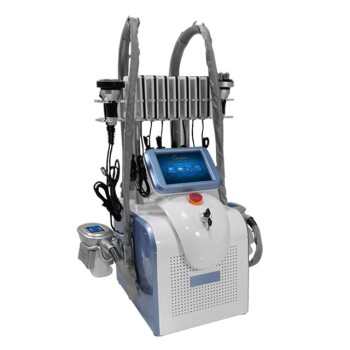
Cryotherapy relies on the physical principle of rapid thermal transfer to induce a phase change in cellular fluids. By applying extreme cold via agents like liquid nitrogen, the equipment causes water within and surrounding the cells to freeze instantly, creating ice crystals that physically destroy the diseased tissue associated with Actinic Cheilitis.
Cryotherapy eliminates diseased tissue by turning cellular water into ice crystals through extreme temperature reduction. This physical ablation triggers vascular stasis and cell death, though it requires precise control to prevent lasting cosmetic damage.
The Mechanism of Action
Ice Crystal Formation
The core physical process involves the rapid freezing of water. Cryotherapy equipment introduces a refrigerant, such as liquid nitrogen, to the targeted area.
This extreme drop in temperature forces both intracellular (inside the cell) and extracellular (outside the cell) water to solidify. The formation of these ice crystals is the primary agent of destruction.
Cellular Disruption and Apoptosis
The presence of sharp ice crystals physically damages the cell structure. This mechanical stress compromises the cell membrane and internal organelles.
According to the primary reference, this damage leads to cell death (apoptosis). The physical trauma renders the diseased cells unable to survive or replicate.
Inducing Vascular Stasis
Beyond direct cellular damage, the freezing process affects the local blood supply. The extreme cold causes vascular stasis, effectively stopping blood flow to the treated area.
This deprivation of blood supply contributes further to the death of the diseased tissue, ensuring the lesion is fully ablated.
Understanding the Trade-offs
The Risk of Imprecise Cooling
While cryotherapy is effective for localized lesions, it is a destructive physical process. The margin for error regarding application time is narrow.
Potential for Cosmetic Damage
If the cooling times are not precisely controlled, the damage can extend beyond the diseased tissue into healthy layers.
This can result in postoperative hyperpigmentation (darkening of the skin) or permanent scarring. The physical ablation must be aggressive enough to kill the disease but controlled enough to preserve appearance.
Making the Right Choice for Your Goal
When evaluating the use of cryotherapy for Actinic Cheilitis, consider your primary objective to determine the approach.
- If your primary focus is understanding the pathology: Recognize that the destruction is caused by the physical phase change of water into ice crystals, which disrupts cell integrity.
- If your primary focus is clinical application: Prioritize the precise management of cooling times to balance effective ablation with the prevention of scarring and pigment changes.
Cryotherapy offers a potent physical solution for tissue elimination, provided the thermal intensity is managed with exact precision.
Summary Table:
| Physical Mechanism | Biological Impact | Clinical Outcome |
|---|---|---|
| Rapid Thermal Transfer | Intracellular/Extracellular freezing | Instant cellular destruction |
| Phase Change | Ice crystal formation | Mechanical membrane rupture |
| Vascular Stasis | Blood flow cessation | Deprivation-induced cell death |
| Controlled Ablation | Targeted tissue removal | Preservation of healthy tissue |
Elevate Your Clinic with Precision Cryotherapy Solutions
At BELIS, we understand that clinical excellence requires more than just equipment—it requires precision. As a professional-grade medical aesthetic provider, we specialize in advanced systems designed for clinics and premium salons. Whether you are treating specific conditions or seeking the latest in body sculpting (Cryolipolysis, EMSlim) or advanced laser systems (Pico, Nd:YAG, Diode), our technology ensures optimal patient outcomes with minimal downtime.
Why partner with BELIS?
- Advanced Safety: Precise thermal control to prevent scarring and hyperpigmentation.
- Comprehensive Portfolio: From HIFU and Microneedle RF to specialized skin testers and Hydrafacial systems.
- Global Quality Standards: Equipment built for durability and professional clinical results.
Ready to upgrade your practice with industry-leading technology? Contact us today to receive a customized equipment consultation!
References
- Preena Shah, Rui Albuquerque. Actinic cheilitis: guidance on monitoring and management in primary care. DOI: 10.1051/mbcb/2023029
This article is also based on technical information from Belislaser Knowledge Base .
Related Products
- Cryolipolysis Fat Freezing Machine Cavitation Lipo Laser Machine
- Fat Freezing Cryolipolysis Machine for Body Contouring
- Cryolipolysis Fat Freezing Machine and Ultrasonic Cavitation Device
- Cryolipolysis Fat Freezing Machine Ultrasonic Cavitation Fat Reducing Device
- Cryolipolysis Fat Freezing Cavitation Lipo Laser Machine
People Also Ask
- What are the main benefits of using a fat freezing machine? Achieve Permanent, Non-Surgical Body Sculpting
- What is the recommended treatment course for different body parts using the cryolipolysis machine? Expert Fat Loss Tips
- What is the recommended treatment duration for different body parts using the cryolipolysis machine? Expert Timing Tips
- What are the potential side effects and risks associated with fat freezing? Safety Profile & Rare Risks Explained
- Do fat freezing machines really work? Achieve Non-Invasive Body Contouring