
For pure hair reduction efficacy, the Alexandrite laser is frequently cited as the most powerful and effective technology available. Studies often show it achieves a higher percentage of hair clearance in fewer sessions compared to other laser types, but this performance is critically dependent on having the right combination of light skin and dark hair.
The "best" laser for hair removal is not a single machine, but a specific technology precisely matched to your skin tone and hair color. The most effective laser for one person can be ineffective or even dangerous for another.
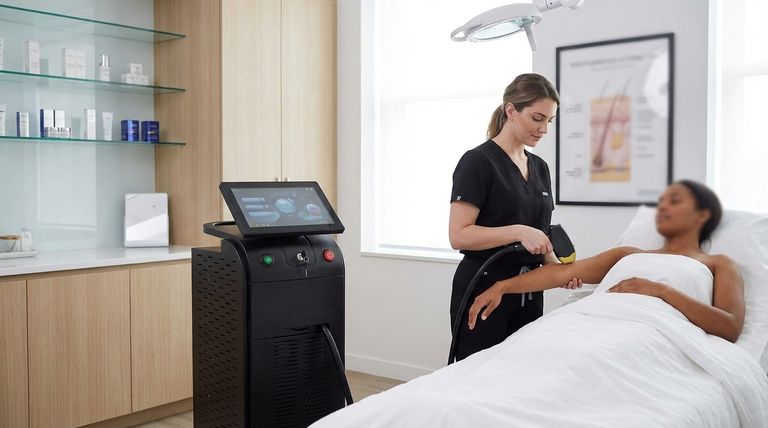
How Laser Hair Removal Actually Works
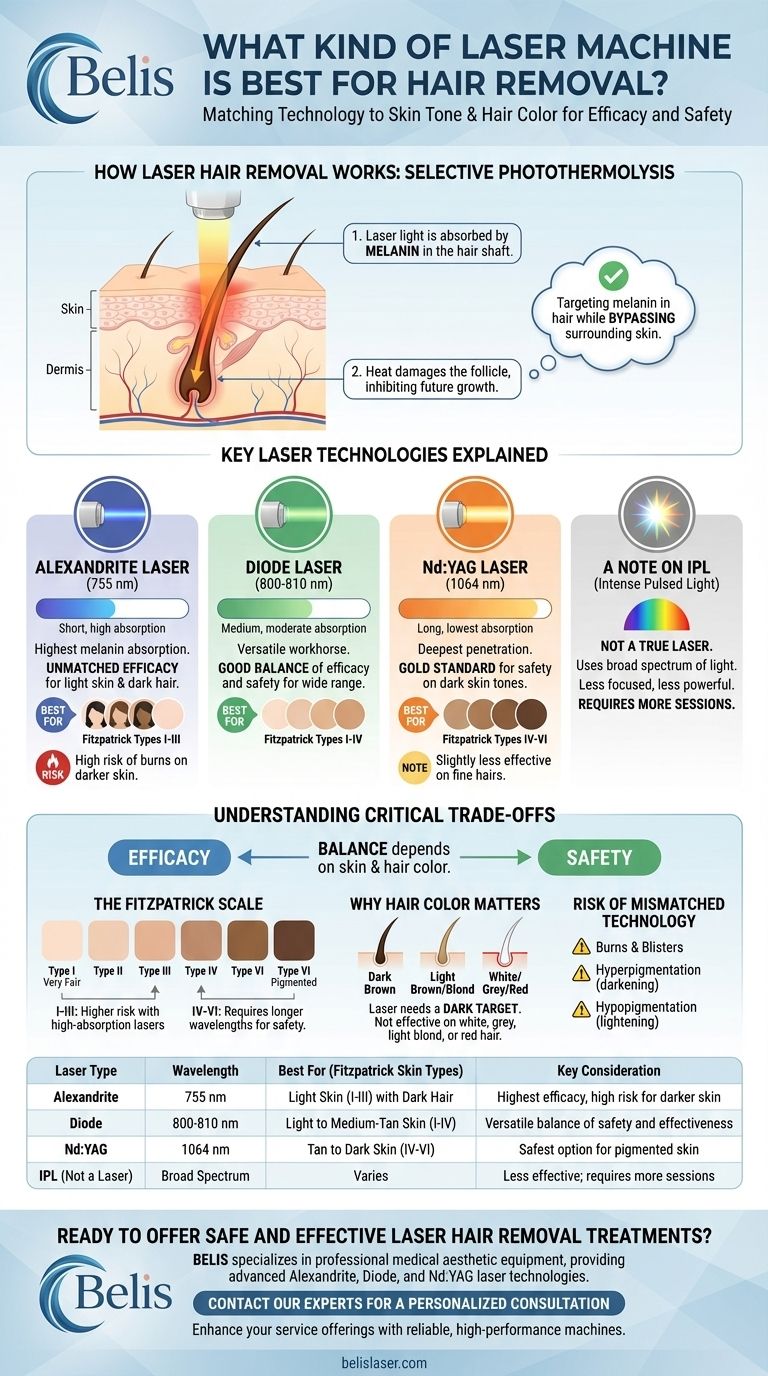
The Principle of Selective Photothermolysis
Laser hair removal operates on a principle called selective photothermolysis. In simple terms, the laser emits a single, concentrated wavelength of light that is specifically absorbed by a target.
Melanin is the Target
In the case of hair removal, that target is melanin, the pigment that gives hair (and skin) its color. The light energy is absorbed by the melanin in the hair shaft, converted into heat, and travels down to the follicle, damaging it and inhibiting future growth.
For the treatment to be both safe and effective, the laser must target the melanin in the hair follicle while bypassing the melanin in the surrounding skin.
The Key Laser Technologies Explained
Different lasers use different wavelengths of light. This wavelength determines how deeply the laser penetrates and how strongly it is absorbed by melanin, making each type suitable for different people.
Alexandrite Laser (755 nm)
This is the laser with the highest melanin absorption rate. Its high energy absorption makes it incredibly effective at destroying hair follicles.
Because it targets melanin so aggressively, it is the undisputed powerhouse for individuals with very light skin (Fitzpatrick types I-III) and dark hair. However, this also makes it the most dangerous for darker skin tones, as the laser can't easily distinguish between melanin in the hair and melanin in the skin, creating a high risk of burns and discoloration.
Diode Laser (800-810 nm)
The Diode laser offers a versatile middle ground. Its longer wavelength penetrates deeper into the skin and has a more moderate melanin absorption rate compared to the Alexandrite.
This balance makes it a safe and effective workhorse for a wider range of skin tones, typically from light to medium-tan skin (Fitzpatrick types I-IV). It provides a good blend of efficacy and safety for the majority of patients.
Nd:YAG Laser (1064 nm)
The Nd:YAG has the longest wavelength of the common hair removal lasers. This allows it to penetrate the deepest into the skin, bypassing the epidermis (the top layer of skin) where most of a person's skin pigment is located.
It has the lowest melanin absorption rate, making it the gold standard for safely treating dark and very dark skin tones (Fitzpatrick types IV-VI). While it may be slightly less effective on fine hairs compared to other lasers, its safety profile for pigmented skin is unmatched.
A Note on IPL (Intense Pulsed Light)
IPL is often marketed alongside laser hair removal, but it is not a true laser. It uses a broad spectrum of light with multiple wavelengths, making it less focused and less powerful. While it can reduce hair, it typically requires more sessions and is generally considered less effective than a true laser treatment performed by a professional.
Understanding the Critical Trade-offs
Choosing a laser is a balance of efficacy and safety, and this balance is dictated almost entirely by your skin and hair color.
The Fitzpatrick Scale: Your Most Important Metric
Professionals use the Fitzpatrick scale to classify skin tone based on its reaction to UV light. It ranges from Type I (very fair, always burns) to Type VI (deeply pigmented, never burns). An honest assessment of your Fitzpatrick type is the first step in any safe laser hair removal journey.
Why Hair Color Matters
The laser needs a dark target. Because the energy is absorbed by melanin, laser hair removal is not effective on white, grey, light blond, or red hair. There is simply not enough pigment in the hair shaft to absorb the laser's energy and destroy the follicle.
The Risk of Mismatched Technology
Using the wrong laser for your skin type is the single biggest risk in hair removal. Using a high-absorption laser like an Alexandrite on dark skin can lead to serious adverse effects, including:
- Burns and blisters
- Hyperpigmentation (darkening of the skin)
- Hypopigmentation (lightening of the skin)
This is why the operator's expertise is just as important as the machine they use.
Making the Right Choice for Your Skin and Hair
A consultation with a qualified dermatologist or technician is non-negotiable. They will assess your skin and hair to determine the safest and most effective path forward.
- If your primary focus is maximum efficacy on fair skin (Fitzpatrick I-III): The Alexandrite laser offers the fastest results for those with dark hair and very light skin.
- If you have light to medium skin (Fitzpatrick I-IV) and want a versatile option: The Diode laser provides an excellent balance of safety and strong results for a wide range of patients.
- If you have tan, brown, or dark skin (Fitzpatrick IV-VI): The Nd:YAG laser is the only choice to ensure a safe treatment that minimizes risk to the surrounding skin.
- If you have very light, white, grey, or red hair: You are unfortunately not a good candidate for laser hair removal, as the technology relies on pigment that your hair lacks.
Ultimately, the best laser is the one that is safest for you.
Summary Table:
| Laser Type | Wavelength | Best For (Fitzpatrick Skin Types) | Key Consideration |
|---|---|---|---|
| Alexandrite | 755 nm | Light Skin (I-III) with Dark Hair | Highest efficacy, but high risk for darker skin |
| Diode | 800-810 nm | Light to Medium-Tan Skin (I-IV) | Versatile balance of safety and effectiveness |
| Nd:YAG | 1064 nm | Tan to Dark Skin (IV-VI) | Safest option for pigmented skin |
| IPL (Not a Laser) | Broad Spectrum | Varies | Less effective; requires more sessions |
Ready to offer safe and effective laser hair removal treatments?
Choosing the right equipment is critical for your clients' safety and your clinic's reputation. BELIS specializes in professional medical aesthetic equipment, providing the advanced Alexandrite, Diode, and Nd:YAG laser technologies discussed here.
We help medical aesthetics clinics and premium beauty salons enhance their service offerings with reliable, high-performance machines tailored to their client base.
Let's find the perfect laser solution for your business. Contact our experts today for a personalized consultation.
Visual Guide
Related Products
- Diode Laser SHR Trilaser Hair Removal Machine for Clinic Use
- Diode Tri Laser Hair Removal Machine for Clinic Use
- Clinic Use IPL SHR ND YAG Laser Hair Removal RF Skin Tightening Machine
- Clinic Diode Laser Hair Removal Machine with SHR and Trilaser Technology
- Trilaser Diode Hair Removal Machine for Beauty Clinic Use
People Also Ask
- What is the working mechanism of professional-grade Diode laser equipment? Master the Physics of Selective Photothermolysis
- What are the characteristics of the Diode laser for hair removal? The Gold Standard for Deep Efficacy and Skin Safety
- What are the technical advantages of using industrial-grade Diode lasers? Superior Precision for Professional Clinics
- What advancements have occurred in laser hair removal machine technology? Trends Shaping Modern Aesthetic Clinics
- How long does a single laser hair removal session take? Fast & Effective Treatments for Your Busy Schedule


















