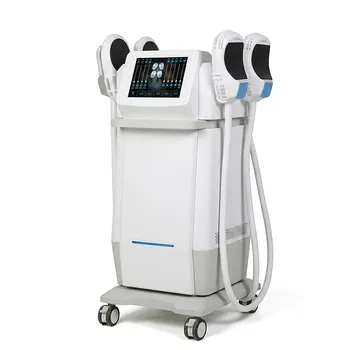
Volumetric RF deep dermal heating rejuvenates the submental and neck region by delivering controlled thermal energy into the deep dermis and subdermal tissue. This heat produces immediate collagen contraction and initiates fibroblast activity, collagen remodeling, and long-term neocollagenesis. When RF pulses are strategically stacked over the submental area, the treatment can also support localized adipose remodeling while tightening lax skin; combining it with platysmal neuromodulation addresses both tissue laxity and dynamic muscle pull.
The key benefit is a multimodal improvement in the lower face: RF tightens and remodels skin, while stacked treatment may improve submental fullness and neuromodulation can reduce downward traction from hyperactive platysmal bands.
How Submental and Neck Aging Develops
Skin laxity
Aging reduces dermal density and elasticity, allowing the skin of the neck and submental region to become thinner, looser, and less well supported.
This laxity can blur the cervicomental angle and reduce the sharpness of the jawline.
Platysmal band activity
The platysma is a superficial neck muscle that can become hyperkinetic with age. Its contraction may accentuate vertical bands, lower-face tension, and downward pull on the jawline.
RF does not primarily relax this muscle. That function is addressed with neuromodulation when clinically appropriate.
Submental fullness
Localized fat beneath the chin can further obscure mandibular definition. Skin tightening alone may improve the envelope but may not fully correct fullness caused by adipose tissue.
This is why treatment planning should distinguish skin laxity, muscle activity, and fat volume rather than treating them as one problem.
How Volumetric RF Produces Its Effects
Controlled deep heating
Radiofrequency energy creates an electric field that produces molecular movement within the dermis and subcutaneous tissue. The resulting resistance generates controlled, volumetric heating rather than acting only at the skin surface.
The intended treatment effect is thermal stimulation of the deep dermis and subdermal matrix, with temperature and energy delivery controlled according to the specific device and protocol.
Immediate collagen contraction
Thermal exposure alters the structure of existing collagen fibers, causing partial contraction and reorganization. This can produce an early tightening effect in treated skin.
The immediate result is not the same as the final outcome. Early contraction is followed by a longer biological remodeling process.
Long-term neocollagenesis
The thermal response activates fibroblast activity and a controlled wound-healing response. Over the following weeks, this promotes production and remodeling of collagen, improving dermal density, firmness, and elasticity.
This delayed remodeling explains why results generally continue to develop after the treatment session rather than appearing entirely at once.
Why Stacked RF Pulses Matter
More concentrated submental treatment
Applying multiple RF pulses over the submental region concentrates thermal exposure in an area where lax skin and fullness commonly coexist.
The objective is to deliver sufficient energy for dermal tightening while maintaining appropriate control of tissue temperature and patient comfort.
Potential adipose remodeling
When energy reaches the subdermal tissue, the thermal effect may support a localized lipolytic or adipose-remodeling response. This can contribute to improvement in submental fullness.
The degree of fat reduction is device-, protocol-, and patient-dependent. RF should not automatically be considered equivalent to a dedicated fat-removal procedure.
Improved contour definition
As the skin contracts and the submental tissue is remodeled, the transition between the chin, jawline, and neck can become more defined.
The practical benefit is refinement of the submental contour, not simply surface smoothing.
Why Combining RF With Platysmal Neuromodulation Can Help
Reducing dynamic muscle pull
Neuromodulators can relax hyperkinetic platysmal bands and reduce their dynamic contribution to neck banding and downward traction.
This addresses a mechanical component that thermal skin tightening alone cannot directly correct.
Complementary mechanisms
RF primarily targets skin and subdermal tissue quality, including contraction and collagen remodeling. Neuromodulation primarily targets muscle activity.
Using both approaches can therefore address static laxity and dynamic platysmal movement through different mechanisms.
More complete lower-face rejuvenation
When appropriate for the patient, the combined approach may improve neck smoothness, jawline definition, and submental contour more comprehensively than either modality alone.
It is best viewed as a coordinated treatment strategy, not as proof that every patient requires combination therapy.
Understanding the Trade-offs
RF is not a substitute for surgery in every case
Volumetric RF is most relevant to patients with mild to moderate laxity and selected submental fullness. Significant excess skin, pronounced fat accumulation, or severe platysmal changes may require other interventions.
Energy-based treatment may improve tissue quality without removing substantial redundant skin.
Results are gradual and variable
Immediate contraction can occur, but collagen remodeling develops over time. The final degree of tightening depends on age, skin quality, tissue thickness, treatment settings, and the underlying cause of laxity.
Patients should expect refinement rather than a guaranteed surgical-level lift.
Thermal control is essential
RF must be delivered with appropriate energy, temperature monitoring, treatment technique, and attention to anatomy. Excessive or poorly controlled heating can increase the risk of pain, burns, uneven results, or unwanted tissue effects.
The device’s validated protocol and the operator’s clinical judgment are more important than pursuing the highest possible temperature.
Fat reduction may be limited
Although stacked pulses may promote localized adipose remodeling, the magnitude of submental fat reduction is not uniform. Patients with a dominant fat component may need a treatment specifically designed for adipose reduction.
Accurate assessment prevents disappointment from using skin-tightening treatment to solve a primarily volume-related problem.
Making the Right Choice for Your Goal
The appropriate plan depends on whether the dominant issue is lax skin, platysmal activity, submental fullness, or a combination of these factors.
- If your primary focus is skin tightening: Use volumetric RF to stimulate immediate collagen contraction and longer-term dermal remodeling in the neck and submental region.
- If your primary focus is submental contouring: Consider stacked RF treatment as a potential way to combine tissue tightening with localized adipose remodeling, while recognizing that results vary.
- If your primary focus is platysmal banding: Assess whether neuromodulation is appropriate, because RF does not directly relax hyperkinetic platysmal muscle.
- If your primary focus is comprehensive lower-face rejuvenation: A coordinated RF and neuromodulator strategy may address skin laxity, muscle pull, and contour definition more completely than a single modality.
The most effective treatment plan begins by identifying which anatomical mechanism—skin laxity, muscle activity, fat volume, or their combination—is primarily responsible for the patient’s concern.
Summary Table:
| Mechanism | Description | Benefit |
|---|---|---|
| Controlled Deep Heating | RF energy produces volumetric heating in deep dermis and subdermal tissue. | Stimulates targeted thermal response, improving skin quality. |
| Immediate Collagen Contraction | Heat alters collagen fibers, causing partial contraction. | Provides early tightening effect. |
| Long-term Neocollagenesis | Fibroblast activation leads to collagen remodeling over weeks. | Improves dermal density, firmness, and elasticity. |
| Stacked RF Pulses | Multiple pulses concentrate thermal energy in submental region. | Supports localized adipose remodeling and improved contour. |
| Combination with Neuromodulation | Addressed dynamic platysmal pull via muscle relaxation. | Offers more complete rejuvenation by targeting both static and dynamic factors. |
Are you ready to enhance your aesthetic practice with advanced RF solutions? At BELIS, we specialize in professional-grade medical aesthetic devices designed exclusively for clinics and premium salons. Our portfolio includes cutting-edge laser and RF systems, body sculpting, and skin rejuvenation equipment. Discover how our technology can help you achieve outstanding results for your patients (or clients). Contact us today for expert guidance and to explore our full range of innovative products tailored to elevate your treatments.
Related Products
- Ultrasonic Cavitation Radiofrecuency Machine for Body Slimming
- 22D HIFU Machine Device Facial Machine
- Ultrasonic Cavitation Machine Lipo Laser Device
- 4D 12D HIFU Machine Device for Skin Tightening
- 4D 12D HIFU Machine Device for Skin Tightening and Lifting
People Also Ask
- What are the pros and cons of the ultrasonic cavitation slimming treatment? A Guide to Painless Body Contouring
- Does an ultrasonic cavitation machine also tighten the skin? Achieve Total Body Contouring with RF Synergy
- How does radiofrequency technology in slimming machines promote fat reduction? The Science of Non-Invasive Sculpting
- How should one prepare for an ultrasonic cavitation appointment? 5 Essential Tips for Maximum Fat Loss Results
- What areas of the body are targeted for ultrasonic cavitation? Best Zones for Effective Body Contouring