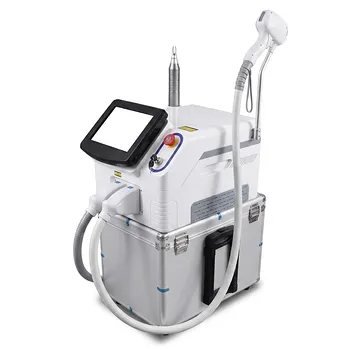
IPL is a second-line option for resistant epidermal melasma, not a first-line treatment. It can reduce excess epidermal pigment when topical therapy or mild peels have produced inadequate results, particularly when clinicians use pigment-targeting filters such as 570 nm or 590–615 nm. Because IPL also exposes melanin-containing skin cells to broadband energy, conservative treatment planning is essential to prevent inflammation, post-inflammatory hyperpigmentation (PIH), and recurrence.
IPL can be useful for carefully selected, refractory epidermal melasma, but its safety depends on controlling both light delivery and inflammation. Adequate pre-conditioning, conservative fluence, cooling, patch testing, and rigorous photoprotection are central to reducing PIH risk.
Where IPL Fits in Melasma Management
Topical therapy remains the foundation
Melasma is relapse-prone and involves complex epidermal and dermal pigment biology. Topical melanogenesis-suppressing agents, including hydroquinone, tretinoin, or triple-combination formulations, generally remain the first-line approach.
IPL should usually be considered only after appropriate topical treatment, and sometimes mild chemical peeling, has failed to provide adequate control.
IPL is most relevant to resistant epidermal disease
IPL can photo-bleach or thermally disrupt excess melanin in the epidermis and, to some extent, superficial dermal pigment. It may also improve overall pigment uniformity and associated vascular or textural changes because its broad spectrum can affect both melanin and abnormal micro-vessels.
Its role is therefore best understood as an adjunctive or second-line treatment, rather than a replacement for ongoing pigment suppression.
Filter selection affects treatment specificity
Targeted cut-off filters, such as 570-nm or 590-to-615-nm filters, can help focus the treatment spectrum toward pigment-related targets. The appropriate filter and settings depend on the patient’s skin type, melasma pattern, pigment depth, and device characteristics.
Broadband light is not inherently selective enough to eliminate risk. Epidermal melanin can absorb unintended energy, producing thermal irritation that stimulates further pigmentation.
How Clinicians Can Reduce PIH Risk
Pre-condition melanocyte activity
The primary reference recommends using topical melanogenesis-suppressing agents for at least six weeks before IPL. This period helps reduce melanocyte hyperactivity before the skin is exposed to light-based thermal stress.
Shorter pre-treatment periods are sometimes described in clinical protocols, but a longer preparation period may be more appropriate for melasma because the condition is highly reactive and recurrence-prone. The specific agent, duration, and tolerability should be individualized.
Choose a uniform pulse profile
Advanced IPL systems should deliver balanced spectral energy without hot spots. A uniform pulse profile reduces the chance that isolated areas receive excessive thermal energy.
Device quality is clinically relevant because uneven delivery can create localized inflammation even when the nominal fluence appears appropriate.
Use conservative fluence and pulse parameters
High-fluence monotherapy can cause thermal irritation and may increase recurrence. Low-fluence, short-pulse protocols combined with topical depigmenting therapy have been associated with better clinical outcomes than aggressive light treatment alone.
Clinicians should adjust fluence downward for patients with Fitzpatrick skin types III through VI, who are more vulnerable to treatment-induced hyperpigmentation. Treatment should prioritize a controlled biological response over immediate, dramatic pigment removal.
Cool the epidermis actively
Integrated contact cooling or cryogen spray can reduce epidermal heating during treatment. Effective cooling is particularly important when treating skin with substantial baseline melanin or when using wavelengths that may be absorbed by the epidermis.
Cooling should be used as part of the treatment protocol, not as a substitute for appropriate energy selection.
Perform a localized patch test
A preliminary test patch on a small, inconspicuous area allows the clinician to assess the patient’s inflammatory and pigmentary response before treating the full face.
The test area should be observed for both immediate reactions and delayed pigmentation. A favorable immediate response does not guarantee that PIH will not develop later.
Control inflammation after treatment
Inflammation is a key pathway through which light-based procedures can stimulate pigment production. Gentle post-treatment care, avoidance of irritating products, and appropriate clinician-directed anti-inflammatory management can reduce this risk.
If substantial acute inflammation occurs, a potent topical corticosteroid may be considered promptly under medical supervision. Routine or prolonged corticosteroid use is not appropriate because of potential adverse effects.
Enforce strict photoprotection
Broad-spectrum sunscreen and rigorous sun avoidance are essential before and after IPL. Ultraviolet exposure can reactivate melanogenesis, worsen existing melasma, and undermine the benefit of treatment.
Photoprotection should be treated as an ongoing component of melasma management rather than a temporary measure limited to the treatment date.
Combining IPL With Other Treatments
Pair light treatment with pigment suppression
IPL addresses accumulated pigment, while topical agents help downregulate ongoing melanogenesis. Combining these mechanisms may produce greater reductions in melasma severity and more durable results than using either approach alone.
Topical treatment should generally continue according to the clinician’s protocol, provided the skin barrier remains well tolerated.
Consider adjunctive LED treatment cautiously
Some clinical protocols use combined red and infrared LED exposure for approximately 15 to 20 minutes immediately after IPL to support tissue calming and reduce inflammation. This may be considered an adjunct, but it should not replace conservative IPL settings, cooling, or photoprotection.
Evidence and device protocols vary, so clinicians should avoid presenting LED as a guaranteed method for preventing recurrence.
Avoid treating every pigment problem as melasma
Melasma, PIH, drug-induced pigmentation, and other dyschromias can look similar but require different management. A thorough history should include medications and prior procedures, including potential causes of drug-induced pigmentation.
Accurate diagnosis is especially important before using energy-based treatment, which can worsen several pigmentary disorders.
Understanding the Trade-offs
IPL can worsen the condition it is intended to treat
IPL may trigger PIH, persistent darkening, or rapid recurrence because broadband light can stimulate melanocytes and inflame the skin. This risk is greater with aggressive fluences, inadequate cooling, active tanning, and darker Fitzpatrick skin types.
Patients should understand that treatment may improve visible pigment without eliminating the underlying tendency to recur.
Higher energy is not necessarily more effective
A more aggressive session may produce faster pigment disruption but also greater thermal injury. In melasma, that trade-off is often unfavorable because inflammation itself can drive additional pigmentation.
A series of conservative treatments may be safer than a single high-fluence session, particularly when combined with topical therapy.
Results are not uniform across pigment depth
IPL is most useful for appropriately selected epidermal melasma. Dermal or mixed melasma may respond less predictably, and persistent pigment after treatment does not necessarily mean that more energy is warranted.
Clinical assessment should guide whether continued topical therapy, another modality, or no further energy-based treatment is the most appropriate course.
Patient selection determines safety
Active tanning, uncontrolled melasma, a history of PIH, recent irritation, or medications associated with photosensitivity or pigmentation may increase risk. These factors should be assessed before treatment rather than managed after a complication develops.
The clinician should also set expectations around maintenance therapy and the possibility of relapse.
How to Apply This to Clinical Practice
IPL is most defensible when used within a structured pigment-control plan rather than as isolated device treatment.
- If your primary focus is treating refractory epidermal melasma: Use a targeted IPL filter and conservative, preferably low-fluence parameters as an adjunct to established topical melanogenesis suppression.
- If your primary focus is minimizing PIH in Fitzpatrick skin types III–VI: Pre-condition the skin, reduce fluence, use active epidermal cooling, perform a localized patch test, and enforce strict photoprotection.
- If your primary focus is durable improvement: Continue appropriate topical therapy and sun protection after IPL because light treatment does not remove the patient’s underlying tendency toward melanogenesis and recurrence.
- If your primary focus is avoiding treatment-related worsening: Confirm the diagnosis, review medications and prior pigment reactions, and defer or reconsider IPL when the expected risk exceeds the likely benefit.
Used selectively and conservatively, IPL can support management of resistant epidermal melasma while disciplined inflammation and pigment control keep the risk of PIH as low as possible.
Summary Table:
| Aspect | Key Points |
|---|---|
| Role of IPL | Second-line, adjunctive for resistant epidermal melasma; not first-line. |
| Filter selection | Use pigment-targeting filters (570 nm or 590–615 nm) for specificity. |
| Pre-treatment | Topical melanogenesis suppressors for at least 6 weeks to reduce melanocyte activity. |
| Treatment parameters | Conservative fluence, uniform pulse profile, adjust for skin type (III–VI). |
| Cooling | Active epidermal cooling (contact or cryogen) to protect epidermis. |
| Patch testing | Localized test to assess inflammatory and pigmentary response. |
| Post-treatment care | Control inflammation, strict photoprotection, continue topical therapy. |
| Combination | Combine with LED cautiously; avoid treating all pigment as melasma. |
For clinics seeking to integrate advanced IPL systems with optimal safety, BELIS offers professional-grade devices featuring uniform pulse profiles and integrated cooling. Our portfolio includes IPL, diode lasers, and other aesthetic technologies to enhance your melasma protocols.
Contact us today to learn how BELIS can elevate your practice with reliable, high-performance equipment and tailored support.
Related Products
- IPL SHR Hair Removal Machine for Permanent Hair Removal
- Professional IPL SHR Hair Removal Machine for Laser and IPL Hair Removal
- IPL SHR+Radio frecuency machine
- Trilaser Diode Hair Removal Machine for Beauty Clinic Use
- Clinic Use IPL SHR ND YAG Laser Hair Removal RF Skin Tightening Machine
People Also Ask
- How does an IPL SHR machine achieve long-term hair reduction compared to traditional methods? Professional Tech Guide
- How does the frequency of IPL SHR sessions compare to traditional laser hair removal? Maximize Comfort and Efficiency
- How does IPL SHR technology accommodate a wide range of skin types and hair colors? Safe Solutions for All Skin Tones
- How does the safety mechanism of IPL SHR technology protect the surrounding skin tissue? Advanced Protection Guide
- Why is the IPL SHR hair removal process described as painless and comfortable for the patient? Discover the Tech.