
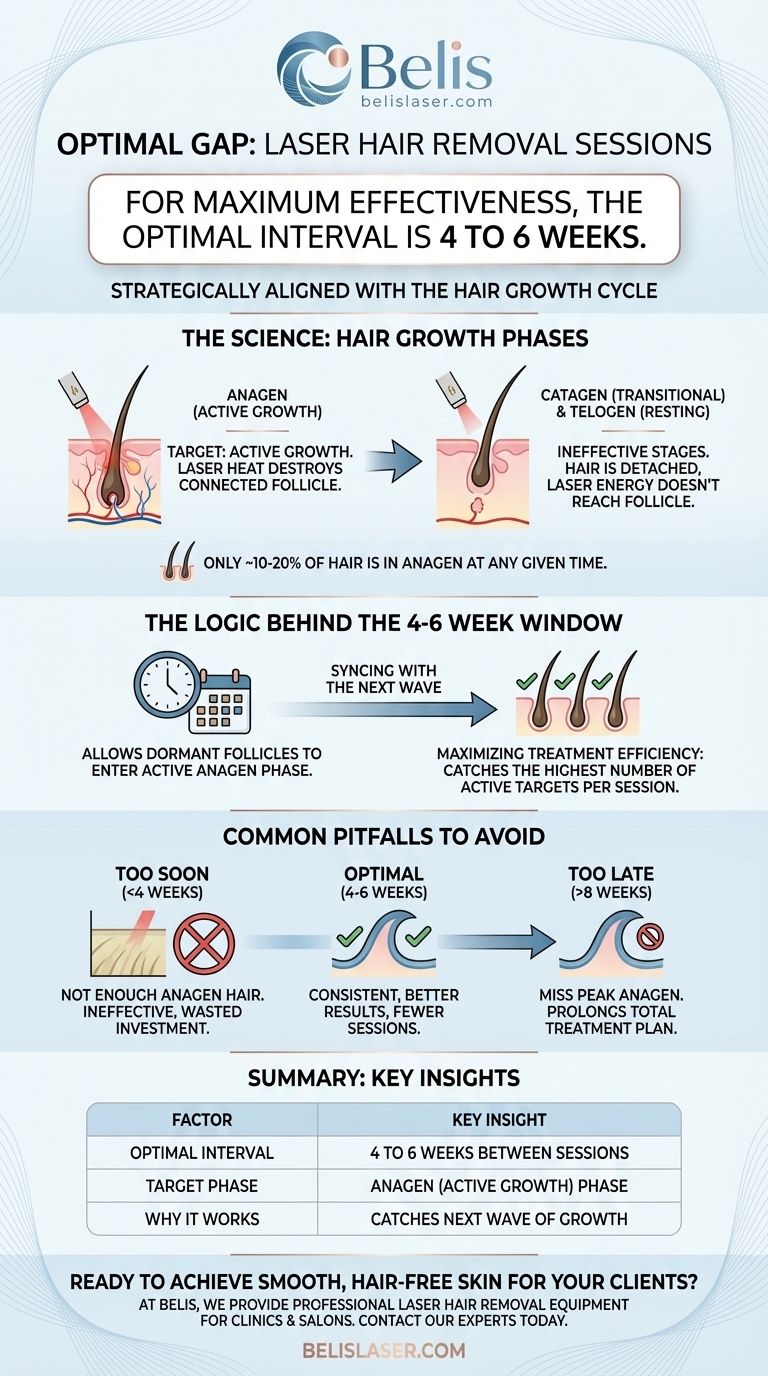
For effective laser hair removal, the optimal interval between treatments is typically four to six weeks. This timing is not arbitrary; it is strategically aligned with the natural growth cycle of your hair to ensure the laser can effectively target and disable the maximum number of follicles in each session.
The core principle to understand is this: Laser hair removal only works when the hair is in its active growth phase. The 4-6 week gap is a carefully calculated window designed to catch the next wave of hair follicles as they enter this crucial stage.

Why Timing is Everything: The Hair Growth Cycle
To understand why the 4-6 week schedule is so critical, you must first understand how hair grows. It's a three-phase cycle, and the laser is only effective during one specific phase.
Understanding the Target: The Anagen (Growth) Phase
The Anagen phase is the active growth stage. During this time, the hair is physically attached to the papilla (the base of the follicle), which supplies it with blood.
The laser targets the pigment in the hair shaft. The heat from the laser travels down the shaft to the base, destroying the follicle and preventing future growth. This entire process relies on the hair being connected to the follicle.
The Ineffective Stages: Catagen and Telogen
The Catagen (transitional) and Telogen (resting) phases are when the hair detaches from the follicle and eventually sheds.
If a hair follicle is in one of these dormant stages during treatment, the laser's energy cannot reach and destroy the follicle. The treatment on that specific hair will be completely ineffective.
The Staggered Nature of Hair Growth
Crucially, not all of your hair is in the same phase at the same time. At any given moment, only a fraction of your hair (typically 10-20%) is in the active Anagen phase.
This is the fundamental reason why multiple sessions are required to achieve significant hair reduction. Each session targets the current crop of active follicles.
The Logic Behind the 4-6 Week Interval
The 4-6 week window is the scientifically-backed sweet spot for scheduling your treatments for maximum impact.
Syncing with the Next Wave
This interval provides enough time for a significant portion of the follicles that were previously dormant (in the Catagen or Telogen phase) to cycle into the active Anagen phase.
Essentially, you are waiting for a new set of targets to become available for the laser.
Maximizing Treatment Efficiency
By adhering to this schedule, each session can disable the highest possible number of active follicles. This consistent approach leads to better results in fewer overall sessions.
Common Pitfalls to Avoid
Deviating from the recommended schedule can compromise your results and ultimately cost you more time and money.
The Problem with Treating Too Soon
Treating earlier than four weeks is counterproductive. There simply won't be enough new hair follicles that have entered the Anagen phase yet.
You will be treating a mostly empty field, rendering the session far less effective and wasting the investment for that appointment.
The Risk of Waiting Too Long
While less damaging than going too early, waiting too long (e.g., 8+ weeks) can also disrupt the process.
You may miss the peak Anagen phase for that particular cycle of hair. This can desynchronize the treatment plan and may extend the total number of sessions required to catch all the hair cycles.
Making the Right Choice for Your Treatment
Consistency is the single most important factor in the success of your laser hair removal journey after choosing a qualified provider.
- If your primary focus is maximum effectiveness: Strictly adhere to the 4-6 week schedule your provider recommends to ensure you target each wave of hair growth.
- If you have to reschedule an appointment: It is almost always better to book it a week or two later rather than trying to squeeze it in earlier.
- If you are treating different body areas: Be aware that your provider may suggest slightly different intervals, as hair on the face often cycles faster than hair on the body.
Following a consistent and professionally guided schedule is the key to achieving the best possible results from your investment.
Summary Table:
| Factor | Key Insight |
|---|---|
| Optimal Interval | 4 to 6 weeks between sessions. |
| Target Phase | Anagen (active growth) phase. |
| Why it Works | Catches the next wave of follicles entering the growth stage. |
| Risk of Early Treatment | Fewer active follicles, reduced effectiveness. |
| Risk of Late Treatment | May miss the growth peak, prolonging total treatment time. |
Ready to achieve smooth, hair-free skin with a perfectly timed treatment plan?
At BELIS, we specialize in providing medical aesthetics clinics and premium beauty salons with professional, high-performance laser hair removal equipment. Our technology ensures precise targeting of hair follicles during the critical growth phase, maximizing treatment efficacy for your clients.
Let us help you deliver superior results and build client satisfaction. Contact our experts today to find the ideal laser solution for your business.
Visual Guide
Related Products
- Clinic Diode Laser Hair Removal Machine with SHR and Trilaser Technology
- Diode Tri Laser Hair Removal Machine for Clinic Use
- Trilaser Diode Hair Removal Machine for Beauty Clinic Use
- Diode Laser SHR Trilaser Hair Removal Machine for Clinic Use
- IPL SHR Hair Removal Machine for Permanent Hair Removal
People Also Ask
- How can aesthetic practitioners prevent side effects like paradoxical hair regrowth and thermal burns when performing diode laser hair removal on dark skin? Master safe protocols for Fitzpatrick IV–VI skin.
- How do broad-spectrum noncoherent light sources compare to single-wavelength diode lasers in aesthetic hair removal applications? Find the best fit for your clinic.
- What are the advantages of the Constant Motion Technique? Elevate Your Clinic's Laser Hair Removal Results
- Why can traditional high-energy pulse (HR) modes lead to adverse skin reactions? Understanding Thermal Injury Risks
- Why is a 40-ms pulse width critical for Fitzpatrick skin types III-V? The Key to Safe & Effective Laser Hair Removal







