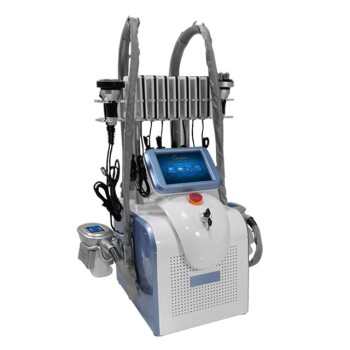
Optimal skin tightening during laser lipolysis relies on precise thermal endpoints. To achieve significant collagen denaturation and tightening, you must reach an internal tissue temperature between 48°C and 50°C. Simultaneously, you must maintain an external skin temperature between 38°C and 41°C to ensure the procedure remains safe and effective.
The key to successful laser lipolysis lies in thermal differential: generating high internal heat to restructure collagen while maintaining a lower, safe temperature on the skin's surface to prevent thermal injury.
The Mechanics of Thermal Targets
Internal Temperature: The Driver of Tightening
The primary goal of the internal temperature setting is collagen denaturation.
While fat liquefaction (lipolysis) may occur at lower temperatures, the structural change required for skin tightening only occurs at higher thresholds.
Clinical data indicates that an internal range of 48°C to 50°C is necessary to trigger the remodeling process that results in firmer skin.
External Temperature: The Safety Monitor
External temperature monitoring serves as a critical safety gauge during the procedure.
The surface of the skin must remain significantly cooler than the subcutaneous tissue to avoid burns or scarring.
A range of 38°C to 41°C on the exterior has been identified as the safe zone, indicating effective internal heating without compromising the integrity of the epidermis.
Understanding the Trade-offs
The Risk of Insufficient Heat
If the internal temperature fails to reach the 48°C threshold, the procedure may successfully melt fat but fail to tighten the skin.
This often leads to dissatisfaction in patients with skin laxity, as the volume reduction without tightening can result in sagging.
The Danger of Excessive Heat
Exceeding the upper limits—50°C internally or 41°C externally—drastically increases the risk of adverse events.
Pushing beyond these thermal endpoints moves the tissue from controlled denaturation to uncontrolled thermal necrosis (cell death) and skin burns.
Precision is required to stay within the effective window without crossing into the zone of injury.
Achieving Clinical Success
For practitioners aiming to balance safety with aesthetic outcomes, adherence to these thermal parameters is non-negotiable.
- If your primary focus is Maximum Skin Tightening: Ensure your internal instrumentation registers a sustained temperature of 48-50°C to fully denature collagen.
- If your primary focus is Patient Safety: Rigorously monitor surface temperatures to ensure they never exceed 41°C, regardless of internal readings.
Mastering this thermal gap is the defining factor in achieving a contoured, tightened result without complications.
Summary Table:
| Temperature Type | Optimal Range | Clinical Objective |
|---|---|---|
| Internal Tissue | 48°C - 50°C | Collagen denaturation & skin contraction |
| External Surface | 38°C - 41°C | Epidermal safety & thermal monitoring |
| Below Threshold | < 48°C (Internal) | Fat liquefaction without significant tightening |
| Above Limit | > 41°C (External) | High risk of thermal injury and scarring |
Elevate Your Clinic's Aesthetic Precision with BELIS
Maximize patient results and safety by integrating world-class medical aesthetic technology into your practice. BELIS specializes in providing premium salons and clinics with professional-grade systems designed for precision and durability.
Our extensive portfolio includes:
- Advanced Laser Systems: Diode Hair Removal, CO2 Fractional, Nd:YAG, and Pico lasers for versatile skin and body treatments.
- Body Sculpting Solutions: EMSlim, Cryolipolysis, and RF Cavitation to complement your lipolysis services.
- Specialized Care: HIFU, Microneedle RF, Hydrafacial systems, and advanced skin testers.
Ready to upgrade your equipment and provide superior skin tightening results? Contact our experts today to find the perfect solution for your clinic.
Related Products
- Cryolipolysis Fat Freezing Cavitation Lipo Laser Machine
- Cryolipolysis Fat Freezing Machine with Cavitation and Laser Lipolysis
- Cryolipolysis Fat Freezing Machine Cavitation Lipo Laser Machine
- Cryolipolysis Fat Freezing Machine and Ultrasonic Cavitation Device
- Cryolipolysis Fat Freezing Machine Ultrasonic Cavitation Fat Reducing Device
People Also Ask
- What are the main benefits of using a fat freezing machine? Achieve Permanent, Non-Surgical Body Sculpting
- Do fat freezing machines really work? Achieve Non-Invasive Body Contouring
- What are the potential side effects and risks associated with fat freezing? Safety Profile & Rare Risks Explained
- What is the treatment principle of cryolipolysis fat freezing? Science-Backed Fat Reduction and Body Contouring
- What is the recommended treatment course for different body parts using the cryolipolysis machine? Expert Fat Loss Tips