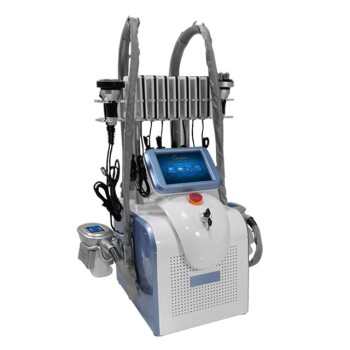
Cryogen spray cooling systems operate by ejecting a high-velocity burst of low-temperature liquid refrigerant onto the skin immediately before a laser pulse, extracting thermal energy through rapid evaporation. While this mechanism is critical for protecting the epidermis, the turbulent airflow created by the spray aggressively disperses laser-ablated smoke and nanoparticles, dramatically increasing the concentration of hazardous airborne particulates within the treatment room.
Cryogen cooling facilitates high-energy treatments by lowering skin surface temperatures, but it simultaneously increases airborne particle concentrations to over 100 times background levels, making high-power smoke evacuation mandatory.
The Operational Mechanics of Cryogen Cooling
Rapid Evaporative Heat Extraction
The fundamental principle of these systems is the pre-cooling of the treatment site. A liquid refrigerant is sprayed onto the skin's surface milliseconds before the laser fires.
Upon contact, the liquid undergoes rapid evaporation. This phase change absorbs significant heat from the epidermis, creating an immediate cooling effect that counteracts the thermal energy delivered by the laser.
Altering Thermal Distribution
By introducing this cooling agent, the system fundamentally changes how heat is distributed across the skin layers.
This process significantly shortens the "Active Time"—the duration the skin spends at high, potentially damaging temperatures. This thermal management is validated by analyzing temperature curves, which show a marked reduction in peak surface heat when cooling is applied.
Clinical Benefits and Application
Enabling Deep Vascular Treatment
The primary clinical advantage of cryogen cooling is the ability to use higher energy settings safely.
Because the surface is actively cooled, practitioners can deliver the intense laser energy required to treat deep vascular lesions. The cooling spray acts as a thermal shield, preventing the heat intended for deep targets from damaging the superficial skin layers.
Prevention of Epidermal Injury
Without cooling, high-energy laser pulses pose a significant risk of epidermal burns.
Cryogen spray mitigates this risk by keeping the epidermal temperature below the threshold for thermal injury, ensuring that the laser affects only the targeted lesion beneath the surface.
Understanding the Trade-offs: Environmental Impact
Aggressive Particle Dispersion
While beneficial for the patient's skin, the physics of cryogen spray creates a significant challenge for the clinical environment.
The high-velocity flow of the refrigerant disturbs the air surrounding the treatment site. This turbulence captures the smoke and nanoparticles generated by laser ablation and scatters them aggressively throughout the room.
Quantifiable Air Quality Degradation
Research indicates that the use of cryogen spray cooling has a massive impact on indoor air quality.
Studies show that during these procedures, airborne particle concentrations can spike to over 100 times the normal background level. This creates a dense, invisible cloud of contaminants that persists in the treatment environment.
The Mandate for Smoke Evacuation
Due to the aggressive dispersion of particles, standard ventilation is insufficient.
To maintain a safe environment for staff and patients, the use of high-power smoke evacuators is not optional; it is a mandatory safety requirement to capture particulates before the cryogen spray scatters them.
Making the Right Choice for Your Goal
To safely integrate cryogen cooling into your practice, you must balance clinical efficacy with strict environmental controls.
- If your primary focus is Clinical Efficacy: Leverage cryogen cooling to reduce thermal "Active Time," enabling the use of higher laser fluences needed for deep vascular lesions without causing surface burns.
- If your primary focus is Staff Safety: You must deploy high-power smoke evacuation systems directly at the treatment site to counteract the 100-fold increase in airborne particle concentration caused by the spray's turbulence.
By anticipating the aerodynamic disruption caused by these systems, you can secure the thermal benefits for the patient without compromising the respiratory health of the clinical team.
Summary Table:
| Feature | Mechanism/Impact | Clinical Value |
|---|---|---|
| Cooling Principle | Rapid liquid evaporation (pre-cooling) | Prevents epidermal burns & thermal injury |
| Energy Delivery | Enables higher laser fluences | Facilitates treatment of deep vascular lesions |
| Air Quality | Turbulent dispersion of particles | 100x increase in airborne particulate levels |
| Safety Need | High-velocity refrigerant flow | Mandatory high-power smoke evacuation |
Elevate Your Clinic’s Standards with BELIS Professional Solutions
At BELIS, we specialize in professional-grade medical aesthetic equipment designed exclusively for high-end clinics and premium salons. Our advanced laser systems—including Diode Hair Removal, CO2 Fractional, Nd:YAG, and Pico lasers—are engineered to deliver superior results while prioritizing patient safety.
Whether you are looking for precision skin care devices like Microneedle RF and HIFU or body sculpting solutions such as EMSlim and Cryolipolysis, BELIS provides the technical expertise and high-performance equipment your practice needs to thrive. Don't compromise on safety or efficacy; let us help you integrate the latest thermal management and specialized care technology into your service menu.
Contact our specialists today to upgrade your treatment technology!
References
- E. Victor Ross, Scott A. Davenport. Airborne particulate concentration during laser hair removal: A comparison between cold sapphire with aqueous gel and cryogen skin cooling. DOI: 10.1002/lsm.22772
This article is also based on technical information from Belislaser Knowledge Base .
Related Products
- Fat Freezing Cryolipolysis Machine for Body Contouring
- Fat Freezing Cryolipolysis Machine for Body Contouring
- Cryolipolysis Fat Freezing Machine with Cavitation and Laser Lipolysis
- Cryolipolysis Fat Freezing Machine Cavitation Lipo Laser Machine
- Hydrofacial Machine with Facial Skin Analyzer and Skin Tester
People Also Ask
- What are the main benefits of using a fat freezing machine? Achieve Permanent, Non-Surgical Body Sculpting
- Do fat freezing machines really work? Achieve Non-Invasive Body Contouring
- What are the potential side effects and risks associated with fat freezing? Safety Profile & Rare Risks Explained
- What are the clinical and safety risks of using uncertified or replicate cryolipolysis body contouring equipment? Avoid hyperpigmentation and legal exposure with certified systems.
- What maintenance and service aspects are important when purchasing a fat freezing machine? Maximize ROI & Reliability