Picosecond lasers generally offer more confined, lower-collateral LIOB than nanosecond Q-switched systems. Their shorter pulses reach the nonlinear intensity needed for optical breakdown through multiphoton ionization while using lower pulse energy, producing a smaller focal plasma and cavitation bubble. Clinically, this can mean more precise dermal micro-injury, less surrounding thermal and mechanical damage, and a lower risk of pigmentary complications—although outcomes still depend on wavelength, fluence, spot size, pulse stacking, skin type, and treatment technique.
Core takeaway: For LIOB, picosecond technology improves spatial confinement and reduces unwanted heat and shock propagation. Its main clinical value is not simply “more power,” but the ability to create controlled micro-plasma effects with less collateral injury.
Why Picosecond Pulses Change the Breakdown Mechanism
Nonlinear ionization at high peak intensity
Picosecond pulses concentrate energy into a much shorter time interval. At the focal point, this can produce electric-field intensities sufficient for multiphoton ionization and plasma formation without requiring the high total pulse energy often associated with longer pulses.
The relevant distinction is that LIOB is a nonlinear optical process, not ordinary surface heating. Breakdown occurs only where the beam is tightly focused and the threshold intensity is exceeded.
Reduced dependence on heat accumulation
Nanosecond Q-switched lasers can also produce optical breakdown under appropriate conditions, but their longer pulse duration allows more time for energy to diffuse and contribute to thermal effects.
Picosecond pulses limit the time available for thermal diffusion during energy deposition. This supports a more photomechanical and plasma-mediated effect rather than broad heat accumulation in surrounding tissue.
Smaller and more localized cavitation effects
The plasma generated during LIOB can form a rapidly expanding cavitation bubble and acoustic disturbance. Because picosecond systems can achieve breakdown with lower overall pulse energy, they can produce a smaller cavitation volume and reduce propagation of mechanical stress beyond the intended target.
This is particularly relevant when the goal is a controlled dermal micro-injury rather than extensive tissue disruption.
The Technical Advantages for LIOB
Higher spatial precision
LIOB is created at the beam focus, so the effective treatment volume is governed by focusing conditions and the breakdown threshold.
Picosecond operation helps confine the event to a small focal region, improving the ability to place multiple micro-injuries at a controlled depth while preserving adjacent tissue.
Lower collateral thermal injury
A shorter pulse width reduces the opportunity for heat to spread into neighboring structures. This can lower the risk of unwanted epidermal or dermal heating compared with treatment parameters that generate substantial thermal load.
The advantage is not that picosecond lasers produce no heat. Rather, the thermal component is more limited and localized when the system is correctly selected and operated.
Lower pulse-energy requirement for breakdown
The primary reference identifies a key physical advantage: picosecond systems can reach the intensity required for plasma formation with lower total pulse energy than nanosecond systems.
Lower energy per breakdown event can reduce the size of the cavitation bubble and the magnitude of collateral acoustic and mechanical effects.
More controllable micro-injury patterns
Because the breakdown event is highly localized, clinicians can adjust focal depth, pulse energy, spacing, and treatment density to control the overall tissue response.
This can be useful when the intended result depends on fractional remodeling or localized dermal stimulation, where excessive overlap or excessive energy can increase inflammation and complications.
Clinical Advantages in Pigment and Tattoo Treatment
Less surrounding tissue disruption
For pigment-related treatments, picosecond pulses can generate a strong localized photomechanical effect while limiting heat exposure to surrounding tissue.
This can help reduce the risk of burns, blistering, textural changes, and scarring compared with treatment settings that produce greater thermal accumulation.
Finer pigment fragmentation
When picosecond systems are used for tattoo or pigmented-lesion treatment, their short pulse duration can produce intense mechanical stress within pigment particles.
The particles may be fragmented into smaller debris, which can improve biological clearance. However, the degree of improvement depends on the pigment composition, wavelength, fluence, spot size, lesion depth, and the patient’s immune response.
Lower risk of pigmentary complications
Reduced thermal injury can be clinically important for patients prone to post-inflammatory hyperpigmentation (PIH) or hypopigmentation.
This may be especially valuable in darker skin types, but picosecond treatment is not risk-free. Conservative parameters, test spots, appropriate wavelength selection, and careful follow-up remain necessary.
Potentially fewer treatment sessions
More efficient pigment fragmentation may allow some tattoos or pigmentation problems to clear in fewer sessions.
This should be treated as a potential advantage rather than a universal result. Certain tattoo colors, dense deposits, cosmetic pigments, melasma, and recurrent pigmentation can remain difficult regardless of pulse duration.
Why LIOB Can Be Clinically Preferable
Controlled dermal remodeling
In LIOB-based procedures, the objective is often to create microscopic, spatially separated injury sites within the dermis.
Picosecond systems can support this approach with a relatively narrow zone of direct effect and less collateral damage, potentially improving the balance between remodeling stimulus and recovery burden.
Shorter and more predictable recovery
Less thermal and mechanical injury generally means less erythema, edema, crusting, or prolonged inflammation.
Recovery still varies with treatment density and energy. A high-density or overly aggressive picosecond treatment can produce substantial inflammation despite the shorter pulse duration.
Broader applicability across skin types
The reduced thermal burden can make picosecond platforms attractive for a wider range of skin tones than strongly heat-dependent approaches.
Nevertheless, skin type does not eliminate the need for risk management. The clinician must still account for baseline pigmentation, tanning, medication use, prior inflammation, and the condition being treated.
Understanding the Trade-offs
Picosecond does not automatically mean safer
Pulse duration is only one treatment variable. Wavelength, fluence, spot size, repetition rate, focal depth, pulse overlap, and operator technique can materially change the risk profile.
A poorly selected picosecond parameter can still cause burns, pigmentary change, excessive inflammation, or scarring.
“Photothermal versus photomechanical” is an oversimplification
Nanosecond Q-switched lasers are often described as thermal devices, but this is incomplete. They can produce significant photoacoustic and photomechanical effects, particularly when treating pigment.
The more accurate comparison is that picosecond systems generally favor highly confined nonlinear and mechanical effects with less thermal diffusion, while nanosecond systems typically expose tissue to a longer period of energy deposition and may generate more heat under comparable treatment conditions.
Stronger local effect does not mean greater collateral damage
A picosecond pulse can create intense local stress and efficient pigment fragmentation because of its high peak power.
At the same time, the total energy and interaction volume can be controlled to reduce damage outside the target. The clinically useful advantage is therefore high local efficacy with limited peripheral injury, not simply a stronger shockwave everywhere.
LIOB is not identical to pigment fragmentation
LIOB refers to plasma formation and associated cavitation at a focused location. Pigment removal may involve additional mechanisms, including particle absorption, photoacoustic stress, tissue response, and immune clearance.
Claims about fewer sessions or superior clearance should therefore be tied to a specific indication and protocol rather than assumed from the pulse duration alone.
Making the Right Choice for Your Goal
The appropriate platform should be selected according to the desired tissue effect, not pulse duration in isolation.
- If your primary focus is precise LIOB-based dermal remodeling: Favor a picosecond platform that provides reliable focal control, adjustable depth, and well-validated treatment parameters.
- If your primary focus is pigment or tattoo clearance: Consider picosecond technology for its potential to fragment pigment more efficiently with less collateral thermal injury, while matching wavelength and fluence to the pigment.
- If your primary focus is treating darker skin types: Prioritize low thermal burden, conservative parameter escalation, test spots, and rigorous PIH prevention rather than relying on the “picosecond” label alone.
- If your primary focus is minimizing recovery and complications: Choose the system and protocol that limit unnecessary heat, cavitation overlap, and treatment density; correct technique matters as much as pulse duration.
Picosecond lasers are most valuable for LIOB when their high peak intensity and short thermal exposure are used to create precise, controlled micro-injury rather than indiscriminate tissue disruption.
Summary Table:
| Advantage | Picosecond Lasers | Nanosecond Q-Switched Lasers |
|---|---|---|
| Pulse Duration | Shorter, more confined energy deposition | Longer, allows more thermal diffusion |
| Plasma Initiation | Multiphoton ionization at lower pulse energy | Requires higher pulse energy for breakdown |
| Thermal Injury | Reduced, more localized | Increased risk of thermal damage |
| Cavitation Effect | Smaller, more localized | Larger, more mechanical stress |
| Pigment Fragmentation | Finer, may improve clearance | Coarser, potentially slower clearance |
| Risk of Pigmentary Complications | Lower (especially in darker skin types) | Higher |
| Recovery Time | Potentially shorter and more predictable | Longer due to more inflammation |
Elevate your practice with BELIS's advanced picosecond laser systems, designed for optimal LIOB precision and patient safety. Whether you're a clinic or premium salon, our cutting-edge technology ensures superior results with minimal downtime. Partner with us to expand your service offerings and exceed client expectations. Contact our experts today at Contact Us to learn how BELIS can power your business growth.
Related Products
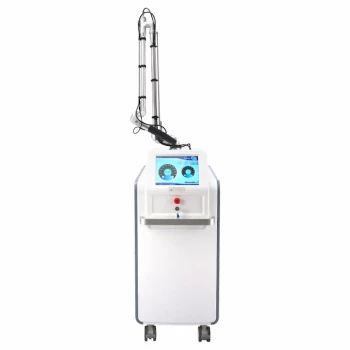
- Pico Laser Tattoo Removal Machine Picosure Picosecond Laser Machine
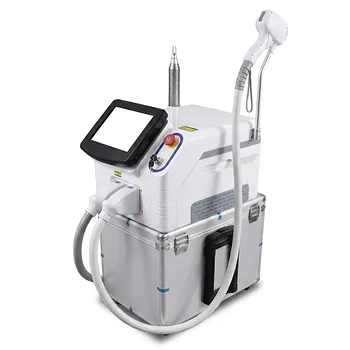
- 808nm Diode Laser Hair Removal Machine and Equipment with Picolaser Arm
People Also Ask
- How does a laser tattoo removal machine work? Shattering Ink with Precision Light
- Why is the precise adjustment of energy density, or fluence, critical during picosecond laser tattoo removal procedures?
- How does the pulse duration of a laser system influence the efficacy of tattoo ink clearance? Master Picosecond Tech
- What role does picosecond laser equipment play in tattoo removal? Faster Results & Advanced Precision
- What are the technical advantages of using Pico Laser or Nd:YAG Laser systems? Achieve Faster, Safer Tattoo Removal