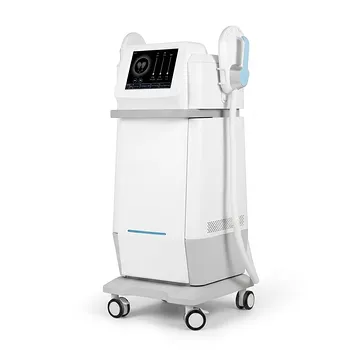
The key distinction is the clinical objective: surgical fat transfer adds volume and restores structure, while non-invasive technologies such as Cryolipolysis and RF Cavitation primarily reduce localized fat or refine body contours. Fat transfer requires tissue harvesting, injection, healing, and clinical planning; non-invasive treatments avoid incisions and anesthesia but generally produce more modest, gradual changes. Neither approach is a substitute for general weight-loss treatment.
Surgical fat transfer is a reconstructive or augmentative procedure for meaningful volume deficits. Non-invasive body sculpting is a contouring approach for localized adipose reduction, mild tissue remodeling, or muscle conditioning.
Match the Treatment to the Clinical Problem
When the problem is missing volume
Autologous fat transfer uses a patient’s own adipose tissue as a graft. Fat is harvested, processed, and injected into areas requiring augmentation, such as facial asymmetries, thoracic defects, contour depressions, or other structural volume deficits.
The intended result is addition and reshaping, not simply reduction of an existing fat deposit.
When the problem is localized excess fat
Cryolipolysis and related non-invasive contouring technologies are intended for localized subcutaneous fat deposits in patients who are generally near a stable body weight. They can refine areas that remain disproportionate despite diet and exercise.
These treatments are not designed to remove large fat volumes or correct major deformities.
When the problem is mild laxity or muscle conditioning
Radiofrequency-based systems may provide thermal tissue remodeling and some degree of skin-tightening effect, depending on the device and treatment protocol. Systems that combine ultrasound cavitation with RF use acoustic energy for localized contouring and RF energy for tissue heating.
EMS-based systems have a different primary purpose: muscle stimulation and conditioning, rather than fat grafting or surgical fat removal.
How the Procedures Work
Surgical fat transfer requires a donor site
Fat transfer begins with invasive harvesting, commonly through manual or power-assisted liposuction. The harvested tissue is then prepared and placed into the recipient area through injection.
Because both the donor and recipient sites must heal, treatment involves postoperative management, possible compression garments, and recovery time. Larger or more complex defects may require staged injection sessions.
Cryolipolysis reduces selected fat deposits
Cryolipolysis applies controlled cooling to a localized fat layer. Cold-sensitive adipocytes are damaged, and the body gradually clears the affected cells over time.
The treatment is therefore delayed and incremental. It does not provide the immediate volume change or structural control associated with surgical excision or grafting.
RF and cavitation address contour, not reconstruction
Ultrasound cavitation uses acoustic energy to affect targeted fat tissue, while radiofrequency delivers heat to tissue and may support collagen remodeling or skin tightening. The clinical effect depends on the device, treatment settings, anatomy, and patient response.
These modalities can support non-surgical contour refinement, but they cannot create a graft or replace missing tissue volume.
Compare the Clinical Applications
Structural correction favors fat transfer
Fat transfer is appropriate when the objective is to restore a depression, improve asymmetry, or augment a region that lacks sufficient volume. It offers the practitioner direct control over where additional tissue is placed.
This makes it fundamentally different from a device that reduces or remodels existing tissue.
Mild-to-moderate contour concerns favor non-invasive treatment
Non-invasive technologies are better suited to patients seeking modest reduction of localized fat, limited improvement in contour, or some degree of skin and muscle conditioning. They are particularly relevant when the patient wants to avoid surgical incisions and extended recovery.
The expected outcome should be framed as refinement, not major reshaping.
Severe tissue excess may require surgery
Large-volume adiposity, extensive hanging skin-fat aprons, severe skin laxity, or major structural deformation may exceed the appropriate scope of non-invasive devices. Such presentations may require surgical evaluation, including liposuction, excisional procedures, or reconstructive techniques.
Device-based treatment should not be used to avoid referral when the underlying problem is substantial tissue excess or compromised skin elasticity.
Understanding the Trade-offs
Fat transfer offers structural control but adds surgical risk
Surgical fat harvesting and transfer can address defects that energy-based devices cannot. However, it involves anesthesia or local anesthetic techniques, incisions, postoperative healing, donor-site morbidity, and risks associated with surgery.
Potential concerns include infection, contour irregularity, scarring, tissue injury, and unpredictable graft retention. Complex or extensive cases may require more than one session.
Non-invasive treatment reduces recovery burden but limits the result
Cryolipolysis, RF, and cavitation generally avoid surgical incisions, anesthesia, major fluid shifts, and prolonged postoperative downtime. This makes them useful for patients who prioritize convenience or are unwilling to undergo surgery.
Their limitations are equally important: results are usually localized, gradual, and moderate. They do not provide the same capacity for large-volume removal, augmentation, or correction of major structural abnormalities.
“Non-invasive” does not mean universally risk-free
Energy-based treatments still require appropriate patient selection, device-specific training, and attention to contraindications. Poor application, unsuitable anatomy, or unrealistic expectations can lead to inadequate results or adverse tissue effects.
Claims of guaranteed results, zero risk, or universal suitability should be treated cautiously. Clinical assessment remains essential.
Treatment mechanisms should not be conflated
Cryolipolysis, ultrasound cavitation, RF tissue heating, and electromagnetic muscle stimulation are different technologies with different intended effects. A clinic should explain which tissue is being targeted and what outcome the device is realistically expected to produce.
Describing every modality simply as “fat destruction” obscures clinically meaningful differences in mechanism and outcome.
How to Apply This to Patient Selection
The decision should begin with the patient’s anatomy and goal rather than the availability of a particular device.
- If your primary focus is structural volume restoration: Consider surgical fat transfer when the patient has a meaningful contour depression, asymmetry, or tissue-volume deficit requiring augmentation.
- If your primary focus is localized fat reduction: Consider Cryolipolysis or another appropriately selected non-invasive modality for mild-to-moderate, well-defined fat deposits.
- If your primary focus is skin tightening or surface contour refinement: Consider RF-based treatment when tissue laxity is limited and the patient understands that improvement may be gradual and modest.
- If your primary focus is muscle conditioning: Consider EMS-based treatment as a muscle-stimulation option, while keeping its role distinct from fat grafting and surgical debulking.
- If your primary focus is major adiposity or hanging skin-fat tissue: Refer for surgical assessment rather than attempting to manage a substantial structural problem with non-invasive equipment alone.
The correct choice follows from whether the patient needs volume added, fat reduced, tissue tightened, muscle conditioned, or excess tissue surgically removed.
Summary Table:
| Aspect | Surgical Fat Transfer | Non-Invasive Body Sculpting |
|---|---|---|
| Clinical Objective | Add volume, restore structure | Reduce localized fat, refine contour, or condition muscle |
| Procedure Type | Invasive; harvesting and injection | Non-invasive; no incisions or anesthesia |
| Indications | Volume deficits, contour depressions, structural asymmetry | Localized fat deposits, mild laxity, or muscle conditioning |
| Treatment Outcome | Immediate, structural correction | Gradual, moderate refinement |
| Recovery Time | Postoperative healing required | Minimal to no downtime |
| Risks | Surgical risks (infection, scarring, graft loss) | Device-related adverse effects (uneven results, tissue damage) |
| Suitability for Severe Excess | May be appropriate for moderate deficits | Not suitable for large-volume or severe laxity |
At BELIS, we offer a comprehensive range of professional-grade aesthetic devices, including surgical fat transfer systems and non-invasive body sculpting technologies like Cryolipolysis and RF Cavitation. Whether you are a clinic or premium salon, our advanced solutions are designed to enhance your practice and patient outcomes. Contact us today to discover how our equipment can elevate your clinical offerings and drive business growth. Get in touch with our experts.
Related Products
- EMSlim RG Laser Body Sculpting and Slimming Machine
- EMS Body Sculpting Slimming Machine EMSlim Body Slimming Machine
- EMSlim Neo Nova Body Sculpting EMS Sculpting Machine
- EMS Body Sculpting Machine for Body Slimming and Sculpting
- EMSlim Body Slimming Machine for Muscle Building and Beauty
People Also Ask
- How long does it take to see results from EMSlim? A Realistic Timeline for Lasting Body Contouring
- Can I do EMSlim everyday? Why Daily Sessions Can Hinder Your Results
- How do these treatments improve muscle definition? Unlock the Science of Advanced Body Sculpting
- How does this body contouring treatment achieve muscle toning and shaping? Unlock High-Efficiency Sculpting Results
- Value of EMSlim & Cryolipolysis for Acne with Obesity? Improve Metabolic Health and Results