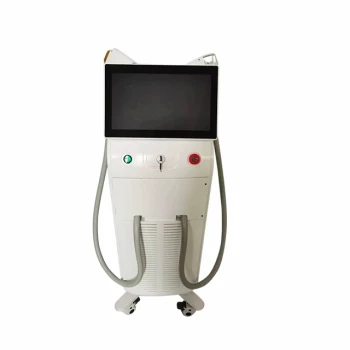
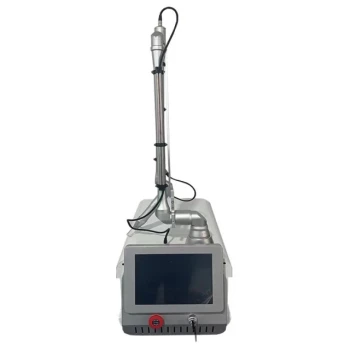
The primary advantage of picosecond lasers is their ability to shatter tattoo pigment into microscopic, dust-like fragments using shockwaves rather than heat. While traditional nanosecond lasers rely on thermal energy to break down ink, picosecond lasers utilize ultra-short pulses to create a powerful photomechanical effect. This fundamental difference results in fewer treatment sessions, higher efficacy on stubborn colors like blue and green, and a significantly lower risk of scarring or skin discoloration.
Core Insight: Picosecond technology shifts the removal mechanism from "cooking" the pigment to "pulverizing" it. By delivering energy faster than the target can heat up, it shatters ink into fine debris that the body’s immune system can flush out far more efficiently than the coarse fragments left by traditional lasers.
The Shift from Thermal to Photomechanical
The defining difference between these technologies is the duration of the laser pulse. Nanosecond lasers emit pulses in the billionths of a second (roughly 50 nanoseconds).
Ultra-Short Pulse Widths
Picosecond lasers operate significantly faster, delivering energy in trillionths of a second (typically 375-450 picoseconds). This speed is critical because it changes how the laser interacts with the ink.
The Photoacoustic Effect
Because the energy is delivered so rapidly, it generates a photomechanical (or photoacoustic) shockwave. Traditional lasers rely on a photothermal effect, effectively heating the pigment until it fractures. The picosecond laser’s shockwave shatters the pigment before significant heat can generate.
Superior Pigment Clearance
The method of destruction determines how easily the body can remove the tattoo.
The "Dust vs. Rocks" Distinction
Traditional nanosecond lasers break ink particles into "pebbles" or "rocks." Picosecond lasers utilize their immense pressure to pulverize ink into fine, dust-like fragments.
Enhanced Metabolic Elimination
The body’s lymphatic system utilizes macrophages (scavenger cells) to consume and eliminate foreign pigment. These cells have a difficult time digesting the larger "rocks" left by nanosecond lasers. However, they can easily consume and flush away the fine "dust" created by picosecond pulses, leading to faster fading.
Efficacy on Stubborn Colors
Certain pigments, particularly blue and green inks, are notoriously difficult for traditional lasers to remove. The high-peak power and shockwave capabilities of picosecond systems are significantly more efficient at breaking down these stubborn wavelengths.
Safety and Tissue Preservation
One of the most significant drawbacks of laser removal is collateral damage to the skin, which picosecond technology mitigates.
"Cold Processing"
Because the pulse width is shorter than the thermal relaxation time of the ink particle, the laser destroys the target before heat can transfer to the surrounding skin. This is often referred to as "cold processing."
Reduced Thermal Diffusion
Nanosecond lasers allow heat to diffuse into healthy tissue, causing unnecessary burns or trauma. Picosecond lasers confine the energy strictly to the pigment. This creates a safer treatment with less pain and faster recovery times.
Prevention of Pigmentary Issues
Excessive heat often triggers Post-Inflammatory Hyperpigmentation (PIH), where the skin darkens after trauma. By minimizing lateral thermal damage, picosecond lasers significantly reduce the risk of PIH and scarring.
Understanding the Trade-offs
While picosecond lasers offer superior performance, it is vital to understand the nuances of the technology to manage expectations.
Biological Limitations
Even with the finest "dust" particles, the body’s lymphatic system has a natural speed limit. While picosecond lasers reduce the number of sessions required, the biological flushing process still takes time between treatments.
Precision Requirements
The intense photomechanical power of a picosecond laser requires precise operation. While safer regarding heat, the acoustic shockwave is potent. Proper settings are essential to avoid physically disrupting the skin texture (frosting or pin-point bleeding) more than necessary for the ink type.
Making the Right Choice for Your Goal
Choosing the right laser depends on prioritizing speed, safety, and the specific characteristics of your tattoo.
- If your primary focus is removing stubborn colors (Blue/Green): The picosecond laser is the definitive choice due to its superior shattering capability on these specific wavelengths.
- If your primary focus is safety and skin quality: The picosecond laser reduces thermal damage, making it the safer option for preventing scarring and post-inflammatory hyperpigmentation.
- If your primary focus is speed of removal: The picosecond laser is superior as it converts ink into finer particles that the lymphatic system can clear more rapidly, reducing total treatment sessions.
Picosecond technology transforms tattoo removal from a heat-heavy procedure into a precise, pressure-based treatment, offering the highest efficiency with the lowest risk to your skin.
Summary Table:
| Feature | Nanosecond Laser | Picosecond Laser |
|---|---|---|
| Pulse Duration | Billionths of a second (50ns) | Trillionths of a second (ps) |
| Energy Mechanism | Photothermal (Heat-based) | Photomechanical (Shockwave) |
| Ink Particle Size | Coarse fragments ("Rocks") | Ultra-fine fragments ("Dust") |
| Treatment Speed | More sessions required | Fewer sessions required |
| Stubborn Colors | Difficult (Blue/Green) | High efficacy |
| Safety Risk | Higher risk of heat damage/PIH | Minimal heat; higher skin safety |
Elevate Your Clinic’s Results with BELIS Advanced Laser Systems
Upgrade your practice to the gold standard of tattoo removal. BELIS provides professional-grade medical aesthetic equipment designed exclusively for premium clinics and salons. Our high-performance Pico lasers deliver the precision needed to pulverize stubborn pigments while ensuring maximum safety for your clients' skin.
Why partner with BELIS?
- Advanced Technology: Our portfolio includes cutting-edge Nd:YAG, Pico, and CO2 Fractional lasers.
- Comprehensive Solutions: From body sculpting (EMSlim, Cryolipolysis) to specialized care (Hydrafacial, Skin Testers).
- Clinic-Focused Quality: Equipment built for durability, efficiency, and superior patient outcomes.
Ready to offer faster, safer, and more effective treatments? Contact us today to explore our professional equipment range!
References
- American Society for Laser Medicine and Surgery Abstracts. DOI: 10.1002/lsm.22351
This article is also based on technical information from Belislaser Knowledge Base .
Related Products
- Pico Laser Tattoo Removal Machine Picosure Picosecond Laser Machine
- Clinic Use IPL and SHR Hair Removal Machine with Nd Yag Laser Tattoo Removal
- Diode Tri Laser Hair Removal Machine for Clinic Use
- Trilaser Diode Hair Removal Machine for Beauty Clinic Use
- Multifunctional Laser Hair Growth Machine Device for Hair Growth
People Also Ask
- What technical advantages do picosecond pulse lasers offer over traditional nanosecond lasers? Upgrade Your Clinic Now
- What role does the Zoom Head play in removing pigment spots? Precision Control for Advanced Picosecond Laser Results
- How does a picosecond laser equipped with a diffractive lens array improve acne scar treatment? The Pico-DLA Advantage
- What are the technical advantages of using a Picosecond Nd:YAG laser? Superior Eyebrow Removal for Dark Skin
- How effective are picosecond lasers for tattoo removal? Discover the Gold Standard for Fast, Safe Ink Clearance