IPL can be appropriate for small, superficial leg telangiectasias—particularly vessels under about 1 mm in fair, untanned skin—but it is not a universal treatment for leg veins. The most important variables are vessel diameter and depth, skin phototype, wavelength filtration, fluence, pulse structure, and epidermal cooling. Deeper reticular veins, larger vessels, darker or tanned skin, and suspected venous disease require a different assessment and often a different treatment modality.
Core takeaway: Use IPL selectively for superficial, fine telangiectasias and diffuse telangiectatic matting, with conservative, device-specific parameters and reliable cooling. Avoid treating deeper or larger leg veins as though they were superficial facial vessels; the higher venous pressure and deeper anatomy of leg veins increase the risk of burns, blistering, and pigmentary change.
Which Leg Telangiectasias Are Appropriate for IPL?
Fine, superficial vessels
The clearest indication is small superficial telangiectasias, generally less than approximately 1 mm in diameter. IPL is most useful when the vessels are close enough to the epidermis for broadband light to reach them effectively.
IPL may also be considered for fine vessels in the approximate 0.4–1.0 mm range when the device, filter, cooling system, and operator experience are appropriate.
Diffuse vascular blush and telangiectatic matting
The large treatment spot of IPL makes it useful for diffuse superficial redness, fine vascular blush, and telangiectatic matting. Several sessions may be required rather than expecting complete clearance in one treatment.
Telangiectatic matting can occur after sclerotherapy or other vascular treatments. IPL may be useful for its superficial component, but the underlying cause and any associated venous reflux should still be assessed.
Fair, untanned skin
IPL is most predictable in fair skin with minimal epidermal melanin, particularly when the skin is not recently tanned. A lower cutoff filter, such as approximately 550 nm, may be selected when superficial vascular targeting is appropriate.
Vascular IPL is generally unsuitable for Fitzpatrick skin types IV–VI or tanned skin because epidermal melanin competes for light absorption. The resulting risk includes blistering, scarring, and prolonged hyperpigmentation or hypopigmentation.
When IPL Is Not the Best Choice
Larger or deeper veins
IPL is poorly suited to deep reticular veins and larger vessels, because broadband light is less selectively delivered at depth than a dedicated vascular laser. Deeper or more substantial vessels may be better evaluated for treatment with a long-pulsed 1064-nm Nd:YAG laser, sclerotherapy, or another vascular intervention.
The vessel’s diameter, depth, pressure, and clinical appearance should determine treatment selection—not simply the fact that it is visible.
Possible venous insufficiency
Extensive, recurrent, symptomatic, or rapidly appearing leg telangiectasias may be associated with underlying venous disease. In that setting, treating the visible surface vessels alone may provide incomplete or temporary results.
Patients with symptoms such as aching, swelling, heaviness, skin changes, or recurrent vein clusters may require vascular evaluation before cosmetic treatment.
IPL Parameter Guidelines
IPL parameters are not interchangeable between platforms. The following values are practical reference ranges from the supplied material, not universal prescriptions. The manufacturer’s validated protocol, the device’s calibration, and the patient’s test-spot response must take priority.
Wavelength and cutoff filter
IPL systems emit a broad, non-coherent spectrum, commonly within approximately 500–1200 nm, although the actual range varies by device. Cutoff filters remove shorter wavelengths and alter the balance between superficial absorption and epidermal melanin exposure.
Typical vascular filters include:
- Approximately 550 nm: Often used for superficial, fine vessels in lighter, untanned skin.
- Approximately 570 nm: May provide a more conservative spectral choice when greater epidermal protection or somewhat deeper penetration is needed.
- Longer filters, such as 590 nm: May be considered on selected platforms for darker skin or deeper targets, but they do not eliminate the risks associated with melanin absorption.
Longer wavelengths generally penetrate farther but may be less effective for the smallest superficial vessels. Filter selection must therefore match both vessel depth and skin phototype.
Fluence and pulse structure
For very fine vessels, the supplementary reference describes an example of a single short pulse around 3 ms at approximately 22 J/cm².
For larger superficial vessels, it describes multi-pulse approaches such as:
- Double pulses: Approximately 35–40 J/cm² total, with 10–20 ms between pulses.
- Triple pulses: Approximately 50–60 J/cm² total, with 20–30 ms between pulses.
These figures should be interpreted as platform-specific examples, not routine starting settings. Fluence displayed by one IPL system cannot be assumed to deliver the same tissue effect as the same numerical fluence on another system.
Multi-pulse delivery allows some conductive epidermal cooling between pulses while progressively heating the vessel. Pulse duration and delay should be selected in relation to vessel size, estimated thermal relaxation behavior, skin type, and the device’s pulse architecture.
Spot size and coverage
A larger IPL spot allows efficient treatment of broad areas of diffuse superficial vascular change. It can also reduce the patchy treatment pattern sometimes produced by small-spot devices.
However, larger coverage does not compensate for incorrect wavelength or excessive fluence. Treatment overlap, especially on the legs, must be controlled to avoid cumulative thermal injury.
Cooling and optical coupling
Contact cooling is an important safety requirement, particularly on the legs. Sapphire cooling, an integrated cooled tip, or an appropriate optical coupling gel can reduce epidermal heating and improve energy transmission.
Cooling should be consistent before and during each pulse. It should not be used to justify excessively aggressive fluence or to mask an inappropriate treatment indication.
Selecting Parameters by Vessel Size
Vessels below approximately 0.2 mm
Very fine vessels may respond to a single short pulse, provided the filter and fluence are appropriate for the patient’s skin type and the device’s validated protocol.
The treatment objective should be controlled vascular heating without excessive epidermal reaction. Conservative test spots are especially important because tiny vessels can be difficult to distinguish from superficial background erythema.
Vessels approximately 0.2–1.0 mm
These vessels may be treated with multiple-pulse configurations, using inter-pulse delays in the approximate 10–30 ms range when supported by the device.
The purpose of the delay is to permit partial epidermal cooling while maintaining sufficient cumulative heating of the vessel. It is not a substitute for selecting the correct filter, fluence, and pulse duration.
Vessels above approximately 1 mm or visibly deep vessels
These are outside the strongest IPL indication described in the primary reference. IPL may be less predictable as vessel depth and hydrostatic pressure increase.
Consider a vascular specialist’s assessment and alternative treatments such as sclerotherapy or a long-pulsed 1064-nm Nd:YAG laser, depending on the anatomy and clinical diagnosis.
How to Judge Safety During Treatment
Use a test spot first
A test spot should be performed in an inconspicuous area using the intended filter, pulse structure, cooling method, and a conservative energy level. The response should be assessed immediately and again after an appropriate interval according to clinical protocol.
A test spot is particularly important for borderline skin types, recently sun-exposed patients, and patients with a history of post-inflammatory hyperpigmentation.
Recognize excessive treatment
Blanching, graying, or crystal-shaped erythema are warning signs of excessive treatment parameters according to the supplied reference. Treatment should be stopped or the fluence reduced rather than continuing through an abnormal endpoint.
Blistering, marked epidermal whitening, or severe pain indicates possible thermal injury and requires prompt clinical management.
Protect the epidermis
Avoid treatment of tanned or recently sun-exposed skin, and use appropriate eye protection and cooling. The operator must also account for scars, pigmentation, medications, and any condition that increases photosensitivity or impairs wound healing.
Understanding the Trade-offs
IPL versus sclerotherapy
IPL is noninvasive and avoids the systemic allergic reactions associated with injected sclerosing agents. Light-based coagulation may also reduce the risk of hemosiderin-related pigmentation and telangiectatic matting compared with some sclerotherapy outcomes.
However, sclerotherapy remains an important treatment for many leg veins, particularly when the target is larger, deeper, or anatomically unsuitable for IPL. IPL should not be viewed as a replacement for all injection-based treatment.
IPL versus vascular laser
IPL provides broad coverage and can be useful for diffuse superficial vascular change. It generally uses larger treatment areas and may produce less purpura than some laser approaches.
A dedicated vascular laser can offer more selective wavelength delivery and may be preferable for deeper or more discrete vessels. Long-pulsed 1064-nm Nd:YAG systems are commonly considered for deeper reticular networks and vessels resistant to sclerotherapy, while IPL is better aligned with superficial diffuse targets.
Risk of undertreatment and overtreatment
Conservative settings may require multiple sessions, but aggressive settings can cause burns, blistering, scarring, and persistent pigmentary change. On the legs, the risk is amplified by deeper vessels and higher hydrostatic pressure.
The correct goal is not the highest possible energy. It is the lowest device-validated energy that produces a controlled vascular response without unsafe epidermal injury.
Making the Right Choice for Your Goal
Parameter selection should follow a documented assessment of skin type, tanning status, vessel size, vessel depth, symptoms, and the specific IPL platform.
- If your primary focus is fine superficial telangiectasias: Use a vascular IPL filter and conservative, device-specific fluence with strong contact cooling; vessels under approximately 1 mm in fair, untanned skin are the principal indication.
- If your primary focus is diffuse blush or telangiectatic matting: Favor IPL’s larger spot size and expect that multiple sessions may be needed, while investigating recurrent or extensive matting for an underlying venous cause.
- If your primary focus is larger or deeper reticular veins: Do not escalate IPL energy indiscriminately; obtain vascular assessment and consider sclerotherapy or an appropriate vascular laser.
- If your primary focus is treating darker or tanned skin: Defer treatment until tanning has resolved and use specialist evaluation, because Fitzpatrick IV–VI and tanned skin carry substantially higher IPL pigment and burn risks.
- If your primary focus is minimizing complications: Perform a test spot, maintain reliable cooling, control overlap, and immediately reduce or stop treatment when excessive blanching, graying, or crystal-shaped erythema appears.
Successful IPL treatment of leg telangiectasias depends less on maximum energy than on matching the indication, filter, pulse structure, cooling, and patient selection to the vessel and the skin.
Summary Table:
| Indication | Parameters | Considerations |
|---|---|---|
| Fine superficial vessels (<1 mm) | Single short pulse, ~550 nm filter, ~22 J/cm² | Fair untanned skin, strong cooling |
| Diffuse blush/matting | Larger spot, multiple sessions | Investigate underlying causes |
| Larger/deeper veins | Not suitable, consider Nd:YAG or sclerotherapy | Vascular assessment needed |
| Darker/tanned skin | Avoid treatment | High risk of pigment changes |
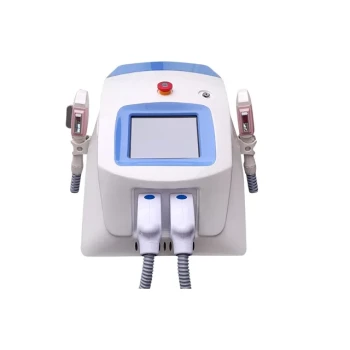
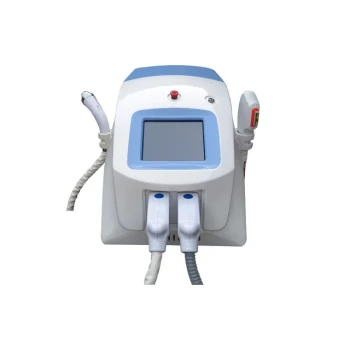
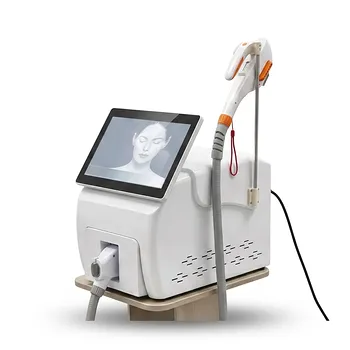
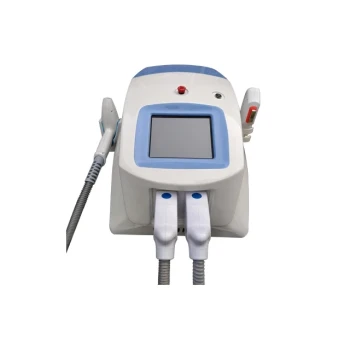
Enhance your clinic's vascular treatment capabilities with BELIS professional IPL systems, designed for safe and effective treatment of superficial leg telangiectasias. Our advanced technology ensures precise parameters and reliable cooling, helping you achieve optimal results. Contact us today to learn more about our IPL devices and other aesthetic solutions tailored for clinics and premium salons. Contact us now.
Related Products
- IPL SHR Hair Removal Machine for Permanent Hair Removal
- IPL SHR+Radio frecuency machine
- Professional IPL SHR Hair Removal Machine for Laser and IPL Hair Removal
- Clinic Use IPL SHR ND YAG Laser Hair Removal RF Skin Tightening Machine
- Clinic Use IPL and SHR Hair Removal Machine with Nd Yag Laser Tattoo Removal
People Also Ask
- How does an IPL SHR machine achieve long-term hair reduction compared to traditional methods? Professional Tech Guide
- How does the frequency of IPL SHR sessions compare to traditional laser hair removal? Maximize Comfort and Efficiency
- How does IPL SHR technology accommodate a wide range of skin types and hair colors? Safe Solutions for All Skin Tones
- How does the safety mechanism of IPL SHR technology protect the surrounding skin tissue? Advanced Protection Guide
- Why is the IPL SHR hair removal process described as painless and comfortable for the patient? Discover the Tech.