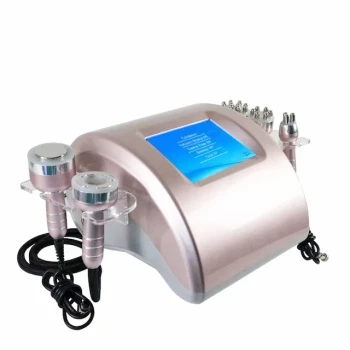
Vacuum-assisted suction technology improves laser specificity by physically altering the target tissue environment immediately prior to the energy pulse. By mechanically compressing the skin and subcutaneous layers, the vacuum temporarily forces blood out of the local dermal vessels. This effectively removes hemoglobin—a substance that normally competes for laser energy—allowing the device to target hair follicles with significantly greater precision.
By temporarily displacing blood from the treatment area, vacuum technology removes hemoglobin as a competing target for laser energy. This ensures that the laser's power is absorbed primarily by the hair follicle's melanin rather than the surrounding blood vessels, significantly reducing unwanted side effects.
The Physics of Competing Chromophores
To understand why vacuum suction improves specificity, one must first understand the challenge of energy absorption in the skin.
The Problem with Hemoglobin
Laser hair removal works by targeting chromophores, which are compounds that absorb light energy. While the primary target is melanin in the hair follicle, human skin contains other chromophores.
Hemoglobin, found in blood, is the most significant competing chromophore. When present in the treatment area, it absorbs a portion of the laser energy intended for the hair, reducing the treatment's overall efficiency.
The Vacuum Solution
Vacuum technology addresses this by applying negative pressure to the skin. This suction creates compression of the skin and subcutaneous tissues.
This physical compression temporarily forces blood out of the area under the handpiece. By displacing the blood, the system removes the competing chromophore (hemoglobin) from the path of the laser beam.
Clinical Implications of Enhanced Specificity
Removing the competition for energy absorption changes the clinical outcome of the treatment in two specific ways.
Increased Energy Absorption at the Follicle
With hemoglobin displaced, there is less "background noise" absorbing the laser energy.
This allows the laser to focus its power more effectively on the intended target: the melanin within the hair follicle. The energy delivery becomes more efficient because less photon energy is wasted on non-target structures.
Reduction of Post-Treatment Side Effects
When laser energy is absorbed by blood vessels rather than hair follicles, it causes thermal damage to the surrounding skin tissue.
By minimizing absorption by hemoglobin, vacuum-assisted technology reduces this collateral heat damage. Consequently, patients experience fewer common side effects, specifically edema (swelling) and erythema (redness), following the procedure.
Understanding the Trade-offs
While vacuum-assisted technology offers distinct advantages in specificity, it is important to recognize the mechanical requirements for success.
Reliance on Perfect Contact
The physiological benefit of blood displacement is entirely dependent on maintaining a strong vacuum seal.
If the suction is broken or the seal is incomplete, the tissue compression will not occur. Without compression, blood remains in the dermal vessels, and the specificity advantage is immediately lost.
Making the Right Choice for Your Goals
Vacuum-assisted lasers are designed to optimize the delivery of energy while protecting the skin. Consider your specific priorities when evaluating this technology.
- If your primary focus is treatment safety: This technology is ideal because it minimizes non-target heating, directly reducing the risk of edema and erythema.
- If your primary focus is energy efficiency: The displacement of hemoglobin ensures that a higher percentage of the emitted laser energy is actually absorbed by the hair follicle.
By mechanically clearing the path for the laser, vacuum-assisted suction transforms the skin into a more ideal medium for optical energy delivery.
Summary Table:
| Feature | Physical Mechanism | Clinical Advantage |
|---|---|---|
| Blood Displacement | Suction compresses tissue to force blood out | Removes hemoglobin as a competing target |
| Energy Focus | Less "background noise" from blood vessels | Higher melanin absorption in hair follicles |
| Tissue Protection | Reduced collateral thermal damage | Significant reduction in edema and erythema |
| Efficiency | Direct path for the laser pulse | More effective energy delivery per pulse |
Elevate Your Clinical Results with BELIS Advanced Laser Systems
Provide your clients with the safest and most efficient treatments by integrating BELIS professional-grade medical aesthetic equipment. Our advanced Diode Hair Removal systems utilize vacuum-assisted technology to ensure unparalleled specificity and patient comfort.
As specialists serving clinics and premium salons, BELIS offers a comprehensive portfolio including:
- Precision Lasers: Diode, CO2 Fractional, Nd:YAG, and Pico systems.
- Advanced Contouring: EMSlim, Cryolipolysis, and RF Cavitation.
- Specialized Care: HIFU, Microneedle RF, Hydrafacial systems, and skin diagnostic tools.
Ready to upgrade your technology? Contact us today to discover how our high-performance devices can drive better results and higher ROI for your practice.
References
- Chi K Yeung, Henry H. Chan. Hair Removal with Neodymium-Doped Yttrium Aluminum Garnet Laser and Pneumatic Skin Flattening in Asians. DOI: 10.1111/j.1524-4725.2010.01715.x
This article is also based on technical information from Belislaser Knowledge Base .
Related Products
- Clinic Diode Laser Hair Removal Machine with SHR and Trilaser Technology
- Clinic Use IPL and SHR Hair Removal Machine with Nd Yag Laser Tattoo Removal
- IPL SHR Hair Removal Machine for Permanent Hair Removal
- Clinic Use IPL SHR ND YAG Laser Hair Removal RF Skin Tightening Machine
- Diode Laser SHR Trilaser Hair Removal Machine for Clinic Use
People Also Ask
- How can aesthetic practitioners prevent side effects like paradoxical hair regrowth and thermal burns when performing diode laser hair removal on dark skin? Master safe protocols for Fitzpatrick IV–VI skin.
- How do broad-spectrum noncoherent light sources compare to single-wavelength diode lasers in aesthetic hair removal applications? Find the best fit for your clinic.
- What are the advantages of the Constant Motion Technique? Elevate Your Clinic's Laser Hair Removal Results
- Why can traditional high-energy pulse (HR) modes lead to adverse skin reactions? Understanding Thermal Injury Risks
- Why is a 40-ms pulse width critical for Fitzpatrick skin types III-V? The Key to Safe & Effective Laser Hair Removal