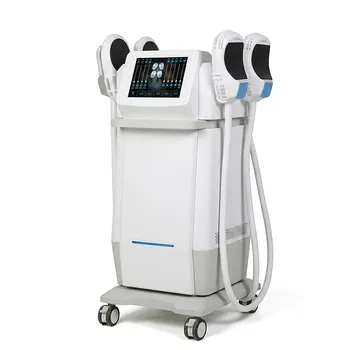
Vacuum-assisted bipolar RF improves energy delivery depth by moving the target tissue closer to the electrodes. Controlled suction lifts and folds the skin into the gap between the bipolar electrodes, positioning deeper dermal and superficial subdermal structures directly within the RF field. This increases effective thermal penetration and promotes more uniform heating without requiring a substantial increase in overall energy.
The key mechanism is tissue repositioning, not simply higher power: vacuum draws the intended skin fold into the electrode gap, allowing bipolar RF energy to reach deeper dermal layers while concentrating heat away from non-target structures.
Why Standard Bipolar RF Has a Depth Limit
Energy travels between fixed electrodes
In a conventional bipolar RF handpiece, current flows between two electrodes positioned on the skin surface. The treatment field is therefore concentrated within the tissue between and beneath those electrodes.
Penetration depends on electrode geometry
Because the electrodes remain fixed against a relatively flat surface, effective penetration is limited by their spacing and the tissue’s position relative to the RF field. In practice, this can leave deeper dermal structures insufficiently heated for consistent collagen remodeling.
More energy is not always the best solution
Increasing energy may raise tissue temperature, but it can also increase discomfort and the risk of heating tissue outside the intended treatment zone. Greater power does not automatically provide better depth control.
How Vacuum Changes Energy Delivery
Suction elevates a controlled tissue fold
A vacuum mechanism creates negative pressure at the treatment tip and draws a flap of skin into the space between the electrodes. The dermis and adjacent connective tissue are thereby lifted closer to the center of the bipolar energy field.
The effective treatment depth increases
Once the target tissue is repositioned within the electrode gap, RF energy can deposit heat deeper into the dermis than a flat-contact configuration typically allows. The device is not necessarily generating energy farther through the body; it is changing the tissue’s location relative to the energy source.
Heating becomes more localized
The captured fold aligns the target tissue with the path of RF current. This can improve energy coupling and concentrate thermal delivery in the dermal layers where collagen contraction and remodeling are intended to occur.
Why This Matters for Tissue Remodeling
Deep dermal collagen receives more consistent heat
Collagen remodeling depends on delivering sufficient, controlled thermal stimulation to the relevant tissue layer. Vacuum-assisted positioning helps produce more uniform heating across the captured treatment fold.
Thermal and mechanical effects work together
The RF component supplies controlled thermal stimulation, while suction applies mechanical stress to the tissue. Mechanical stimulation of fibroblasts is proposed to complement the thermal response and may support collagen formation, although the magnitude of this additional effect can vary by device and treatment protocol.
Deeper delivery does not require indiscriminate power increases
By bringing the target tissue closer to the electrodes, vacuum can improve treatment depth through geometry and positioning. This may reduce the energy required to reach the intended thermal effect and can help limit unnecessary heating and discomfort.
How Vacuum Supports Treatment Specificity
Target tissue is isolated within the handpiece
The suction cup captures a defined skin fold and holds it between the electrodes. This gives the operator a more controlled treatment volume than a flat handpiece applying energy across an unraised surface.
Non-target deeper structures may be better protected
Because the intended dermal tissue is elevated into the RF field, energy can be concentrated nearer the skin and away from deeper structures such as muscle, fascia, and bone. This is a design advantage, not an absolute guarantee of protection; appropriate settings and technique remain essential.
Contact and coupling become more consistent
Vacuum capture can improve physical contact between the treatment tip and the target tissue. More consistent coupling helps reduce variations in energy delivery across the treatment area.
Understanding the Trade-offs
Suction does not eliminate depth limitations
Vacuum assistance improves the effective position of the tissue within the bipolar field, but it does not make RF energy unlimited in depth. Results still depend on electrode spacing, suction strength, tissue thickness, impedance, energy settings, and treatment technique.
Excessive suction can affect comfort and tissue response
Higher vacuum levels may cause discomfort, temporary redness, swelling, or bruising in susceptible patients. Suction should be controlled according to the treatment area, tissue characteristics, and device protocol.
Clinical claims require device-specific evidence
The underlying mechanism is straightforward: suction moves tissue closer to the electrodes. However, claims about superior collagen production, reduced energy requirements, or improved outcomes should be evaluated using clinical data from the specific device rather than assumed from the technology label alone.
Treatment safety still depends on execution
Accurate placement, appropriate energy selection, adequate skin contact, and monitoring remain important. Vacuum assistance improves control but does not replace professional assessment or correct operating technique.
Making the Right Choice for Your Goal
Vacuum-assisted bipolar RF is most useful when the objective is controlled deep-dermal heating rather than simply increasing surface energy.
- If your primary focus is deeper collagen remodeling: Choose a system whose vacuum geometry positions the target dermal tissue reliably within the bipolar electrode gap.
- If your primary focus is treatment comfort: Prioritize controlled tissue capture and adjustable energy settings, since closer tissue positioning may reduce the need for higher RF output.
- If your primary focus is protecting deeper structures: Look for a design that concentrates the treatment fold between the electrodes and follow validated settings for the treatment area.
- If your primary focus is consistent results: Evaluate electrode spacing, suction control, treatment protocols, and device-specific clinical evidence together.
Vacuum-assisted bipolar RF improves depth primarily by repositioning and isolating the target tissue, allowing controlled energy to reach the deeper dermis with greater specificity.
Summary Table:
| Mechanism | Standard Bipolar RF | Vacuum-Assisted Bipolar RF |
|---|---|---|
| Electrode contact | Flat, surface contact | Elevated skin fold between electrodes |
| Target tissue position | Remains at surface | Lifted into RF field |
| Effective penetration | Limited by electrode spacing | Increased by repositioning |
| Heating pattern | Can be superficial | More localized in dermis |
| Depth control | Indirect | Improved, precise |
| Energy requirement | May need higher power | Does not necessarily require more |
| Protection of deeper structures | Less controlled | Better protection |
| Comfort | Potential discomfort | Controlled suction, possible comfort |
Enhance your clinic's aesthetic offerings with BELIS's advanced vacuum-assisted bipolar RF systems. Our professional-grade devices ensure precise deep-dermal heating for superior collagen remodeling, with comfort and safety for your clients. Contact our experts today to explore how our technology can elevate your practice—Get in touch with BELIS for a personalized consultation.
Related Products
- IPL SHR+Radio frecuency machine
- Professional IPL SHR Hair Removal Machine for Laser and IPL Hair Removal
- Ultrasonic Cavitation Radiofrecuency Machine for Body Slimming
- EMS Body Sculpting Slimming Machine EMSlim Body Slimming Machine
- 22D HIFU Machine Device Facial Machine
People Also Ask
- In what ways is an IPL SHR machine considered a cost-effective solution for hair removal? Maximize Your Clinic's ROI
- What is the typical downtime and recovery period associated with IPL SHR treatments? Zero-Downtime Guide
- What types of skin rejuvenation concerns can be addressed using IPL SHR machines? Master Photofacials & Anti-Aging
- What factors contribute to the speed and efficiency of IPL SHR treatments for large body areas? Boost Clinic Throughput
- What are the technical advantages of using the SHR mode in IPL systems? Discover Pain-Free, Safe Hair Removal