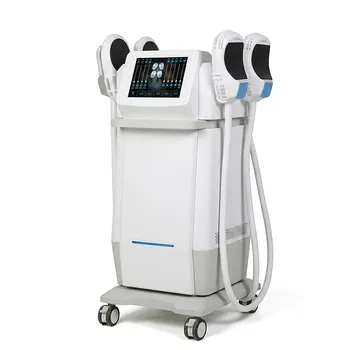
RF Cavitation can reduce the risk of jawline skeletonization by reducing jowl fat gradually rather than removing a large volume of tissue in one operation. Its acoustic cavitation component targets localized fat, while accompanying RF heat supports collagen remodeling and skin tightening. This combination allows the mandibular contour to be refined with softer transitions and less risk of abrupt hollowing than aggressive fat aspiration.
The central advantage is controlled volume reduction. By preserving a measured layer of soft tissue and supporting skin contraction as the jowl decreases, RF Cavitation can help maintain natural continuity along the inferior jawline instead of creating a sharply exposed or hollow mandibular border.
Why Aggressive Liposuction Can Skeletonize the Jawline
Excessive fat removal changes the contour framework
The lower face depends on a balanced relationship between skin, subcutaneous fat, connective tissue, and the underlying mandible. When aggressive liposuction removes too much fat along the mandibular border, the soft-tissue layer may no longer transition smoothly into adjacent facial areas.
Bony landmarks become visually exaggerated
Over-reduction near the jaw can make the mandibular edge appear unusually prominent. This is commonly described as skeletonization, because the loss of soft-tissue volume makes the underlying skeletal structure visually dominant.
Abrupt contour steps are difficult to correct
A cannula-based procedure may create localized volume deficiencies or sharp transitions between treated and untreated zones. These irregularities can produce mandibular hollowing rather than a refined, continuous jawline.
How RF Cavitation Supports More Controlled Sculpting
Acoustic energy targets localized adipose tissue
The cavitation component uses acoustic energy to affect localized fat deposits. In a properly selected patient and treatment area, this supports incremental reduction of jowl volume rather than the immediate extraction of a large amount of fat.
Gradual reduction supports volume preservation
Because the change occurs progressively, the practitioner can assess the evolving contour between treatments. This makes it easier to preserve enough soft tissue for a natural feathered transition along the mandibular border.
RF heating addresses the overlying skin
As fat volume decreases, loose or less elastic skin can become more noticeable. RF delivers thermal energy to the treated tissues and may stimulate dermal collagen remodeling, helping the skin firm as the contour changes.
Skin contraction complements fat reduction
The goal is not simply to make the jowl smaller. Fat reduction and skin adaptation must remain proportionate so the result does not become either hollow or lax.
Why Feathered Transitions Matter
Natural contours are not sharply segmented
Aesthetic jawline sculpting usually requires a continuous transition between the jowl, lower cheek, mandibular border, and upper neck. Treating only a narrow strip directly over the jaw can create an artificial step.
Controlled treatment protects surrounding volume
RF Cavitation can be used to reduce the jowl while respecting the volume of neighboring facial regions. Maintaining those surrounding areas helps prevent a drawn or overly angular appearance.
The objective is refinement, not maximal removal
A well-designed treatment aims to improve definition without exposing every underlying contour. This reflects a broader volume preservation principle: the most defined jawline is not necessarily the one with the least soft tissue.
What the Combined Approach Contributes
Cavitation and RF address different parts of the problem
Cavitation is directed toward localized fat reduction, while RF contributes thermal stimulation to the skin and subcutaneous tissues. Their combination is intended to coordinate contour reduction with tissue tightening.
The process avoids mechanical aspiration
Unlike surgical liposuction, RF Cavitation does not depend on inserting a cannula to physically aspirate fat. That eliminates the specific contour risks associated with aggressive cannula passes, including excessive removal in a small facial zone and abrupt postoperative volume deficits.
Results develop progressively
A progressive response can make the final contour easier to manage clinically. It also allows treatment intensity and treatment areas to be adjusted according to the patient’s response rather than committing to a single large-volume reduction.
Understanding the Trade-offs
It does not guarantee protection from skeletonization
RF Cavitation may lower the risk of over-reduction, but it cannot guarantee a particular outcome. Results depend on the device, settings, treatment technique, patient anatomy, skin quality, baseline fat volume, and the clinician’s ability to identify the correct treatment plane.
Noninvasive does not mean risk-free
Patients may experience temporary redness, swelling, tenderness, or sensitivity. Energy-based treatments also require appropriate screening, accurate device use, and adherence to manufacturer and clinical safety protocols.
Fat reduction may be insufficient for every patient
RF Cavitation is most relevant to localized, modest jowl fullness. Prominent laxity, substantial excess tissue, deep structural changes, or skeletal asymmetry may require a different treatment strategy or combination of approaches.
Over-treatment can still compromise contour
Repeated or overly intense treatments may reduce more volume than intended. The principle of gradual treatment only protects the contour when the practitioner also preserves adequate soft tissue and reassesses the result over time.
Making the Right Choice for Your Goal
RF Cavitation should be selected according to the desired degree of definition, available soft-tissue volume, and skin elasticity.
- If your primary focus is gradual jowl reduction: Choose a conservative treatment plan that allows contour changes to be assessed before additional volume is removed.
- If your primary focus is avoiding mandibular hollowing: Prioritize soft, feathered transitions and preservation of a continuous tissue layer over maximal fat reduction.
- If your primary focus is improving laxity as the jowl decreases: Consider the RF component’s role in supporting collagen remodeling and skin contraction.
- If your primary focus is major tissue removal or significant laxity: Obtain an expert evaluation because noninvasive RF Cavitation may not provide the degree of correction required.
A natural jawline comes from balancing fat reduction, skin tightening, and preservation of the soft-tissue volume that keeps the mandible from appearing artificially exposed.
Summary Table:
| Aspect | Aggressive Liposuction | RF Cavitation |
|---|---|---|
| Fat removal | Large volume, immediate | Gradual, incremental |
| Contour transition | Sharp, abrupt | Soft, feathered |
| Skin tightening | Limited | RF stimulates collagen |
| Risk of skeletonization | Higher | Lower |
| Recovery | Downtime | Minimal |
Discover how BELIS's advanced RF Cavitation systems can help your clinic offer safe, non-invasive jawline contouring. Our professional-grade devices ensure precise control and patient satisfaction. Contact us today to learn more about our solutions and how we can support your practice. Contact us now!
Related Products
- Ultrasonic Cavitation Radiofrecuency Machine for Body Slimming
- Ultrasonic Cavitation Machine Lipo Laser Device
- Cryolipolysis Fat Freezing Machine and Ultrasonic Cavitation Device
- Cryolipolysis Fat Freezing Machine Cavitation Lipo Laser Machine
- Cryolipolysis Fat Freezing Machine Ultrasonic Cavitation Fat Reducing Device
People Also Ask
- What are the pros and cons of the ultrasonic cavitation slimming treatment? A Guide to Painless Body Contouring
- Does an ultrasonic cavitation machine also tighten the skin? Achieve Total Body Contouring with RF Synergy
- How does radiofrequency technology in slimming machines promote fat reduction? The Science of Non-Invasive Sculpting
- How should one prepare for an ultrasonic cavitation appointment? 5 Essential Tips for Maximum Fat Loss Results
- What is an ultrasonic cavitation machine? Sculpt Your Body with Advanced Non-Invasive Fat Reduction