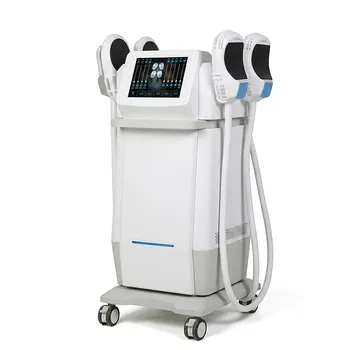
Micro-focused ultrasound achieves deep lifting by concentrating acoustic energy beneath the skin’s surface. Unlike surface-level rejuvenation methods that primarily heat, ablate, or remodel the epidermis and superficial dermis, it creates precisely placed thermal coagulation points in deeper tissue planes, including the deep dermis, subcutaneous tissue, and sometimes the SMAS. This produces immediate collagen contraction followed by months of collagen remodeling—without intentionally damaging the outer skin barrier.
The key distinction is depth and selectivity: micro-focused ultrasound treats structural support layers from beneath the surface, while surface-level modalities mainly improve texture, pigmentation, and superficial dermal quality.
Why Deep Tissue Lifting Requires More Than Surface Treatment
The skin has multiple structural layers
The epidermis and papillary dermis are close to the surface and are strongly associated with texture, pigmentation, and superficial skin quality. Deeper lifting depends on affecting the reticular dermis, subcutaneous tissue, and the superficial muscular aponeurotic system (SMAS).
The SMAS is a connective-tissue layer that links facial muscles with the overlying skin. Because it contributes to facial support, targeting this plane can produce a more structural lifting effect than treating the surface alone.
Surface rejuvenation and structural lifting are different goals
Surface-level rejuvenation generally focuses on the epidermis or upper dermis. It can improve fine lines, uneven texture, pigmentation, and other visible signs of aging.
However, treating the surface does not necessarily create meaningful contraction in the deeper support layers responsible for laxity. A smoother surface and a lifted facial contour are related but distinct outcomes.
How Micro-Focused Ultrasound Reaches Deep Tissue
Focused acoustic energy bypasses the surface
Micro-focused ultrasound directs acoustic energy through the epidermis and superficial tissue to a predetermined focal depth. Energy is concentrated at the selected point rather than being broadly deposited throughout the entire path.
This allows the intervening tissue and skin surface to remain relatively preserved while the target zone receives sufficient energy to trigger a controlled biological response.
Thermal coagulation points create localized injury
At the focal point, mechanical acoustic energy is converted into heat. Depending on the device and treatment parameters, focal temperatures may reach approximately 60°C to 70°C, creating small thermal coagulation points, often called TCPs.
These points produce localized collagen denaturation and contraction. The treatment is therefore not simply warming the skin; it creates a controlled pattern of microscopic thermal zones at depth.
Multiple transducers enable layered treatment
Different transducers can focus energy at different depths, commonly including approximately 1.5 mm, 3.0 mm, and 4.5 mm planes. These depths may correspond broadly to the superficial dermis, deeper dermis, and SMAS region, although actual anatomy varies by patient and treatment area.
Layered treatment allows a practitioner to address more than one component of laxity rather than treating every patient at a single standardized depth.
How the Treatment Produces Tightening Over Time
Collagen contracts immediately
Heat-induced collagen denaturation causes existing collagen fibers to contract. This can create an early tightening effect, although the initial result is only part of the overall process.
The deeper the treatment plane, the more the effect relates to tissue contraction and structural support rather than immediate surface smoothing.
Wound healing stimulates remodeling
The thermal coagulation points activate a controlled wound-healing response. Fibroblasts are recruited and stimulated to produce new collagen, while existing collagen and elastin structures undergo gradual remodeling.
This process develops over time rather than appearing entirely on the day of treatment. Reported remodeling periods commonly extend across several months, including approximately three to six months in the supplied references.
The skin surface remains largely intact
Because the energy is focused below the epidermis, the outer skin barrier is not intentionally vaporized or broadly ablated. This is the main reason micro-focused ultrasound can produce deep treatment effects with less epidermal downtime than resurfacing procedures.
“Non-surface-damaging” does not mean risk-free or completely recovery-free. Pain, tenderness, swelling, temporary sensory changes, or other adverse effects remain possible and depend on the device, settings, anatomy, and operator technique.
How It Compares With Surface-Level Modalities
Compared with lasers
Lasers commonly concentrate energy in superficial layers, often less than approximately 1.5 mm, depending on wavelength, pulse design, and treatment mode. Their strengths include resurfacing, pigment treatment, vaporization, and micro-fractional improvement of skin texture.
Because lasers primarily interact with the surface or upper dermis, they are generally better suited to visible surface quality than to directly contracting the deeper SMAS region.
Compared with radiofrequency
Radiofrequency typically creates a broader, more diffuse heating pattern in the dermis. It can improve dermal quality and stimulate collagen through generalized thermal exposure, but it does not necessarily produce the same sharply localized treatment points at a deep anatomical plane.
RF can be useful for mild laxity and overall dermal tightening. Its effect is usually more diffuse, whereas micro-focused ultrasound is designed for targeted depth-specific contraction.
Compared with superficial rejuvenation generally
Surface-focused treatments primarily improve how the skin looks and feels. Micro-focused ultrasound is designed to affect where the tissue sits and how its deeper collagen framework contracts.
These approaches are not automatically competitors. A surface treatment may improve texture while ultrasound addresses deeper laxity, provided the combination is clinically appropriate.
Understanding the Trade-offs
Deeper treatment does not guarantee a dramatic lift
Micro-focused ultrasound can stimulate deep contraction and remodeling, but results depend on baseline laxity, tissue thickness, age-related structural changes, treatment parameters, and individual healing response.
It is not equivalent to surgical repositioning of tissue. Patients seeking correction of substantial excess skin or advanced structural descent may require a different intervention.
Precision depends on anatomy and technique
Selecting the correct focal depth is essential. A transducer must match the patient’s anatomy and the intended tissue plane, particularly in areas where bone, nerves, vessels, or thin tissue may limit safe treatment.
Systems with real-time visualization can help the operator identify tissue layers and confirm treatment depth. Visualization improves targeting, but it does not replace clinical judgment or proper training.
Energy settings involve a balance
Higher energy or denser treatment patterns may increase the intended tissue response, but they can also increase discomfort and the risk of adverse effects. More energy is not automatically better.
A credible treatment plan balances depth, energy, spacing, coverage, patient tolerance, and safety rather than maximizing a single setting.
Fat disruption is a separate consideration
Some ultrasound systems or protocols use mechanical, non-thermal energy to affect adipose tissue. This may support contouring and contraction in selected areas, but fat reduction and skin tightening are different treatment objectives.
Excessive fat reduction in the wrong patient or facial region can produce unwanted hollowing. The desired contour, not merely the presence of laxity, should guide treatment selection.
How to Apply This to Your Treatment Goal
Micro-focused ultrasound is most appropriate when the central problem is deeper laxity rather than surface damage.
- If your primary focus is deep lifting or jawline definition: Choose a treatment plan that evaluates the reticular dermis, subcutaneous tissue, and SMAS region rather than relying on a surface-only approach.
- If your primary focus is texture, pigmentation, or superficial fine lines: Consider a modality designed to act in the epidermis or upper dermis, such as an appropriate laser or other surface-focused treatment.
- If your primary focus is generalized dermal tightening: Radiofrequency may be appropriate when broad, moderate heating is preferred over sharply focused deep treatment.
- If your primary focus is combined rejuvenation: A qualified practitioner may sequence or combine modalities, with each one selected for the tissue layer and clinical problem it can address most effectively.
Effective rejuvenation begins with matching the modality’s physical depth and energy pattern to the tissue problem—not simply choosing the strongest device.
Summary Table:
| Feature | Micro-focused Ultrasound | Surface-level Modalities (Lasers, RF) |
|---|---|---|
| Primary Depth | Deep dermis, subcutaneous tissue, SMAS | Epidermis, superficial dermis |
| Mechanism | Focused thermal coagulation points at depth | Broad heating or ablation of surface tissue |
| Goal | Structural lifting and deep tightening | Improvement of texture, pigmentation, superficial fine lines |
| Energy Delivery | Concentrated at precise focal points | Diffuse or superficial absorption |
| Downtime | Minimal, less surface damage | Variable; may include resurfacing downtime |
| Results | Immediate contraction, progressive remodeling over months | Often quicker for surface issues, less deep lift |
Are you ready to offer your patients the deep lifting results they desire? BELIS provides professional-grade micro-focused ultrasound systems designed for clinics and premium salons. Our advanced technology ensures precise, safe, and effective treatments. Contact us today to learn how our devices can expand your service menu and boost your practice. Get in touch with our specialists now!
Related Products
- 7D 12D 4D HIFU Machine Device
- 4D 12D HIFU Machine Device for Skin Tightening
- 4D 12D HIFU Machine Device for Skin Tightening and Lifting
- 22D HIFU Machine Device Facial Machine
- 12D HIFU Machine Device for Facial HIFU Treatment
People Also Ask
- What is the mechanism of action of High-Intensity Focused Ultrasound (HIFU) devices in noninvasive body sculpting, and how is surrounding tissue protected?
- What are the main functions of a High Intensity Focused Ultrasound (HIFU) machine? Advanced Skin Lifting and Sculpting
- Why is a HIFU device essential for non-invasive facial lifting? Discover the Power of Deep SMAS Layer Targeting
- How does a HIFU device achieve deep tissue contraction? Master Non-Invasive Facial Lifting Technology
- How do non-surgical skin tightening devices enhance tissue firmness? Discover the Power of HIFU & RF for Clinics