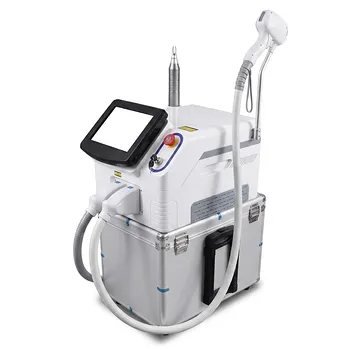
Androgen-induced follicle miniaturization is a signaling problem, not simply a circulation problem. In genetically susceptible scalp follicles, testosterone is converted to dihydrotestosterone (DHT) by 5α-reductase within follicular tissues, including dermal papilla-associated cells. DHT activates androgen receptors and changes the signals that regulate matrix-cell proliferation, extracellular matrix support, and the hair-cycle clock; professional hair growth machines may support these stressed follicles, but they do not directly remove the androgen trigger.
The practical point: Hair-growth equipment works best as an adjunct to a biologically informed treatment plan. It can support cellular energy production, local perfusion, and anagen activity, but it should not be presented as a standalone reversal of androgenetic alopecia or as a substitute for appropriate medical evaluation.
What Happens Inside a Susceptible Hair Follicle
Testosterone is converted into a more potent androgen
Circulating testosterone reaches the follicular environment and can be converted into DHT by 5α-reductase enzymes. The relevant enzyme activity varies by tissue, follicle region, sex, and individual genetics; it is therefore more accurate to describe androgenetic alopecia as a localized sensitivity problem rather than a uniform systemic hormone excess.
DHT has a stronger affinity for the androgen receptor than testosterone. Once bound, the receptor-androgen complex influences gene transcription inside androgen-responsive follicular cells.
Dermal papilla cells act as a signaling hub
The dermal papilla sits at the base of the follicle and coordinates communication with matrix keratinocytes, stem-cell compartments, and surrounding follicular structures. It is one of the principal sites through which androgen signaling can alter follicle behavior.
The exact response is not identical in every person. DHT can modify paracrine growth signals, including factors involved in dermal papilla support, vascular interaction, and matrix-cell activity.
Growth signals become less supportive
Androgen-receptor activation can shift the balance between signals that promote follicular growth and signals that inhibit it. The result may include reduced dermal papilla cell proliferation, changes in extracellular matrix volume, and weaker support for the rapidly dividing matrix cells that produce the hair shaft.
IGF-1 is one growth-related signaling molecule discussed in this context, but it should not be treated as the sole mediator or as a universal single-direction biomarker in every follicle.
How Miniaturization Changes the Hair Cycle
The anagen phase becomes shorter
The anagen phase is the active growth stage of the hair cycle. With progressive androgen sensitivity, susceptible scalp follicles spend less time producing a substantial hair shaft during each cycle.
This is why affected hairs often become shorter and shed sooner, even before the follicle appears completely inactive.
The follicle produces a smaller shaft
Repeated cycles can reduce the size of the follicle and the diameter of the hair shaft. A coarse, pigmented terminal hair gradually becomes finer, shorter, and less pigmented.
This process is called follicular miniaturization. It is not simply hair shedding; it is a structural reduction in the follicle’s capacity to produce a thick shaft.
Apparent “dormancy” can be misleading
A miniaturized follicle may still be biologically active while producing a very fine hair. In later-stage loss, follicular structures can become substantially regressed and may be replaced or surrounded by fibrous connective tissue.
Consequently, a machine cannot be assumed to “reactivate” every empty-looking area. The likely response depends on residual follicular structure, disease duration, diagnosis, and treatment consistency.
Why This Matters When Operating Hair Growth Machines
Equipment supports the follicle; it does not neutralize DHT
Low-level light therapy, LED photobiomodulation, microcurrent, and related scalp-stimulation technologies are intended to influence local cellular conditions. Proposed effects include support for mitochondrial activity, ATP production, cellular metabolism, microcirculation, and growth-related signaling.
These effects are supportive rather than equivalent to anti-androgen therapy. If androgen-receptor signaling remains active, equipment may improve the follicle’s operating environment without fully stopping the underlying miniaturization process.
Treatment must target the correct biological problem
Before selecting a device or protocol, the operator should establish whether the presentation is consistent with androgenetic alopecia. Diffuse shedding, inflammatory scalp disease, scarring alopecia, nutritional deficiency, medication effects, and autoimmune disorders can require different management.
A scalp imaging system, trichoscopy, or standardized photographic assessment can help document hair density, shaft diameter, follicular openings, inflammation, and miniaturization patterns. These measurements are more useful than relying only on a client’s impression of shedding.
Parameters and coverage matter
Professional operation requires controlled attention to the device’s validated specifications, including:
- Wavelength or energy output
- Power density and treatment duration
- Treatment frequency
- Scalp coverage and contact or positioning
- Cleaning, eye protection, and equipment safety
- Consistency of the treatment schedule
More energy is not automatically better. The protocol should follow the manufacturer’s instructions and the device’s clinical evidence rather than being intensified without justification.
Results should be judged over hair-cycle timescales
Hair follicles do not respond like muscles or superficial skin tissue. Changes in shaft diameter, density, and shedding generally require repeated assessments over multiple months.
Use standardized lighting, camera distance, scalp regions, and measurement intervals. A short-term change in shedding alone does not prove reversal of miniaturization.
The Androgen Response Is Region-Specific
Scalp and body follicles can respond oppositely
Androgens can stimulate terminal hair growth in areas such as the beard, chest, and pubic region. In genetically susceptible frontal and vertex scalp follicles, the same hormonal class can promote miniaturization.
This is why a device or treatment principle cannot be generalized across every body site. Follicular genetics and local androgen sensitivity determine the direction of the response.
Female pattern hair loss is not simply “male-pattern loss in women”
Female pattern hair loss commonly presents as diffuse thinning over the crown and parietal scalp, often with relative preservation of the frontal hairline. Local receptor sensitivity, enzyme activity, aromatase activity, and other biological factors influence the pattern.
Lower average androgen levels do not eliminate androgen responsiveness. A clinically appropriate assessment is still necessary before attributing diffuse thinning to DHT alone.
Understanding the Trade-offs
Machines are generally adjunctive
Hair-growth machines may improve the environment around a compromised follicle, but they do not reliably block 5α-reductase, prevent DHT from binding its receptor, or eliminate genetic susceptibility.
For clinically diagnosed androgenetic alopecia, medical options may be considered alongside equipment where appropriate. Referral to a qualified clinician is important when diagnosis, prescription treatment, or systemic risk assessment is required.
“Increased circulation” is not the complete mechanism
Microcirculation may contribute to follicular support, but androgen-induced miniaturization is fundamentally a cellular signaling and follicle-cycle disorder. Presenting circulation as the sole explanation oversimplifies the disease and can create unrealistic expectations.
A more accurate claim is that certain devices may support cellular metabolism and local tissue conditions as part of a broader management plan.
Not every form of hair loss is androgenic
Sudden shedding, patchy loss, scarring, pain, erythema, scaling, pustules, or significant inflammation should not be treated as routine androgenetic alopecia without evaluation. Using a growth device without identifying the underlying cause can delay appropriate care.
Evidence and device quality vary
“Laser,” “LED,” “photobiomodulation,” and “scalp stimulation” describe broad technology categories, not identical clinical outcomes. Operators should distinguish between evidence for a specific device and evidence for an entire category.
Avoid promising complete regrowth. The realistic goals are often slowing progression, improving shaft caliber, supporting existing miniaturized follicles, and documenting measurable change.
How to Apply This to Professional Practice
The cellular mechanism should directly inform screening, protocol selection, client education, and outcome measurement.
- If your primary focus is accurate assessment: Confirm the likely cause of hair loss and document miniaturization before beginning a machine-based protocol.
- If your primary focus is treatment planning: Use the device as an adjunct that supports follicular metabolism and anagen activity, not as a direct DHT-blocking treatment.
- If your primary focus is client safety: Screen for inflammatory, scarring, sudden, or atypical hair loss and refer for medical evaluation when indicated.
- If your primary focus is measurable outcomes: Track standardized photographs, shaft diameter, density, and shedding over a sufficiently long treatment interval.
- If your primary focus is realistic communication: Explain that residual miniaturized follicles may respond, while advanced follicular loss may not be reversible with equipment alone.
Understanding androgen signaling allows professionals to use hair growth machines more responsibly: as targeted support for viable follicles within a complete, diagnosis-led strategy.
Summary Table:
| Key Concept | Description | Implication for Practice |
|---|---|---|
| DHT conversion | Testosterone to DHT in follicle | Machines don't block DHT; supportive role |
| Dermal papilla signaling | Androgen alters growth signals | Targets follicular metabolism, not receptor |
| Hair cycle changes | Shorter anagen, smaller shaft | Results require months, not weeks |
| Region-specific response | Scalp vs. body follicles differ | Protocol tailored to specific area |
| Diagnosis importance | Identify non-androgenic causes | Screen and refer when needed |
Optimize Your Clinic's Hair Restoration Outcomes with BELIS
At BELIS, we understand the biology behind androgenetic alopecia and supply professional-grade hair growth machines designed to support follicular health. Our advanced Laser and LED devices enhance cellular energy and local circulation, complementing your comprehensive treatment plans. Whether you're a clinic or premium salon, our equipment meets rigorous safety standards and is backed by clinical evidence. Partner with us to elevate your patient care and achieve measurable results. Contact us today to discuss your needs and receive a customized solution.
Related Products
- Multifunctional Laser Hair Growth Machine Device for Hair Growth
- Multifunctional Laser Hair Growth Machine Device for Hair Growth
- IPL SHR Hair Removal Machine for Permanent Hair Removal
- Cryolipolysis Fat Freezing Machine Cavitation Lipo Laser Machine
- 808nm Diode Laser Hair Removal Machine 755+808+1064nm Mixed Wavelength Professional Equipment
People Also Ask
- What is a typical treatment schedule when using a laser hair growth device? Maximize Results with the Proven Protocol
- Why do professional-grade laser hair growth devices integrate LCD displays? Achieve Clinical Precision in Every Session
- How do professional-grade laser stimulation devices contribute to improving hairline morphology? Revitalize Growth & Symmetry
- For which conditions have laser hair growth treatment devices been approved? Targeted Solutions for Androgenic Alopecia
- How do the biological phases of the hair growth cycle inform the clinical application of specialized hair growth devices for treating androgenetic alopecia? Insights for Clinics & Salons