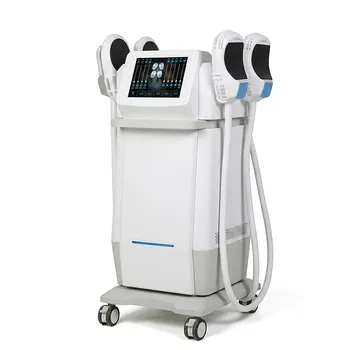
Adipocyte integrity depends on the objective: surgical fat harvesting attempts to preserve viable adipocytes for removal and possible grafting, whereas Cryolipolysis and RF Cavitation intentionally damage or eliminate localized fat cells in place. Therefore, non-surgical body contouring does not produce intact, transplantable adipose tissue.
Surgical harvesting seeks viable cells but can mechanically injure them; Cryolipolysis and RF Cavitation deliberately compromise adipocyte integrity. The key distinction is not simply how much fat is reduced, but whether the cells must remain viable for collection or are being targeted for natural clearance.
The Fundamental Difference in Treatment Objectives
Surgical harvesting preserves fat for removal
In liposuction or surgical fat harvesting, the clinician removes adipose tissue through cannulas and suction. When the fat is intended for grafting, preserving adipocyte viability is essential because damaged cells may not survive transplantation.
Harvest-site comparisons, such as abdomen versus thighs, may show broadly comparable viability under controlled conditions. However, the harvesting technique and processing protocol can have a greater effect than the anatomical site.
Non-surgical contouring destroys or disables fat cells in place
Cryolipolysis and RF Cavitation are not fat-harvesting technologies. They are designed to reduce localized subcutaneous fat without collecting tissue for purification, centrifugation, or reinjection.
Their intended endpoint is therefore adipocyte reduction, not preservation. The affected cells are subsequently cleared through the body’s biological processes rather than removed as an intact graft material.
How Surgical Technique Affects Adipocyte Integrity
Gentle aspiration can support cell survival
Low-trauma harvesting methods are generally more compatible with adipocyte viability than aggressive mechanical extraction. Cannula design, suction pressure, shear forces, handling time, temperature, and exposure to air or fluid can all influence the quality of the harvested tissue.
The same fat may be suitable for volume removal but unsuitable for grafting if excessive mechanical stress has damaged the cells.
High-pressure aspiration can cause substantial damage
Conventional high-pressure vacuum aspiration can create intense shear and compression forces. The primary reference reports that this may destroy a very large proportion—up to 90% in some circumstances—of harvested cells.
That figure should be interpreted as technique- and protocol-dependent rather than universal. It illustrates the central risk: fat removal does not automatically mean viable fat-cell recovery.
Processing adds another viability challenge
After aspiration, fat may undergo washing, decanting, filtration, centrifugation, or other purification steps. Each additional manipulation can remove tissue fractions or injure cells.
Consequently, surgical fat harvesting involves two separate integrity questions: how many cells survive extraction, and how many remain viable after processing and preparation for grafting.
How Cryolipolysis Changes Adipocyte Integrity
Controlled cooling induces programmed cell death
Cryolipolysis applies controlled cooling to a localized fat compartment. Adipocytes are more sensitive to cold than many surrounding tissues, allowing the treatment to target fat within a defined treatment area.
The intended biological outcome is adipocyte apoptosis, or programmed cell death, followed by gradual clearance of the affected cellular material.
The cells are not harvested
Cryolipolysis does not preserve intact adipocytes for collection. Even though the treatment is non-invasive, the relevant cells are biologically compromised and later removed through normal clearance mechanisms.
This makes Cryolipolysis fundamentally different from a gentle fat-harvesting procedure: it prioritizes localized reduction over tissue recovery.
Effects develop gradually
Cryolipolysis generally does not remove a large volume of fat during the treatment session. The body processes the affected cells over time, so visible contour change develops progressively rather than immediately.
This is appropriate for localized contouring but not for procedures requiring rapid removal of substantial tissue redundancy or large fat volumes.
How RF Cavitation Affects Adipocyte Integrity
The terminology describes more than one energy approach
“RF Cavitation” systems may combine radiofrequency energy with ultrasound or acoustic cavitation. These are related in commercial body-contouring systems but are not identical physical mechanisms.
Radiofrequency primarily produces controlled tissue heating, while acoustic cavitation uses ultrasound energy to create mechanical effects that may disrupt adipocyte membranes. The exact biological effect depends on the device, operating parameters, applicator, treatment area, and tissue conditions.
Membrane disruption is the intended endpoint
Where acoustic cavitation is used, the treatment is intended to compromise adipocyte membranes and facilitate subsequent metabolic clearance of released cellular contents. Radiofrequency may also contribute thermal effects and tissue tightening, depending on the system.
In either case, the objective is not to maintain adipocyte viability. Treated cells should not be regarded as intact, harvestable fat suitable for grafting.
Device claims require careful interpretation
The phrase “fat-cell destruction” can oversimplify what occurs biologically. Some systems may produce membrane disruption, thermal injury, apoptosis, or a combination of effects, and outcomes can vary across technologies.
A clinic should evaluate the specific device’s validated indications, treatment parameters, clinical evidence, and safety controls rather than assuming all RF or cavitation platforms produce identical results.
Direct Comparison of Adipocyte Integrity
Surgical fat harvesting
- Primary goal: Remove fat, potentially for grafting.
- Desired cell state: Viable and structurally intact.
- Main integrity threat: Mechanical trauma from suction, shear, pressure, handling, and processing.
- Outcome: Tissue is physically extracted and may be purified or transferred.
- Typical role: Larger-volume removal or tissue transfer when clinically appropriate.
Cryolipolysis
- Primary goal: Reduce a localized fat layer without surgery.
- Desired cell state: Targeted adipocyte injury and apoptosis.
- Main mechanism: Controlled cooling.
- Outcome: Affected cells remain in the body temporarily and are gradually cleared.
- Typical role: Non-surgical reduction of mild to moderate localized fat deposits.
RF Cavitation systems
- Primary goal: Localized contouring, often with a tissue-tightening component.
- Desired cell state: Cellular disruption or injury, not viability.
- Main mechanism: Radiofrequency heating, ultrasound cavitation, or a combination.
- Outcome: Cellular contents and damaged tissue are handled through biological clearance processes.
- Typical role: Non-surgical treatment of selected localized areas, depending on the device and indication.
Why “Viability” Is Not the Same as “Effectiveness”
Viability matters for grafting
For fat transfer, a viable adipocyte is valuable because it may survive in its new location and contribute to retained graft volume. Surgical harvesting must therefore minimize avoidable cell damage.
A high percentage of nonviable cells can reduce graft predictability and may increase unwanted tissue breakdown or inflammatory effects.
Non-viability is intentional in contouring
For Cryolipolysis and RF Cavitation, loss of adipocyte integrity is not a treatment failure. It is part of the intended mechanism for reducing the targeted fat compartment.
The relevant measures are instead appropriate patient selection, treatment response, contour improvement, safety, and consistency of results.
Non-surgical does not mean biologically inactive
Although there are no incisions, energy-based treatments still create a biological response in tissue. Cooling, heating, or acoustic energy must remain within appropriate anatomical and operational limits.
Treatment planning and device-specific protocols remain important, particularly near sensitive structures or in patients with unsuitable tissue characteristics.
Understanding the Trade-offs
Surgical treatment offers greater volume capability
Liposuction can remove substantially more fat in a single procedure than non-surgical contouring systems. It is therefore more suitable when the problem involves extensive tissue redundancy or significant fat volume.
The trade-off is invasiveness, including anesthesia requirements, bruising, fluid collections, scarring, infection risk, recovery time, and the possibility of contour irregularities.
Non-surgical treatment offers less disruption
Cryolipolysis and RF Cavitation avoid incisions and the tissue disruption associated with cannula passage and suction. They generally involve less downtime and are better suited to localized, mild-to-moderate fat deposits.
However, they are not substitutes for surgical excision or large-volume liposuction when substantial excess tissue must be removed.
Cell reduction does not prevent future weight gain
Reducing or eliminating adipocytes in a treated area can provide lasting local reduction, but it does not make the body resistant to future weight gain. Remaining fat cells can enlarge, and overall body composition can change.
Long-term results therefore depend on maintaining a relatively stable body weight and using the treatment for appropriate localized contouring rather than general weight loss.
Results and mechanisms vary by device
Cryolipolysis has a defined cooling-based mechanism, while “RF Cavitation” may refer to systems with different combinations of radiofrequency and ultrasound energy. Results should not be generalized across all devices using similar marketing terminology.
Clinics should distinguish validated performance from broad promotional claims and should communicate that non-surgical contouring typically produces gradual, localized changes rather than surgical-scale volume removal.
Making the Right Choice for Your Goal
The appropriate technology depends first on whether the objective is to preserve fat for transfer or reduce fat without removing tissue.
- If your primary focus is viable fat for grafting: Use a purpose-designed surgical harvesting and processing protocol that minimizes suction, shear, handling, and processing trauma; Cryolipolysis and RF Cavitation cannot provide intact transplantable adipocytes.
- If your primary focus is non-surgical localized contouring: Consider an appropriately indicated Cryolipolysis or RF Cavitation system, understanding that the treatment intentionally compromises adipocyte integrity and produces gradual rather than large-volume fat reduction.
- If your primary focus is extensive fat removal or severe tissue redundancy: Surgical assessment is more appropriate because non-surgical devices are not designed to replace large-volume extraction or tissue resection.
- If your primary focus is minimizing downtime: Non-surgical treatment generally offers less procedural disruption, but candidacy, device-specific evidence, and realistic expectations remain essential.
The decisive question is whether adipocyte integrity is the desired outcome—or the mechanism that must be intentionally lost to achieve localized contour reduction.
Summary Table:
| Aspect | Surgical Fat Harvesting | Cryolipolysis | RF Cavitation Systems |
|---|---|---|---|
| Primary Goal | Remove fat, potentially for grafting | Reduce localized fat layer without surgery | Localized contouring with possible tissue tightening |
| Desired Cell State | Viable and structurally intact | Targeted adipocyte injury and apoptosis | Cellular disruption or injury, not viability |
| Main Mechanism | Mechanical extraction via cannula and suction | Controlled cooling | Radiofrequency heating, ultrasound cavitation, or combination |
| Outcome | Tissue physically extracted and may be purified or transferred | Affected cells remain in body and gradually cleared | Cellular contents and damaged tissue handled through biological clearance |
| Typical Role | Larger-volume removal or tissue transfer | Non-surgical reduction of mild to moderate localized fat deposits | Non-surgical treatment of selected localized areas |
Ready to enhance your aesthetic practice with cutting-edge technology? BELIS offers a comprehensive range of professional-grade devices, including laser systems, Cryolipolysis, and RF Cavitation, tailored for clinics and premium salons. Our solutions are designed to deliver effective, patient-approved results, boosting your clinic's reputation and profitability. Contact us today to explore how our advanced equipment can elevate your services and meet your clients' needs!
Related Products
- Ultrasonic Cavitation Radiofrecuency Machine for Body Slimming
- Ultrasonic Cavitation Machine Lipo Laser Device
- Cryolipolysis Fat Freezing Machine and Ultrasonic Cavitation Device
- Cryolipolysis Fat Freezing Machine Cavitation Lipo Laser Machine
- Cryolipolysis Fat Freezing Machine Ultrasonic Cavitation Fat Reducing Device
People Also Ask
- What are the pros and cons of the ultrasonic cavitation slimming treatment? A Guide to Painless Body Contouring
- Does an ultrasonic cavitation machine also tighten the skin? Achieve Total Body Contouring with RF Synergy
- How does radiofrequency technology in slimming machines promote fat reduction? The Science of Non-Invasive Sculpting
- How should one prepare for an ultrasonic cavitation appointment? 5 Essential Tips for Maximum Fat Loss Results
- What is an ultrasonic cavitation machine? Sculpt Your Body with Advanced Non-Invasive Fat Reduction