Wavelength and penetration depth must be matched to where the pigment is located. Shorter wavelengths, such as 532 nm and 694 nm, are absorbed strongly by melanin but act mainly in superficial tissue, making them suitable for epidermal lesions. Longer wavelengths, especially 1064 nm, penetrate farther into the dermis and are better suited to dermal pigment because they reach deeper melanosomes while producing less epidermal melanin absorption.
The central rule is to match wavelength to pigment depth: use high-absorption, shorter wavelengths for superficial epidermal pigment and deeper-penetrating, longer wavelengths for dermal pigment. The trade-off is that longer wavelengths require higher fluence because melanin absorbs them less efficiently.
Why Wavelength Determines Treatment Depth
Melanin absorption falls as wavelength increases
Melanin absorbs a broad range of light, but its absorption is strongest at shorter wavelengths and decreases progressively toward the near-infrared range.
This makes short wavelengths efficient at depositing energy in melanin. However, strong absorption also means that energy is concentrated near the skin surface when epidermal melanin is present.
Scattering limits shorter wavelengths
Shorter wavelengths are scattered more strongly by tissue. As a result, they lose energy more rapidly with depth and have limited access to dermal targets.
This combination—high melanin absorption and shallow penetration—makes them appropriate for pigment located in the epidermis.
Longer wavelengths reach the dermis
Longer wavelengths experience less scattering and generally penetrate farther into skin tissue. The 1064 nm Nd:YAG wavelength, for example, can reach dermal melanosomes that shorter wavelengths may not effectively access.
Its lower melanin absorption is therefore not simply a disadvantage. It allows energy to pass through the epidermis and reach pigment deeper in the skin.
Choosing Lasers for Epidermal Pigmented Disorders
532 nm targets superficial epidermal pigment
The 532 nm frequency-doubled Nd:YAG wavelength has strong melanin absorption and shallow penetration. It is well suited to superficial lesions such as solar lentigines and ephelides.
Because absorption is concentrated near the surface, 532 nm can efficiently disrupt epidermal pigment with appropriately short pulses.
694 nm provides strong pigment absorption
The 694 nm ruby wavelength also has high melanin absorption and can treat superficial pigmentation. Compared with 532 nm, it offers somewhat greater penetration while retaining strong interaction with melanin.
It may therefore be useful when the lesion is epidermal but not confined to the most superficial layer.
Epidermal pigment requires careful energy control
The same absorption that makes shorter wavelengths effective can increase epidermal injury. Excessive fluence or inappropriate pulse parameters can produce unwanted thermal damage and post-inflammatory pigmentary change.
This concern is particularly important in patients with darker skin phototypes, where normal epidermal melanin competes strongly for laser energy.
Choosing Lasers for Dermal Pigmented Disorders
1064 nm is suited to deep dermal pigment
The 1064 nm Q-switched Nd:YAG laser penetrates more deeply and is commonly selected for dermal pigment, including conditions such as Nevus of Ota and other dermal melanocytoses.
It can reach pigment within the dermis while reducing direct absorption by superficial epidermal melanin. This helps limit epidermal injury compared with shorter, more strongly absorbed wavelengths.
Lower absorption requires higher fluence
At 1064 nm, melanin absorbs less energy than it does at 532 nm or 694 nm. The clinician must therefore use sufficient fluence to achieve effective photothermolysis or photomechanical disruption of the target.
This does not mean that maximum energy is appropriate. Fluence must remain within a range that disrupts the target without causing excessive nonspecific heating.
755 nm occupies an intermediate position
The 755 nm Alexandrite wavelength combines substantial melanin absorption with deeper penetration than 532 nm. It can be useful when pigment is deeper than a typical epidermal lesion but does not require the deepest penetration associated with 1064 nm.
Its position between shorter visible wavelengths and 1064 nm makes it versatile, although the choice still depends on lesion depth, skin phototype, and treatment objective.
How Skin Type Changes the Decision
Epidermal melanin is a competing target
When a laser is applied to darker skin, the epidermis contains more melanin that can absorb energy before it reaches the lesion. A wavelength that is effective for a superficial lesion may therefore also injure surrounding normal epidermis.
Longer wavelengths, particularly 1064 nm, reduce this competition because their relative absorption by melanin is lower.
Deeper targeting can improve safety
For dermal disorders in darker skin, the goal is to deliver energy through the epidermis while concentrating the treatment effect deeper in the dermis.
This is why deeper-penetrating wavelengths are often preferred for dermal pigment and why superficial, highly melanin-absorbed wavelengths require greater caution.
Lesion depth matters more than the diagnosis alone
The same diagnostic category can contain clinically different targets. A lesion that appears superficial may require a different wavelength from one with pigment extending into the dermis.
Assessment should therefore consider the expected location of the pigment, the patient’s skin phototype, and the risk of epidermal pigmentary alteration.
Other Parameters That Support Wavelength Selection
Pulse duration must match the target
Wavelength determines where energy is absorbed, but pulse duration influences how the absorbed energy affects the pigment and surrounding tissue.
Q-switched systems use very short pulses to promote photomechanical pigment disruption, which is particularly relevant when treating melanosomes or tattoo particles rather than relying only on bulk heating.
Spot size influences effective penetration
Larger spot sizes generally reduce peripheral scattering and can deliver a greater proportion of energy deeper into tissue.
The spot should still be appropriate for the lesion. Extending unnecessarily beyond the target increases the risk of altering normal surrounding skin.
Fluence must compensate for reduced absorption
Longer wavelengths may need higher fluence because the target absorbs less of the incident energy. This adjustment should be made together with pulse duration, spot size, cooling, and the patient’s skin response.
Wavelength selection cannot compensate for unsuitable settings in the other parameters.
Understanding the Trade-offs
High absorption versus deeper access
Short wavelengths offer efficient melanin absorption but shallow action and greater epidermal interaction.
Long wavelengths penetrate more deeply and can be safer for epidermal melanin, but they require more energy and may be less efficient when the target is very superficial.
532 nm has competing chromophores
At 532 nm, hemoglobin can also absorb laser energy. With short-pulse treatment, this may produce vascular effects such as purpura, particularly when superficial vessels are exposed.
The wavelength is therefore effective for superficial pigment but is not selective for melanin alone.
Deeper penetration does not guarantee better treatment
A longer wavelength is not automatically preferable. If the pigment is confined to the epidermis, excessive penetration may reduce targeting efficiency and expose deeper tissue unnecessarily.
The correct choice is the wavelength that reaches the target while minimizing absorption by structures that should be preserved.
Pigmentary complications remain possible
Both epidermal and dermal treatments can produce unwanted hypo- or hyperpigmentation, especially when fluence, overlap, or patient selection is inappropriate.
Lower epidermal absorption can reduce risk, but it does not eliminate the need for conservative parameter selection and careful monitoring.
Making the Right Choice for Your Goal
Use the following framework to connect treatment goals with wavelength selection:
- If your primary focus is superficial epidermal lesions: Favor strongly melanin-absorbed wavelengths such as 532 nm or 694 nm, while controlling fluence and accounting for epidermal melanin and vascular absorption.
- If your primary focus is intermediate-depth pigment: Consider a wavelength such as 755 nm, which provides more penetration than 532 nm while retaining meaningful melanin absorption.
- If your primary focus is deep dermal pigment: Prefer a deeper-penetrating wavelength such as 1064 nm, using adequate fluence because melanin absorption is lower at this wavelength.
- If your primary focus is treatment in darker skin phototypes: Give priority to minimizing epidermal melanin absorption, often favoring longer wavelengths and conservative, target-specific parameters.
- If your primary focus is treatment precision: Match spot size, pulse duration, and fluence to the lesion’s boundaries and depth rather than selecting wavelength in isolation.
The most reliable laser choice is the one that reaches the pigment’s actual depth while minimizing energy absorption in the epidermis and surrounding normal tissue.
Summary Table:
| Wavelength | Penetration Depth | Melanin Absorption | Best For | Considerations |
|---|---|---|---|---|
| 532 nm | Superficial | High | Epidermal lesions (solar lentigines, ephelides) | Risk of epidermal injury; vascular absorption may cause purpura |
| 694 nm | Superficial to intermediate | High | Epidermal lesions | Slightly deeper than 532 nm; strong melanin absorption |
| 755 nm | Intermediate | Moderate | Intermediate-depth pigment | Versatile; balances absorption and depth |
| 1064 nm | Deep | Low | Dermal lesions (Nevus of Ota) | Requires higher fluence; reduces epidermal competition |
Optimize your laser protocols with BELIS's advanced systems. Our Q-switched Nd:YAG, Alexandrite, and Ruby lasers provide precise wavelength options for epidermal and dermal pigmented disorders. For clinics and premium salons, BELIS delivers professional-grade equipment with superior safety and efficacy. Contact us today to enhance your practice and achieve outstanding patient outcomes.
Related Products
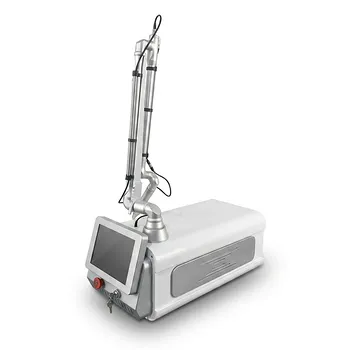
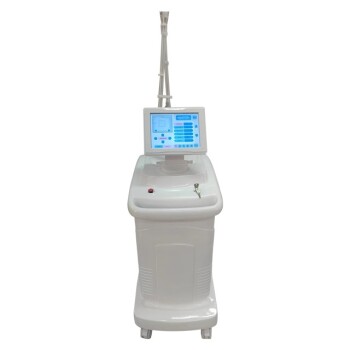
- Fractional CO2 Laser Machine for Skin Treatment
- Fractional CO2 Laser Machine for Skin Treatment
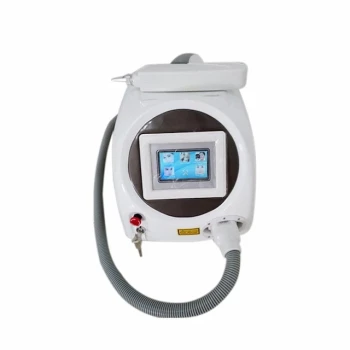
- Q Switch Nd Yag Laser Machine Tattoo Removal Nd Yag Machine
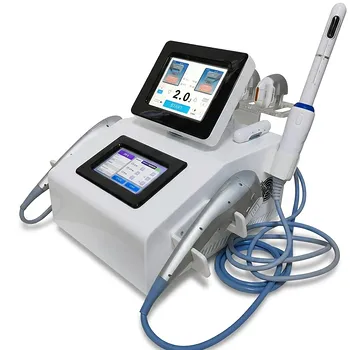
- Professional Face and Vaginal 7D HIFU System for HIFU Clinic Treatments
- Pico Laser Tattoo Removal Machine Picosure Picosecond Laser Machine
People Also Ask
- What is the technical principle behind CO2 Laser Fractional micro-perforations? Master Scar Revision Mechanics
- What parameters and treatment intervals are advised when applying fractional CO2 laser technology to delicate periorbital skin laxity? Discover safe protocols for eyelid rejuvenation.
- How do energy-based modalities complement injectable neurotoxins in décolleté rejuvenation? Explore synergistic benefits.
- What is the primary function of a high-precision fractional CO2 laser system for GSM? Restore Vaginal Health Naturally
- Why do fractional CO2 laser parameters need to be differentiated? Master Keloid vs. Hypertrophic Scar Treatment