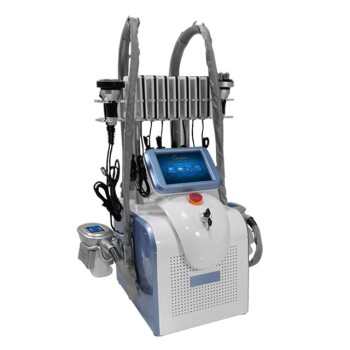
The fundamental difference lies in their mechanism of action. Ultrasound utilizes high-frequency sound waves to mechanically disrupt and break down fat cells with extreme precision. Conversely, radiofrequency (RF) employs electromagnetic waves to generate heat, treating a broader area to shrink fat cells while simultaneously stimulating collagen for skin tightening.
While both methods are non-invasive, the choice is driven by your specific anatomy: choose ultrasound for precise fat destruction in small areas, and opt for radiofrequency when treating larger zones where skin tightening is a priority alongside fat reduction.
Mechanisms of Action: How They Work
Ultrasound: Mechanical Disruption
Ultrasound technology relies on high-frequency sound waves. These waves penetrate the skin to create mechanical vibrations within the tissue.
This vibration specifically targets fat cells, causing them to break down and rupture without relying on heat.
Radiofrequency: Thermal Energy
Radiofrequency operates by emitting electromagnetic waves. These waves generate significant thermal energy (heat) within the tissue layers.
This heat serves two purposes: it causes fat cells to shrink and eventually die, and it affects the surrounding connective tissues.
Precision and Treatment Areas
The Precision of Ultrasound
Because ultrasound uses sound waves, it is highly precise. It targets fat cells exclusively without affecting the surrounding tissue structures.
This makes it the superior choice for small, defined areas. It is ideal for treating stubborn pockets of fat, such as under the chin or the "love handles."
The Broad Reach of Radiofrequency
Radiofrequency is designed to heat a broader surface area. While it affects fat, the heat disperses through nearby tissues as well.
This broader application makes RF better suited for larger body contours. It is frequently recommended for the abdomen, thighs, or flanks where general reduction is the goal rather than spot-treatment.
Secondary Benefits: Skin Tightening
The Collagen Bonus of RF
A distinct advantage of radiofrequency is its effect on the skin's structure. The heat generated during treatment stimulates natural collagen production.
This results in a skin-tightening effect, addressing laxity that often accompanies fat deposits. Ultrasound generally focuses purely on fat removal and does not offer this tightening benefit.
Addressing Cellulite
When targeting cellulite, the best option depends on the individual case. While RF is often favored for its tightening properties, sometimes a combination of both technologies yields the best smoothing results.
Understanding the Trade-offs
Specificity vs. Versatility
The trade-off is between focus and multi-tasking. Ultrasound is a specialist tool; it destroys fat efficiently but will not improve skin texture or looseness.
Radiofrequency is a multi-tasker; it reduces fat and tightens skin, but it lacks the microscopic targeting precision of ultrasound.
The Importance of Power
Regardless of the technology chosen, efficacy is not guaranteed by the method alone. Results hinge on the device being high-power and deep-acting.
Low-power consumer devices often fail to penetrate deeply enough to effect real change, regardless of whether they use sound waves or radio waves.
Making the Right Choice for Your Goal
To select the correct treatment, you must identify your primary aesthetic concern.
- If your primary focus is distinct, stubborn fat pockets: Choose ultrasound for its ability to precisely target and destroy fat cells in small areas like the chin.
- If your primary focus is general contouring with loose skin: Choose radiofrequency to reduce fat volume while simultaneously tightening the skin on areas like the stomach or thighs.
- If your primary focus is cellulite reduction: Consider a consultation for a combination approach, as blending high-power RF and ultrasound is often required for optimal smoothing.
Ultimately, successful body contouring requires matching the physics of the device to the specific condition of your tissue.
Summary Table:
| Feature | Ultrasound (Mechanical) | Radiofrequency (Thermal) |
|---|---|---|
| Mechanism | High-frequency sound waves | Electromagnetic heat energy |
| Primary Goal | Precise fat cell destruction | Fat reduction + Skin tightening |
| Precision | High (Targeted spot treatment) | Broad (General contouring) |
| Skin Tightening | Minimal to None | High (Stimulates Collagen) |
| Best For | Chin, Love handles, Stubborn pockets | Abdomen, Thighs, Large areas |
Elevate Your Clinic with BELIS Professional Body Sculpting Solutions
Are you looking to provide your clients with the latest in non-invasive fat reduction? BELIS specializes in professional-grade medical aesthetic equipment designed exclusively for clinics and premium salons. Whether you need the mechanical precision of advanced ultrasound or the multi-tasking thermal power of high-end RF Cavitation, EMSlim, and Cryolipolysis systems, we deliver high-power, deep-acting technology that guarantees visible results.
Our extensive portfolio also includes CO2 Fractional, Nd:YAG, Pico lasers, and Microneedle RF to ensure your business stays at the forefront of the aesthetic industry.
Ready to upgrade your service offerings? Contact us today to find the perfect system for your practice!
Related Products
- Ultrasonic Cavitation Radiofrecuency Machine for Body Slimming
- Cryolipolysis Fat Freezing Machine and Ultrasonic Cavitation Device
- 4D 12D HIFU Machine Device for Skin Tightening
- Cryolipolysis Fat Freezing Machine Ultrasonic Cavitation Fat Reducing Device
- EMSlim RG Laser Body Sculpting and Slimming Machine
People Also Ask
- What are the pros and cons of the ultrasonic cavitation slimming treatment? A Guide to Painless Body Contouring
- Does an ultrasonic cavitation machine also tighten the skin? Achieve Total Body Contouring with RF Synergy
- How does radiofrequency technology in slimming machines promote fat reduction? The Science of Non-Invasive Sculpting
- How should one prepare for an ultrasonic cavitation appointment? 5 Essential Tips for Maximum Fat Loss Results
- What areas of the body are targeted for ultrasonic cavitation? Best Zones for Effective Body Contouring