Q-switched lasers are generally preferable for discrete solar and senile lentigines. Q-switched Nd:YAG, Alexandrite, and Ruby systems deliver nanosecond pulses that selectively disrupt melanin-rich structures with limited surrounding thermal injury. Semiselective lasers, including argon and some 532 nm frequency-doubled Nd:YAG/KTP systems used with thermal coagulation principles, act less selectively and therefore carry a greater risk of epidermal injury, pigmentary change, and atrophy.
For isolated, well-defined lentigines, Q-switched systems provide the best balance of pigment selectivity, clearance, and limited tissue damage. Semiselective lasers may treat superficial pigmentation, but their broader thermal effect makes them less predictable and generally less attractive when a pigment-specific alternative is available.
How the Two Technologies Work
Q-switched laser treatment
Q-switched lasers emit very high peak power in nanosecond pulses. These pulses are short enough to target melanosomes and melanocytes before substantial heat spreads into adjacent epidermal and dermal tissue.
The resulting photothermal and photomechanical effect fragments pigment-containing structures. Clinically, the immediate endpoint is often whitening, followed by darkening, crusting, and gradual clearance as the treated material is removed by the body.
Semiselective laser treatment
Semiselective systems rely more heavily on bulk thermal coagulation of superficial epidermal tissue. Rather than confining the effect primarily to melanosomes, they can heat and damage surrounding tissue.
This makes the treatment less pigment-specific. The laser may remove the visible lesion, but it does so with a narrower margin of safety for normal epidermis and dermis.
How Q-Switched Systems Compare by Wavelength
532 nm Q-switched Nd:YAG
The 532 nm wavelength is strongly absorbed by melanin and is commonly used for superficial, epidermal lentigines. It is particularly effective for sharply defined, dark lesions with strong contrast against the surrounding skin.
Because this wavelength can also interact with superficial blood vessels, transient purpura or more pronounced erythema may occasionally occur. Careful parameter selection is important, especially in patients with a higher risk of post-inflammatory hyperpigmentation.
755 nm Alexandrite
Q-switched 755 nm Alexandrite provides strong melanin targeting and is useful for selected epidermal and more superficially situated pigmented lesions. It is often considered for light-skinned patients with dark, high-contrast lentigines.
Long-pulsed Alexandrite is a different treatment modality from Q-switched Alexandrite. Long-pulsed systems produce more heat and may be useful in selected patients, but they should not be assumed to have the same photomechanical, pigment-specific profile as nanosecond Q-switched treatment.
694 nm Ruby
The 694 nm Ruby laser has high melanin absorption and can produce substantial clearance of freckles and lentigines in appropriately selected patients. Its strong interaction with melanin also means that treatment settings and patient skin type require careful consideration.
Ruby systems are less commonly selected in some modern clinics than 532 nm Nd:YAG or 755 nm Alexandrite platforms, but the underlying principle remains the same: short pulses target pigment more selectively than semiselective thermal coagulation.
Why Q-Switched Lasers Usually Perform Better for Isolated Lesions
Greater pigment selectivity
Q-switched treatment is designed around selective photothermolysis. The pulse duration is matched more closely to the thermal behavior of melanosomes, helping concentrate energy within the pigmented target.
Semiselective treatment cannot confine heat as precisely. Its effect extends into normal surrounding tissue, increasing the likelihood of visible treatment injury.
Fewer treatment sessions
Well-selected lentigines may show excellent clearance after one or two Q-switched sessions, although some lesions require additional treatment. The final result depends on lesion depth, wavelength, fluence, skin type, and the accuracy of the diagnosis.
Semiselective systems may also produce visible improvement, but their less targeted mechanism does not provide the same level of predictability for isolated macules.
Lower risk of permanent textural damage
When appropriately performed, Q-switched treatment minimizes bulk thermal necrosis. This generally reduces the risk of scarring and permanent textural change compared with a system that thermally coagulates a broader area.
The risk is not zero. Excessive energy, poor patient selection, inadequate sun protection, or treatment of an incorrectly diagnosed lesion can still produce complications.
Safety and Recovery in Aesthetic Practice
Expected Q-switched endpoints
The immediate endpoint may be whitening, followed by erythema, edema, darkening, and superficial crusting. Redness and swelling commonly last around one to two days, while crusting may persist for up to approximately a week.
Patients should not remove crusts mechanically. Post-treatment care should emphasize gentle wound care and strict avoidance of ultraviolet exposure, because ultraviolet exposure increases the risk of persistent or recurrent pigmentation.
Pigmentary complications
The principal concern with Q-switched treatment is post-inflammatory hyperpigmentation, particularly in darker Fitzpatrick skin types or after excessive treatment intensity. Temporary hypopigmentation can also occur.
The claim that Q-switched lasers carry minimal risk should therefore be interpreted as minimal relative to less selective thermal techniques, not as an absence of risk.
Semiselective complications
Because semiselective systems heat a wider area, reported adverse effects include hypopigmentation, post-inflammatory hyperpigmentation, and superficial tissue atrophy. The primary reference cites rates as high as 25% for hypopigmentation, 10% for post-inflammatory hyperpigmentation, and 15% for superficial atrophy, although actual rates vary with device, settings, operator technique, skin type, and patient selection.
These risks are especially important when treating cosmetically sensitive areas where small changes in texture or pigmentation may remain noticeable.
Understanding the Trade-offs
Q-switched lasers are not ideal for every patient
Q-switched lasers are highly effective for distinct lesions, but they create a visible healing response. Patients should expect temporary erythema, swelling, darkening, or crusting rather than an entirely invisible recovery.
They also require careful management in darker skin types. A test spot, conservative settings, appropriate wavelength selection, and realistic counseling may be more important than simply choosing the highest-powered device.
Semiselective lasers may still have a role
Semiselective lasers can be considered when a clinic has a specific device, protocol, and level of experience with superficial vascular or pigmented lesions. However, their thermal mechanism should be explained clearly, particularly when a more selective Q-switched option is available.
They should not be presented as equivalent to Q-switched systems for pigment-specific lentigo removal. Their broader tissue effect is the central limitation.
Do not confuse semiselective lasers with IPL
IPL is a broad-spectrum light source rather than a semiselective laser in the strict technical sense. It is useful for diffuse pigmentation and photorejuvenation, especially when lentigines coexist with telangiectasia or broader photoaging.
For a small number of sharply defined lentigines, Q-switched lasers are generally more precise. IPL may be more efficient for treating a large area but usually requires multiple sessions and depends strongly on contrast between the lesion and surrounding skin.
Confirm the lesion before treating it
A changing, irregular, bleeding, or clinically atypical pigmented lesion should not be treated cosmetically without appropriate assessment. Laser removal can alter or partially obscure a lesion that requires diagnostic evaluation.
The first clinical decision is therefore not wavelength selection; it is confirming that the lesion is suitable for aesthetic treatment.
Choosing the Appropriate Clinic Protocol
Light skin with dark, high-contrast lentigines
These patients are often strong candidates for Q-switched 532 nm Nd:YAG, 755 nm Alexandrite, or 694 nm Ruby treatment. High contrast improves targeting and generally makes endpoint assessment easier.
Long-pulsed 755 nm Alexandrite may also be considered in selected light-skinned patients, but its thermal profile differs from Q-switched treatment and requires its own evidence-based protocol.
Darker skin or low-contrast lesions
In darker skin types, the margin between treating the lesion and damaging normal melanin is smaller. Conservative Q-switched protocols, test spots, and careful post-treatment ultraviolet protection are essential.
Depending on the clinical situation, longer-pulsed pigment lasers or non-ablative fractional systems may offer a lower-risk compromise, although they commonly require more sessions and may provide less sharply targeted clearance.
Diffuse photoaging with pigmentation
When the patient wants improvement in pigmentation plus telangiectasia, pore appearance, or overall photodamage, IPL or a fractional non-ablative platform may be more appropriate than a spot-treatment laser.
The trade-off is reduced precision. These technologies treat a broader field and may be less predictable for an individual deep or sharply delineated lentigo.
Making the Right Choice for Your Goal
The best system depends on whether the clinic is optimizing for precise lesion clearance, broad-area rejuvenation, or reduced pigmentary risk.
- If your primary focus is rapid clearance of isolated solar or senile lentigines: Prefer a properly selected Q-switched laser, most commonly 532 nm Nd:YAG, with Alexandrite or Ruby considered according to lesion and patient characteristics.
- If your primary focus is minimizing surrounding thermal injury: Choose Q-switched technology over semiselective thermal coagulation, while still accounting for the patient’s skin type and risk of post-inflammatory pigment change.
- If your primary focus is treating diffuse photoaging over a large area: Consider IPL or a non-ablative fractional laser rather than using a small-spot Q-switched laser across the entire treatment field.
- If your primary focus is treating darker skin safely: Use conservative parameters, test spots, rigorous ultraviolet avoidance, and consider alternatives that may reduce the risk of post-inflammatory hyperpigmentation.
For targeted lentigines, the most defensible clinical choice is a carefully selected Q-switched laser used with accurate diagnosis, conservative technique, and disciplined aftercare.
Summary Table:
| Feature | Q-Switched Lasers | Semiselective Lasers |
|---|---|---|
| Pulse duration | Nanoseconds | Longer (thermal coagulation) |
| Pigment selectivity | High | Low |
| Risk of epidermal damage | Low | High |
| Risk of pigmentary changes | Lower | Higher (e.g., 25% hypopigmentation) |
| Typical sessions | 1-2 | Variable, often more |
| Best for | Discrete, well-defined lentigines | Superficial pigmentation (less predictable) |
Elevate your clinic's lentigo treatment with BELIS's advanced Q-switched laser systems, exclusively for clinics and premium salons. Achieve superior clearance with minimal downtime and enhance patient satisfaction. Contact us today to discuss your needs and discover how our professional-grade aesthetic equipment can transform your practice.
Related Products
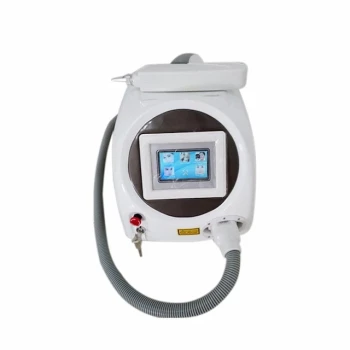
- Q Switch Nd Yag Laser Machine Tattoo Removal Nd Yag Machine
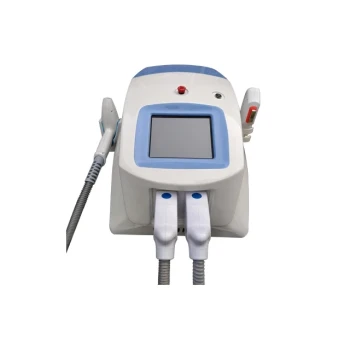
- Clinic Use IPL and SHR Hair Removal Machine with Nd Yag Laser Tattoo Removal
- Clinic Use IPL SHR ND YAG Laser Hair Removal RF Skin Tightening Machine
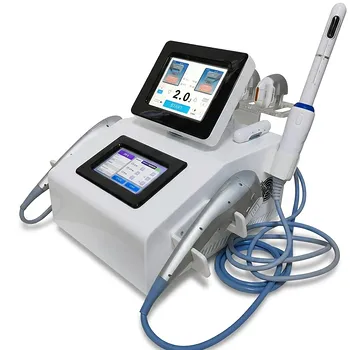
- Professional Face and Vaginal 7D HIFU System for HIFU Clinic Treatments
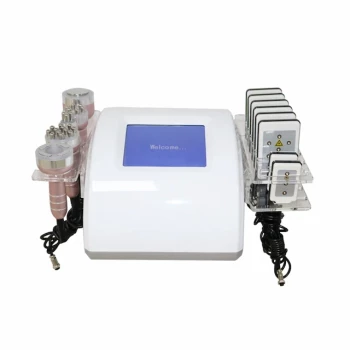
- Ultrasonic Cavitation Machine Lipo Laser Device
People Also Ask
- How do wavelength selection and parameter guidelines differ when using Q-switched Nd:YAG laser equipment for removing different tattoo colors? Master Tattoo Removal for Every Color
- How does laser fluence influence pigment clearance vs. safety? Balancing Speed and Skin Integrity in Tattoo Removal
- What is the documented effectiveness of Q-switched Nd:YAG lasers for tattoo removal? Gold Standard Results
- What pigment compositions and particle properties should practitioners evaluate before operating Q-switched Nd:YAG lasers for tattoo removal? Evaluate pigment composition and particle size for safe, effective tattoo removal.
- How should wavelength and fluence settings be adjusted on Nd:YAG and Q-switched lasers when treating darker skin tones? Optimize Safety & Efficacy