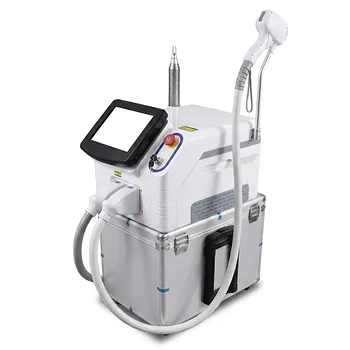
Pulse duration and wavelength are the two governing choices in Q-switched tattoo removal. The pulse must be no longer than the tattoo particle’s thermal relaxation time, so energy remains confined to the ink instead of spreading into surrounding dermis. The wavelength must also match the ink’s absorption characteristics and depth, which is why no single Q-switched laser system treats every tattoo equally.
The central principle is temporal and spectral matching: use an ultrashort pulse to fragment pigment before heat diffuses outward, then select the wavelength that reaches and is absorbed by the specific ink color.
Why Pulse Duration Determines Treatment Selectivity
The Role of Thermal Relaxation Time
Thermal relaxation time is the approximate time required for a heated target to lose a substantial amount of its thermal energy.
For selective photothermolysis to work, the laser pulse should be equal to or shorter than the target’s thermal relaxation time. This limits heat conduction into adjacent skin.
Tattoo particles are extremely small, so their thermal relaxation time is very short. That requires nanosecond or shorter pulses, rather than the longer millisecond pulses used for larger targets such as hair follicles or blood vessels.
Why Q-Switched Pulses Fragment Ink
Q-switched systems store laser energy and release it in a brief, high-peak-power pulse, commonly in the nanosecond range.
The pigment absorbs the energy rapidly. This produces rapid thermal expansion and photoacoustic or photomechanical stress, which breaks the ink into smaller fragments that can subsequently be removed by cellular and lymphatic processes.
The objective is not to heat the entire tattoo region. It is to deliver enough energy to disrupt the pigment while limiting sustained thermal damage to the surrounding epidermis and dermis.
Nanoseconds Versus Picoseconds
Nanosecond Q-switched lasers remain an established clinical option for many tattoos, particularly when the ink responds well to conventional wavelengths.
Picosecond systems use even shorter pulses, often in the sub-nanosecond range. Their shorter duration increases peak power and can emphasize photoacoustic fragmentation, potentially producing finer pigment fragments and improving response in some resistant tattoos.
Picosecond technology is not automatically superior for every case. Ink composition, wavelength, fluence, spot size, treatment interval, and patient skin characteristics all influence the result.
How Wavelength Determines Which Ink Can Be Treated
1064 nm for Black and Dark Blue Ink
A Q-switched 1064 nm Nd:YAG laser is commonly selected for black and dark blue pigments.
Its longer wavelength penetrates relatively deeply and is less strongly absorbed by epidermal melanin than shorter visible wavelengths. This makes it particularly useful for deeper pigment and often more suitable for darker skin types when used with appropriate clinical judgment.
532 nm for Red, Orange, and Some Yellow Pigments
Frequency-doubled Nd:YAG systems produce 532 nm light, which is strongly absorbed by many red, orange, and related warm-colored pigments.
Because 532 nm light is more readily absorbed by epidermal melanin and is less deeply penetrating than 1064 nm light, it generally requires greater caution in patients with more heavily pigmented skin or recently tanned skin.
755 nm and 694 nm for Blue and Green Pigments
Alexandrite systems operating at 755 nm and Ruby systems operating at 694 nm are commonly associated with blue and green tattoo pigments.
Their effectiveness depends on the actual ink formulation. Modern tattoo inks contain varied and sometimes mixed compounds, so color labels alone do not reliably predict laser response.
Wavelength Must Follow the Ink, Not the Device
A tattoo that appears to contain one color may include multiple pigments, layering, or colorants with different absorption profiles.
For that reason, treatment planning may require more than one wavelength. Test spots and conservative parameter escalation help confirm how the specific ink and the patient’s skin respond.
How Pulse Duration and Wavelength Work Together
Pulse Duration Controls Heat Containment
Pulse duration answers the question: How quickly must energy be delivered to keep the treatment localized?
If the pulse is too long for the pigment target, heat has more time to diffuse into surrounding tissue. That increases the risk of blistering, textural change, pigmentary alteration, and other thermal injury.
Wavelength Controls Energy Deposition
Wavelength answers a different question: Where will the laser energy be absorbed, and how deeply will it reach?
A pulse can be extremely short but still ineffective if the wavelength is poorly absorbed by the target pigment or cannot reach its depth. Effective treatment therefore requires both temporal selectivity and chromophore selectivity.
Fluence Completes the Treatment Equation
Fluence is the energy delivered per unit area. It must be high enough to produce pigment disruption but low enough to avoid unacceptable tissue injury.
There is no universally correct fluence for every tattoo. Appropriate settings depend on the wavelength, spot size, pulse duration, ink density, tattoo depth, skin type, treatment history, and immediate tissue response.
Selecting the Appropriate Q-Switched System
Choose Nd:YAG for Versatility and Deeper Dark Pigment
A dual-wavelength Q-switched Nd:YAG platform, typically offering 1064 nm and 532 nm, provides broad utility.
The 1064 nm wavelength addresses many black and dark blue tattoos, while 532 nm expands treatment capability for red and orange pigments. This combination is often practical for clinics treating a varied patient population.
Choose Alexandrite or Ruby for Specific Color Profiles
A 755 nm Alexandrite or 694 nm Ruby system may be advantageous when blue and green pigments are a major part of the clinical workload.
These systems should be viewed as complementary tools rather than universal replacements for Nd:YAG. The best choice depends on the colors, depth, and formulations encountered in the practice.
Consider Picosecond Technology for Resistant or Complex Ink
Picosecond systems may be considered when tattoos contain resistant pigments, dense professional ink, or colors that have responded poorly to nanosecond treatment.
Their potential advantage comes from higher peak power and strong photoacoustic fragmentation. However, the added cost and complexity should be justified by the clinical case mix rather than by pulse duration alone.
Understanding the Trade-offs
Shorter Is Not Always Better
Shorter pulses can increase peak power, but they do not eliminate the need for correct wavelength selection and controlled fluence.
A picosecond device using an unsuitable wavelength may perform worse than a well-selected nanosecond system matched to the ink.
Multiple Sessions Are Usually Necessary
Laser fragmentation does not remove all pigment immediately. The body must process and clear the resulting particles, so treatments are normally separated by healing and clearance intervals.
Dense professional tattoos, layered colors, scarred tissue, and certain modern pigments may require more sessions or may show incomplete clearance.
Adverse Effects Remain Possible
Even correctly selected systems can cause transient whitening, redness, swelling, blistering, pigmentary changes, or textural alteration.
The risk increases with excessive fluence, inappropriate wavelength selection, overlapping pulses, recent tanning, inadequate cooling, or poor patient selection. Laser choice reduces risk, but it does not replace conservative technique and appropriate clinical assessment.
Ink Chemistry Can Create Unexpected Responses
Some pigments may darken rather than lighten after laser exposure, particularly when their chemistry changes under treatment.
This is one reason a test spot, detailed tattoo history, and staged treatment strategy are important, especially when the pigment composition is unknown.
Making the Right Choice for Your Goal
The practical decision should begin with the tattoo’s colors and depth, then be refined according to skin type, prior response, and available pulse durations.
- If your primary focus is broad clinical versatility: Choose a system that combines 1064 nm and 532 nm capabilities, with nanosecond pulses suitable for common dark, red, and orange pigments.
- If your primary focus is blue and green pigment removal: Evaluate 694 nm Ruby or 755 nm Alexandrite capability, while confirming that the specific ink formulations respond to the selected wavelength.
- If your primary focus is darker skin types: Give particular attention to longer-wavelength 1064 nm treatment, conservative parameters, and the reduced epidermal-melanin absorption that can improve the safety margin.
- If your primary focus is resistant or densely pigmented tattoos: Consider picosecond technology for its higher peak power and potential for finer photoacoustic fragmentation, without treating it as a substitute for correct wavelength matching.
- If your primary focus is minimizing complications: Prioritize thermal-relaxation-time matching, test spots, controlled fluence, appropriate treatment intervals, and careful assessment of tanning and pigmentary risk.
The right Q-switched laser is the system that matches pulse duration, wavelength, energy, depth, and patient skin characteristics to the specific tattoo rather than relying on pulse duration alone.
Summary Table:
| Factor | Role in Tattoo Removal | Key Considerations |
|---|---|---|
| Pulse Duration | Must be ≤ thermal relaxation time to contain heat in ink particles | Nanosecond vs picosecond; shorter pulses increase photoacoustic effects but don't guarantee efficacy |
| Wavelength | Matches ink absorption and depth | 1064 nm for dark/blue, 532 nm for red/orange, 694/755 nm for blue/green; modern inks may vary |
| Fluence | Energy per area; enough to fragment ink without excessive damage | Adjust based on target response and skin type |
| Clinical Factors | Skin type, ink composition, treatment history | Test spots, staged approach, and conservative parameters minimize risks |
Optimize your tattoo removal results with the right Q-switched laser system. At BELIS, we offer advanced Nd:YAG, Picosecond, and Alexandrite platforms designed for clinics and premium salons. Our equipment ensures precise pulse durations and wavelengths for safe, effective treatment across all ink types. Ready to elevate your practice? Contact us today to find the perfect solution tailored to your clinical needs.
Related Products
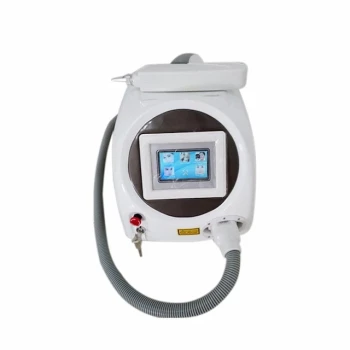
- Q Switch Nd Yag Laser Machine Tattoo Removal Nd Yag Machine
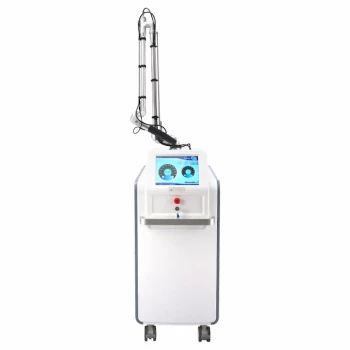
- Pico Laser Tattoo Removal Machine Picosure Picosecond Laser Machine
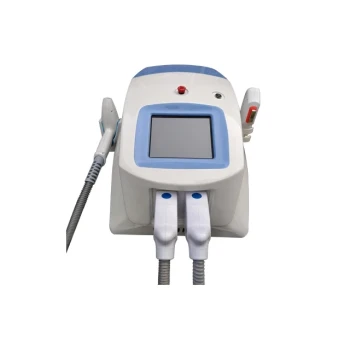
- Clinic Use IPL and SHR Hair Removal Machine with Nd Yag Laser Tattoo Removal
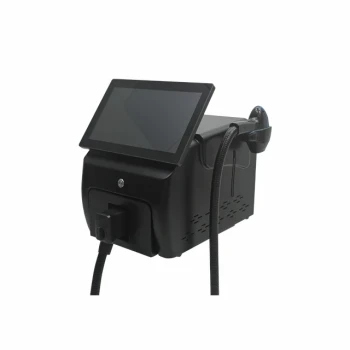
- Diode Laser SHR Trilaser Hair Removal Machine for Clinic Use
- Trilaser Diode Hair Removal Machine for Beauty Clinic Use
People Also Ask
- What is the documented effectiveness of Q-switched Nd:YAG lasers for tattoo removal? Gold Standard Results
- How does laser fluence influence pigment clearance vs. safety? Balancing Speed and Skin Integrity in Tattoo Removal
- How do wavelength selection and parameter guidelines differ when using Q-switched Nd:YAG laser equipment for removing different tattoo colors? Master Tattoo Removal for Every Color
- What pigment compositions and particle properties should practitioners evaluate before operating Q-switched Nd:YAG lasers for tattoo removal? Evaluate pigment composition and particle size for safe, effective tattoo removal.
- How should wavelength and fluence settings be adjusted on Nd:YAG and Q-switched lasers when treating darker skin tones? Optimize Safety & Efficacy