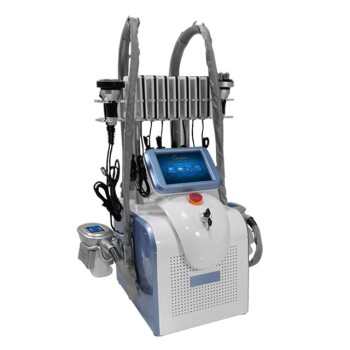
In brief: IGF-1, FGF, and VEGF can support hair restoration by acting on different parts of the follicle environment. IGF-1 and selected FGFs influence follicular-cell proliferation and hair-cycle signaling, while VEGF supports the blood-vessel network around the follicle. When combined with low-level light or other photobiomodulation devices, these signals may complement cellular effects that promote the anagen growth phase—but the combination is not automatically synergistic or clinically proven for every device and diagnosis.
The central idea: Growth factors provide biological signals, while a specialized hair-growth machine may modify cellular energy and signaling through photobiomodulation. Better outcomes depend on matching the growth-factor treatment, device parameters, diagnosis, and treatment schedule—not simply combining two interventions.
How Growth Factors Influence the Follicle
IGF-1 supports follicular-cell activity
IGF-1 can promote the proliferation and survival of follicular epithelial cells, including cells involved in producing the hair shaft. It also participates in signaling between the dermal papilla and the epithelial portion of the follicle.
This matters because the dermal papilla helps regulate whether a follicle remains in, enters, or exits the anagen, or active growth, phase.
FGF regulates follicular signaling
Fibroblast growth factors are a family of signaling proteins rather than a single uniform molecule. Depending on the specific FGF, concentration, receptor, and cellular context, they can influence epithelial-cell proliferation, dermal papilla activity, and hair-cycle transitions.
In the intended therapeutic context, selected FGF signals may help support follicular-cell activity and coordinate communication within the follicle. Their effects should not be treated as interchangeable, because different FGF subtypes can produce different biological responses.
VEGF improves the perifollicular environment
VEGF stimulates angiogenesis, the formation or remodeling of small blood vessels. Around a miniaturized follicle, improved perifollicular vascular support may increase access to oxygen, nutrients, and signaling factors.
VEGF does not directly rebuild a follicle by itself. Its potential value is improving the surrounding microenvironment so that responsive follicular cells can function more effectively.
How These Signals Interact With Follicular Cells
Dermal papilla cells act as a signaling hub
Dermal papilla cells sit at the base of the follicle and communicate with the epithelial cells that generate the hair shaft. IGF-1 and FGF-related signaling can influence this communication and help support the transition toward productive follicular activity.
This interaction is important because hair growth is controlled by a network of signals, not by one isolated growth factor.
Epithelial and matrix cells produce the shaft
Follicular epithelial and matrix cells divide rapidly during anagen. Signals that support their proliferation and survival can contribute to a longer or more productive growth phase.
If these cells remain responsive, the expected clinical effects may include improved hair density, reduced miniaturization, or greater shaft thickness. The degree of improvement depends on how much functional follicular tissue remains.
Endothelial cells support vascular remodeling
VEGF primarily acts through endothelial cells lining blood vessels. Increased perifollicular vascular signaling can complement the metabolic demands of actively growing follicles.
However, increased blood-vessel signaling alone does not guarantee visible regrowth. Follicular responsiveness, the underlying cause of hair loss, and the quality of the treatment protocol remain decisive.
What the Hair-Growth Machine Adds
Photobiomodulation may influence cellular energy
Low-level light or low-level energy devices are generally intended to produce photobiomodulatory effects rather than thermal tissue destruction. These effects may influence cellular energy use and downstream signaling in susceptible tissues.
In a combined approach, the device is not supplying IGF-1, FGF, or VEGF. Instead, it may create a cellular environment in which existing or administered signals can be more readily utilized.
The interaction is complementary, not automatically synergistic
Growth factors and photobiomodulation act through overlapping biological processes, including cell survival, proliferation, and tissue signaling. That creates a plausible rationale for combination therapy.
But biological plausibility is not the same as proven clinical synergy. A treatment should be called synergistic only when controlled clinical evidence demonstrates that the combination performs better than either intervention alone.
Device parameters determine the biological effect
Outcome depends on factors such as wavelength or energy type, dose, exposure duration, treatment frequency, coverage, and device geometry. A machine with a different specification may not produce the same result as one used in a clinical study.
For that reason, growth-factor therapy cannot compensate for an unsuitable or inconsistently applied device protocol.
How the Combination May Affect Clinical Outcomes
Extending the anagen phase
If the combined treatment supports dermal papilla signaling and follicular-cell activity, it may help maintain follicles in the anagen phase for longer. A longer growth phase can allow more time for shaft production.
This should be understood as a potential treatment effect, not a guaranteed result. Some follicles may be too miniaturized, scarred, or biologically inactive to respond.
Improving shaft thickness and density
IGF-1 and FGF-related epithelial signaling may support the cells responsible for shaft formation, while VEGF may improve the surrounding vascular environment. Together, these effects could contribute to thicker shafts and improved apparent density.
Visible density can improve through both true growth and reduced miniaturization. Standardized photography and hair measurements are needed to distinguish meaningful change from normal variation.
Reactivating responsive follicles
The term “dormant follicle” is often used broadly. Some follicles are miniaturized but viable, whereas others may be severely damaged or absent.
Growth-factor and device-based treatments are more likely to help viable, responsive follicles than areas where follicular structures have been permanently destroyed.
Understanding the Trade-offs
Growth-factor composition is variable
Platelet-derived preparations are not chemically identical from one patient or preparation method to another. Platelet concentration, activation method, leukocyte content, preparation quality, and injection technique can all affect the signaling profile.
Therefore, results from one platelet-based protocol cannot automatically be applied to every product marketed as a growth-factor treatment.
More signaling is not always better
Growth factors operate within tightly regulated concentration ranges and receptor networks. Increasing the amount does not necessarily produce proportionally better follicular growth and may alter inflammatory or vascular responses.
Clinical protocols should prioritize reproducibility and safety rather than maximal concentration.
Hair-loss diagnosis remains fundamental
Androgenetic alopecia, alopecia areata, telogen effluvium, and scarring alopecias involve different mechanisms. A growth-factor and device combination may be inappropriate or insufficient if the underlying diagnosis is incorrect.
Scarring alopecia, in particular, requires timely specialist assessment because permanent follicular destruction may continue despite cosmetic stimulation.
Combination therapy can obscure the true cause of improvement
If a patient receives platelet-derived treatment, photobiomodulation, medication, and supplements simultaneously, it becomes difficult to determine which intervention produced the result. This complicates optimization and may expose the patient to unnecessary cost or risk.
A well-designed plan should define the treatment objective, baseline measurements, follow-up interval, and criteria for continuation.
Safety and regulation cannot be assumed
“Specialized” does not necessarily mean clinically validated. Devices should be used according to their intended indications, and injectable platelet-based procedures should be performed by qualified clinicians using appropriate sterile techniques.
Patients should also be informed that improvement is usually gradual and that nonresponse remains possible.
How to Apply This to Clinical Practice
A rational protocol treats the growth factors and the machine as parts of a coordinated plan rather than as independent guarantees.
- If your primary focus is follicular signaling: Prioritize an evidence-based diagnosis and a standardized growth-factor protocol that addresses dermal papilla and epithelial-cell responsiveness.
- If your primary focus is vascular support: Consider how VEGF-related activity may support the perifollicular environment, while recognizing that vascular signaling alone does not restore destroyed follicles.
- If your primary focus is photobiomodulation: Verify the device’s wavelength, energy parameters, treatment schedule, coverage, and clinical evidence rather than relying on the label “low-level” or “specialized.”
- If your primary focus is measurable clinical outcomes: Establish baseline photographs and hair-density or shaft-thickness measurements, then assess results after an appropriate hair-cycle interval.
- If your primary focus is patient safety: Confirm the diagnosis, review contraindications and treatment risks, and avoid presenting the combination as guaranteed or universally synergistic.
The most effective approach is a diagnosis-led, protocol-controlled combination in which growth factors support follicular signaling and photobiomodulation is used only when its device parameters and clinical role are appropriate.
Summary Table:
| Growth Factor | Primary Action | Interaction with Follicular Cells | Clinical Relevance |
|---|---|---|---|
| IGF-1 | Supports proliferation and survival of follicular epithelial cells | Enhances dermal papilla signaling | Promotes anagen phase, potentially increasing hair density |
| FGF (selected subtypes) | Regulates epithelial and dermal papilla signaling | Modulates hair cycle transitions | Supports follicle regeneration and coordination |
| VEGF | Stimulates angiogenesis | Improves perifollicular vascular supply | Enhances nutrient/oxygen delivery, supporting follicular function |
Ready to elevate your practice with evidence-based hair restoration? At BELIS, we provide professional-grade medical aesthetic equipment, including advanced laser systems and photobiomodulation devices, tailored for clinics and premium salons. Our portfolio also features growth factor-compatible technologies and comprehensive solutions. Contact our experts today to optimize your clinical outcomes. Get in touch now.
Related Products
- Multifunctional Laser Hair Growth Machine Device for Hair Growth
- Multifunctional Laser Hair Growth Machine Device for Hair Growth
- Professional IPL SHR Hair Removal Machine for Laser and IPL Hair Removal
- Tri Laser Diode Hair Removal Machine Professional Beauty Equipment
- Diode Laser SHR Trilaser Hair Removal Machine for Clinic Use
People Also Ask
- Why do professional-grade laser hair growth devices integrate LCD displays? Achieve Clinical Precision in Every Session
- What is a typical treatment schedule when using a laser hair growth device? Maximize Results with the Proven Protocol
- How do professional-grade laser stimulation devices contribute to improving hairline morphology? Revitalize Growth & Symmetry
- For which conditions have laser hair growth treatment devices been approved? Targeted Solutions for Androgenic Alopecia
- How do the biological phases of the hair growth cycle inform the clinical application of specialized hair growth devices for treating androgenetic alopecia? Insights for Clinics & Salons