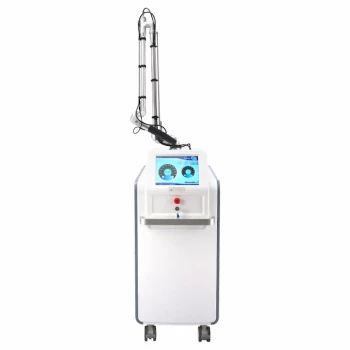
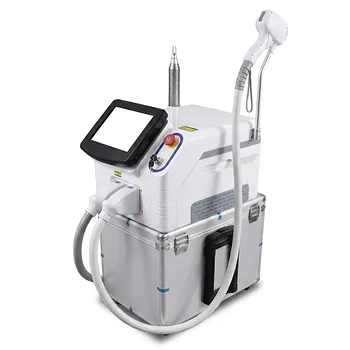
Picosecond and subnanosecond lasers generally create a stronger photomechanical effect with less heat than traditional Q-switched Nd:YAG lasers. Their 450–750 picosecond pulses are much shorter than the 5–10 nanosecond pulses used by conventional Q-switched systems, allowing them to interact more closely with the approximately 300-picosecond stress relaxation time of melanosomes. This can fragment pigment more efficiently while reducing thermal injury, but it does not eliminate the risk of irritation, recurrence, or post-inflammatory hyperpigmentation in melasma.
Picosecond lasers offer a physical, not automatic, safety advantage: shorter pulses can improve pigment fragmentation and limit heat diffusion, but outcomes still depend on wavelength, fluence, treatment intervals, skin type, and the underlying biology of melasma.
How the Two Laser Technologies Work
Traditional Q-Switched Nd:YAG Lasers
Q-switched Nd:YAG lasers commonly deliver pulses in the 5–10 nanosecond range. Their energy can disrupt melanosomes, but a greater proportion of the effect may involve photothermal heating of pigment and nearby tissue.
This approach can be effective for selected pigmented lesions. In melasma, however, repeated thermal stimulation may contribute to inflammation and increase the risk of worsening pigmentation, particularly in darker skin types.
Picosecond and Subnanosecond Lasers
Picosecond systems deliver pulses in the subnanosecond range, including durations such as 450–750 picoseconds. The shorter pulse is closer to the stress relaxation time of a melanosome, which is approximately 300 picoseconds.
When energy is delivered within this timescale, the pigment experiences rapid mechanical stress before heat can diffuse widely into surrounding tissue. The resulting effect is predominantly photoacoustic or photomechanical, rather than primarily thermal.
Why Pulse Duration Matters
More Focused Stress on Melanosomes
A melanosome can be understood as a small pigment-containing target embedded within skin. When the laser pulse is appropriately timed, mechanical stress is concentrated in that target instead of spreading as heat through a larger volume of tissue.
The primary reference indicates that picosecond pulses can generate substantially higher peak tensile stress, potentially up to 100 times higher, while keeping the acoustic shockwave spatially limited. This supports more effective pigment fragmentation.
Smaller Pigment Fragments
Picosecond treatment can break melanosomes into finer particles than conventional nanosecond treatment. These smaller fragments may be more readily removed through the skin’s normal immune and phagocytic clearance processes.
This does not mean pigment disappears immediately. Clearance occurs over time, and the visible result also depends on whether the biological drivers of melasma remain active.
Less Unwanted Heat
The shorter pulse duration reduces the time available for heat to spread into the epidermis and surrounding dermis. That can reduce collateral thermal injury, inflammation, and discomfort compared with treatments that rely more heavily on heating.
The benefit is especially relevant for patients with darker skin phototypes, who are more susceptible to post-inflammatory hyperpigmentation after irritation or injury.
Comparing Clinical Implications
Pigment Clearance
Both technologies can disrupt melanin. Picosecond lasers may provide more efficient fragmentation and clearance because they generate stronger mechanical stress and smaller pigment particles.
However, “more powerful” does not automatically mean “better.” Melasma is often recurrent and involves vascular, hormonal, inflammatory, and dermal components that cannot be corrected by pigment fragmentation alone.
Risk of Epidermal Injury
Traditional Q-switched Nd:YAG lasers can produce satisfactory results when carefully selected and conservatively administered. Their greater thermal component may nevertheless increase the likelihood of epidermal irritation, prolonged inflammation, or uneven pigment response.
Picosecond treatment generally offers less thermal diffusion, which may lower these risks. The risk is reduced, not removed, because laser energy can still injure tissue when settings or treatment intervals are inappropriate.
Suitability for Darker Skin
Darker skin contains more epidermal melanin, so the epidermis competes with the target pigment for laser energy. Excessive heating can trigger inflammation and post-inflammatory hyperpigmentation.
Picosecond devices may be advantageous in this context because their photomechanical action can target pigment with less surrounding heat. Careful wavelength selection and conservative parameters remain essential.
Refractory Pigmentation
Picosecond lasers may be useful when pigmentation has responded incompletely to conventional Q-switched treatment. Finer pigment fragmentation and reduced thermal exposure can provide a different treatment profile for persistent lesions.
For melasma specifically, laser should generally be considered part of a broader management plan rather than a standalone cure. Recurrence is common if triggers and maintenance therapy are not addressed.
Understanding the Trade-offs
Picosecond Does Not Mean Risk-Free
A picosecond laser can still cause erythema, edema, crusting, irritation, or pigmentary changes. In susceptible patients, even a predominantly photomechanical treatment may provoke inflammation and worsen melasma.
The device label, wavelength, spot size, fluence, repetition rate, and operator technique all affect the risk profile. Pulse duration alone cannot determine safety.
Melasma Is Not a Simple Pigment Deposit
Melasma often involves more than superficial melanin. Its persistence may reflect ongoing ultraviolet and visible-light exposure, hormonal influences, inflammation, vascular changes, and dermal pigment.
Fragmenting pigment may improve the visible appearance without preventing new pigment formation. This is why recurrence after laser treatment remains a central limitation.
More Aggressive Treatment Can Backfire
Increasing energy to accelerate clearance can increase inflammation and thermal injury. In melasma, that inflammatory response may stimulate additional pigmentation and undermine the original treatment goal.
A controlled, staged approach is usually more defensible than pursuing immediate maximal lightening.
Marketing Claims Need Context
Claims such as “no downtime,” “no thermal damage,” or “permanent clearance” oversimplify the treatment. Picosecond lasers reduce heat-related exposure relative to longer-pulse systems, but they do not eliminate tissue response or guarantee durable results.
Clinical evidence also depends on the specific device, treatment protocol, patient population, and definition of improvement. Results from one wavelength or indication should not automatically be generalized to every melasma case.
Choosing the Right Treatment Approach
Match the Wavelength to the Lesion
Picosecond Nd:YAG systems may be available at wavelengths such as 532 nm and 1064 nm, while other platforms use wavelengths such as 755 nm. These wavelengths differ in penetration, melanin absorption, and suitability for particular lesion depths and skin types.
The safest choice depends on whether the target is epidermal, dermal, mixed, or not actually melasma. A correct diagnosis should precede device selection.
Control the Inflammatory Response
Laser treatment should be paired with rigorous protection from ultraviolet and visible light. Appropriate topical management and maintenance therapy may be necessary to reduce recurrence and protect the result.
Patients with a history of post-inflammatory hyperpigmentation may require particularly conservative settings, longer intervals, and careful monitoring.
Evaluate the Diagnosis Before Treating
Not every brown facial patch is melasma. Solar lentigines, post-inflammatory hyperpigmentation, drug-induced pigmentation, nevus-related lesions, and other conditions can resemble it but require different strategies.
Diagnostic uncertainty is a reason to reassess the condition, not simply to increase laser intensity.
Making the Right Choice for Your Goal
The practical decision should be based on the lesion, skin phototype, recurrence risk, and tolerance for downtime rather than on pulse duration alone.
- If your primary focus is minimizing thermal injury: A properly selected picosecond or subnanosecond laser may be preferable because its stronger photomechanical action limits heat diffusion more effectively than a traditional Q-switched Nd:YAG pulse.
- If your primary focus is treating a discrete pigmented lesion: Either technology may be appropriate, provided the wavelength and parameters match the lesion’s depth and pigment characteristics.
- If your primary focus is managing melasma: Treat laser as one component of a comprehensive plan that includes light protection, medical therapy when appropriate, and recurrence prevention.
- If your primary focus is reducing post-inflammatory hyperpigmentation risk: Favor conservative treatment planning, especially for darker skin types, because even picosecond devices can provoke inflammation when overtreated.
- If your primary focus is treating refractory pigmentation: Picosecond technology may offer an alternative when conventional Q-switched treatment has produced incomplete clearance, but the diagnosis and previous treatment response should be reviewed first.
The key advantage of picosecond technology is more efficient mechanical pigment disruption with less collateral heat, while the key determinant of success remains thoughtful patient selection and conservative, diagnosis-driven treatment.
Summary Table:
| Aspect | Picosecond Lasers | Traditional Q-Switched Nd:YAG |
|---|---|---|
| Pulse Duration | 450-750 ps | 5-10 ns |
| Mechanism | Photomechanical | Photothermal + Mechanical |
| Thermal Damage | Lower | Higher |
| Pigment Fragmentation | Finer | Coarser |
| Risk for Darker Skin | Lower | Higher |
| Recurrence Risk in Melasma | Still Possible | Still Possible |
Elevate Your Aesthetic Practice with BELIS
At BELIS, we specialize in professional-grade medical aesthetic equipment designed exclusively for clinics and premium salons. Our advanced portfolio includes picosecond lasers for precise pigmentation treatment, alongside Q-switched Nd:YAG, diode lasers, and IPL systems. Whether you're targeting melasma or other pigmented lesions, our technology delivers superior results with safety and efficiency.
- For Clinics: Enhance your treatment offerings with cutting-edge laser systems that minimize downtime and maximize patient satisfaction.
- For Distributors: Benefit from attractive profit margins, OEM/ODM support, full certifications, and reliable supply chain.
Take the next step in aesthetic innovation. Contact us today to discuss how BELIS can elevate your practice or business!
Related Products
- Pico Laser Tattoo Removal Machine Picosure Picosecond Laser Machine
- 808nm Diode Laser Hair Removal Machine and Equipment with Picolaser Arm
People Also Ask
- How does a laser tattoo removal machine work? Shattering Ink with Precision Light
- Why is the precise adjustment of energy density, or fluence, critical during picosecond laser tattoo removal procedures?
- How does the pulse duration of a laser system influence the efficacy of tattoo ink clearance? Master Picosecond Tech
- What role does picosecond laser equipment play in tattoo removal? Faster Results & Advanced Precision
- What are the technical advantages of using Pico Laser or Nd:YAG Laser systems? Achieve Faster, Safer Tattoo Removal