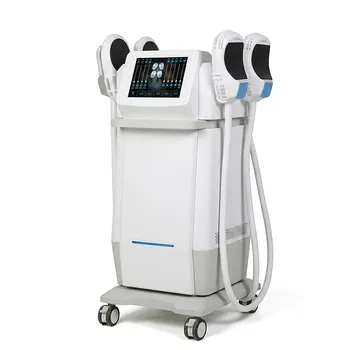
Dual-wavelength laser systems optimize body sculpting by assigning different tissue effects to 1,064 nm and 1,320 nm energy. The 1,064 nm modality generally provides deeper penetration with relatively lower water absorption, supporting coagulation, controlled heating, and tissue remodeling. The 1,320 nm modality is more strongly absorbed by water in fat and soft tissue, helping heat, disrupt, and liquefy localized adipose deposits while contributing to dermal tightening.
The core advantage is layer-specific treatment: one wavelength helps reduce fat volume and control tissue bleeding, while the other generates targeted thermal stimulation for collagen contraction and skin retraction. The clinical result depends on how the wavelengths are sequenced, delivered, and thermally controlled.
How the Two Wavelengths Divide the Work
The Role of 1,064 nm Energy
At 1,064 nm, energy can penetrate relatively deeply into subcutaneous tissue. Its interaction with blood-containing structures can support coagulation and hemostasis, while controlled heating may contribute to collagen contraction and later remodeling.
The exact balance between fat disruption, vascular coagulation, and dermal heating depends on the device’s power, pulse duration, fiber position, and delivery technique. It is therefore more accurate to view 1,064 nm as a deep, versatile wavelength rather than as exclusively superficial or exclusively adipose-targeting.
The Role of 1,320 nm Energy
The 1,320 nm wavelength has stronger absorption in water-rich tissue, including adipose tissue and the dermis. This allows it to generate localized heat that can disrupt adipocyte membranes, soften or liquefy fat, and stimulate thermal remodeling.
Because tissue water absorbs this wavelength more readily, 1,320 nm energy can produce efficient heating over a more controlled treatment zone. This makes it useful when the goal is to address fat volume and skin laxity during the same procedure.
Why the Combination Is More Useful Than Either Wavelength Alone
A single wavelength has a narrower tissue-interaction profile. Combining two wavelengths gives the practitioner greater control over where heat is generated and which tissue response is emphasized.
The system can therefore address two related problems at once: excess localized fat and insufficient skin recoil. Fat reduction creates the contour change, while controlled thermal exposure helps the overlying skin adapt to the reduced volume.
How Dual Wavelengths Improve Procedural Efficiency
Layered Treatment of Fat and Skin
Laser-assisted body sculpting often requires treatment across multiple tissue planes. Energy may be delivered through a fiber cannula into subcutaneous tissue, where it can target fat, small blood vessels, and the undersurface of the dermis.
Using 1,064 nm and 1,320 nm modalities allows treatment to be adjusted according to fat thickness, skin laxity, and the anatomy of the target area. This supports a tiered approach, ranging from deeper fat heating and disruption to more localized subdermal tightening.
Potential Sequencing Benefits
Some platforms use 1,320 nm energy before 1,064 nm energy to alter the optical environment of the tissue and increase subsequent absorption by blood-related chromophores. The proposed effect is improved coagulation and hemostatic efficiency, but this mechanism is platform- and protocol-dependent rather than a universal rule.
Sequencing should therefore follow the system’s validated clinical protocol. It should not be inferred solely from the nominal wavelengths.
More Controlled Contouring
The operator can adjust wavelength selection, power, pulse duration, treatment speed, and fiber movement to match the treatment area. This is particularly useful for anatomically variable regions such as the abdomen, arms, submentum, and neck.
The objective is not simply to deliver more energy. It is to distribute energy predictably so that fat disruption occurs without excessive thermal injury to the dermis or surrounding structures.
The Biological Basis of the Combined Effect
Fat Volume Reduction
Thermal exposure can disrupt adipocyte membranes and soften localized fat deposits. The resulting material may be removed through aspiration, depending on the procedure, or processed and cleared through the body over time.
Laser energy does not replace patient selection, mechanical aspiration technique, or postoperative management. It is one component of the overall contouring procedure.
Collagen Contraction and Remodeling
Controlled heating of collagen-containing tissue can cause short-term contraction. Subsequent wound-healing responses may support longer-term collagen remodeling and improved skin firmness.
The degree of tightening is limited by the patient’s baseline skin elasticity, the amount of excess skin, and the thermal dose delivered. Laser treatment cannot reliably substitute for excisional surgery when substantial skin redundancy is present.
Hemostasis and Tissue Handling
Interaction with blood-containing structures can help coagulate small vessels and reduce bleeding during treatment. This may improve procedural handling and contribute to a more orderly treatment field.
However, hemostatic performance depends on wavelength, tissue conditions, cannula movement, and the device’s operating parameters. It should be evaluated as part of the complete platform rather than attributed to wavelength alone.
Understanding the Trade-offs
Thermal Injury Risk
The same thermal energy that supports fat disruption and collagen remodeling can cause burns, prolonged inflammation, sensory changes, or contour irregularities if delivered excessively or unevenly.
Temperature monitoring, controlled fiber movement, appropriate energy settings, and knowledge of tissue-plane anatomy are essential. Higher energy is not automatically associated with better tightening.
Results Depend on Skin Quality
Patients with moderate laxity may benefit from the combination of volume reduction and thermal remodeling. Patients with extensive loose skin may experience limited improvement because tightening cannot remove excess tissue.
Patient selection is therefore as important as wavelength selection. The expected result should be based on fat distribution, skin recoil, and the treatment area’s anatomy.
Device Labels Do Not Guarantee Equivalent Performance
Two systems may both list 1,064 nm and 1,320 nm while differing substantially in power output, pulse structure, fiber design, cooling, temperature monitoring, and treatment protocols.
Clinical comparison should examine the complete energy-delivery system, training requirements, safety controls, and supporting evidence rather than relying on wavelength names alone.
Claims About Wavelength-Specific Effects Require Caution
The tissue effects described for 1,064 nm and 1,320 nm can overlap. Actual penetration and absorption vary with tissue composition, hydration, blood content, angle of delivery, and treatment settings.
Some descriptions reverse the primary role of the two wavelengths or present proposed hemoglobin-conversion effects as universal. The technically sound interpretation is that the wavelengths have different, overlapping absorption and penetration profiles, and their clinical value comes from controlled combination rather than rigid one-wavelength/one-effect assignments.
Making the Right Choice for Your Goal
The most appropriate system and protocol should be selected by a qualified clinician after evaluating the target anatomy, fat thickness, skin laxity, and safety requirements.
- If your primary focus is localized fat reduction: Use the wavelength and delivery settings that provide controlled subcutaneous heating and adipose disruption, with aspiration or clearance determined by the treatment protocol.
- If your primary focus is skin tightening: Prioritize a protocol that produces uniform, monitored subdermal and dermal heating without exceeding safe thermal limits.
- If your primary focus is contour refinement with limited downtime: Favor a platform that combines predictable energy delivery, hemostatic control, and minimally invasive fiber access.
- If your primary focus is treating lax skin with substantial excess tissue: Recognize that dual-wavelength laser treatment may improve firmness but may not replace surgical excision.
Dual-wavelength optimization comes from matching each modality and its delivery parameters to the tissue layer being treated, not from using both wavelengths indiscriminately.
Summary Table:
| Wavelength | Primary Target | Key Effects |
|---|---|---|
| 1,064 nm | Deep tissue, blood | Coagulation, tissue remodeling, deep heating |
| 1,320 nm | Water-rich tissue (fat, dermis) | Fat disruption, collagen contraction, skin tightening |
| Combined | Layered fat and skin | Synergistic fat reduction + skin retraction |
Elevate your body sculpting results with BELIS's advanced dual-wavelength laser systems. Our medical aesthetic equipment combines 1,064 nm and 1,320 nm modalities for precise fat reduction and skin tightening. Ideal for clinics and premium salons, our devices offer proven technology, safety features, and comprehensive support. Contact us today to learn how BELIS can enhance your practice and patient satisfaction.
Related Products
- EMSlim RG Laser Body Sculpting and Slimming Machine
- EMSlim Neo Nova Body Sculpting EMS Sculpting Machine
- Ultrasonic Cavitation Machine Lipo Laser Device
- Tri Laser Diode Hair Removal Machine Professional Beauty Equipment
- 22D HIFU Machine Device Facial Machine
People Also Ask
- How long does it take to see results from EMSlim? A Realistic Timeline for Lasting Body Contouring
- Can I do EMSlim everyday? Why Daily Sessions Can Hinder Your Results
- How do these treatments improve muscle definition? Unlock the Science of Advanced Body Sculpting
- How does this body contouring treatment achieve muscle toning and shaping? Unlock High-Efficiency Sculpting Results
- Value of EMSlim & Cryolipolysis for Acne with Obesity? Improve Metabolic Health and Results