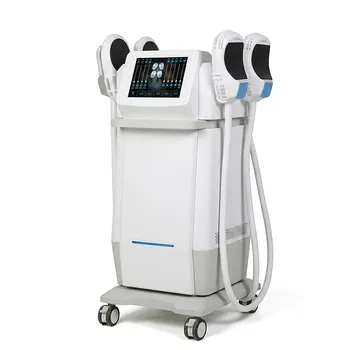
Bipolar RF is generally superficial, while unipolar or monopolar RF is designed to reach deeper tissue. Bipolar handpieces confine energy between two closely spaced electrodes, typically heating the dermis at approximately 2–6 mm. Unipolar or monopolar systems distribute RF energy more deeply, with some body-contouring platforms reporting penetration of up to 15–20 mm into subcutaneous tissue; the exact depth depends on electrode geometry, frequency, power, tissue properties, and treatment technique.
The practical distinction is target layer: bipolar RF primarily treats superficial dermal laxity and collagen remodeling, while unipolar/monopolar RF is used for deeper dermal, fibrous-septal, and subcutaneous tissue heating associated with body contouring and cellulite-focused protocols.
Why RF Handpiece Configuration Changes Treatment Depth
Bipolar RF Concentrates Energy Near the Handpiece
A bipolar handpiece contains two active electrodes. RF energy travels between them, creating a relatively confined and symmetrical heating zone beneath the treatment surface.
The effective depth is related to the spacing between the electrodes and is commonly limited to a portion of that distance. In clinical equipment, this often corresponds to roughly 2–6 mm, although some systems specify narrower ranges such as 1–4 mm.
Unipolar and Monopolar RF Use a Broader Energy Path
Monopolar RF typically uses one active electrode in the handpiece and a separate grounding or return pad elsewhere on the body. The larger path through tissue allows heating to extend beyond the immediate superficial contact zone.
Unipolar RF may describe a different technical configuration in which an applicator emits an electromagnetic field without the same grounding-pad circuit. Because manufacturers use these terms inconsistently, the device’s technical documentation matters more than the label alone.
Penetration Is an Operating Range, Not a Fixed Boundary
A stated depth such as 20 mm should be understood as a device-dependent treatment range, not a guaranteed vertical endpoint in every patient. Tissue thickness, hydration, impedance, applicator pressure, movement, cooling, and delivered power all influence the resulting thermal field.
Which Clinical Areas Each Handpiece Targets
Bipolar RF: Superficial Skin Laxity
Bipolar RF is primarily suited to the dermis and superficial connective tissue. Its controlled heating is used to stimulate collagen contraction and longer-term dermal remodeling.
For body sculpting, this makes bipolar RF useful where the main concern is surface laxity, texture, or mild tightening rather than a substantial subcutaneous fat layer.
Unipolar or Monopolar RF: Deeper Contouring
Deeper RF configurations are intended to heat the deep dermis, hypodermis, and subcutaneous fibrous septa. Depending on the platform and protocol, this can support tissue remodeling, localized circumference reduction, and improvement in the appearance of cellulite.
Common body-contouring targets may include the abdomen, flanks, thighs, buttocks, and other areas with thicker soft-tissue coverage, provided the applicator and treatment parameters are indicated for those regions.
Combining Both Depths Addresses Different Problems
A patient can have both superficial laxity and deeper tissue fullness. Bipolar RF can address the skin envelope, while unipolar or monopolar RF can deliver broader, deeper heating to the underlying tissue.
Using both handpieces in one treatment plan can therefore provide a more comprehensive approach than relying on either depth alone. The sequence and settings should follow the specific device protocol and the patient’s anatomy.
What the Heating Is Intended to Do
Dermal Heating Supports Collagen Remodeling
Controlled thermal exposure can contract existing collagen and stimulate a wound-healing response associated with later collagen remodeling. This is the principal rationale for using bipolar RF in superficial tightening treatments.
The result is generally gradual and variable rather than an immediate surgical-style lift.
Deep Heating Affects Subcutaneous Structures
When RF reaches deeper tissue, it can heat adipose tissue and fibrous septa volumetrically. This may influence local tissue remodeling, microcirculation, and the appearance of contour irregularities.
Claims about “fat dissolution,” metabolic turnover, or adipocyte destruction should be interpreted cautiously. The clinical effect depends on the device, temperature control, treatment protocol, and evidence supporting that particular platform.
RF Does Not Select Fat Through a Chromophore
RF is not dependent on melanin or another optical chromophore in the way some light-based treatments are. Its energy interacts with tissue’s electrical and dielectric properties, allowing treatment across a broader range of skin tones.
That does not eliminate safety considerations. Conductive implants, sensation changes, scarring history, pregnancy, and other contraindications still require clinical screening.
Understanding the Trade-offs
Bipolar RF Offers Control and More Limited Depth
Because the energy path is confined between nearby electrodes, bipolar RF provides precise superficial heating and is often easier to control around smaller or more delicate treatment areas.
Its limitation is reach. It is not the appropriate configuration when the primary target lies well within the subcutaneous fat layer.
Unipolar or Monopolar RF Reaches Deeper but Is Less Localized
Deeper configurations can affect a larger volume of tissue and are more relevant to body contouring. However, the broader energy distribution may increase treatment discomfort and requires careful temperature monitoring, movement, and surface protection.
Depth also does not automatically mean better results. Treating too aggressively can increase the risk of excessive pain, burns, unwanted fat changes, or uneven results.
Device Labels Can Obscure Important Differences
“Monopolar” and “unipolar” are sometimes treated as interchangeable in marketing materials, but their electrical configurations are not always identical. A monopolar system generally involves a return path through a grounding pad, whereas a unipolar system may use an electromagnetic field without that same circuit.
Before comparing devices, verify the manufacturer’s description of electrode arrangement, operating frequency, stated depth, cooling method, indications, and clinical evidence.
Depth Claims Should Not Be Compared in Isolation
A 20 mm specification does not mean that every point within 20 mm receives the same therapeutic temperature. Treatment outcomes depend on whether the system can maintain a controlled thermal dose throughout the intended target without overheating the skin.
Clinical selection should therefore consider the complete applicator design and protocol, not only the maximum penetration number.
Making the Right Choice for Your Goal
The appropriate handpiece depends on the tissue layer responsible for the patient’s concern.
- If your primary focus is superficial skin tightening: Choose a bipolar protocol intended to heat the dermis, typically within an approximate 2–6 mm treatment range.
- If your primary focus is deeper body contouring: Choose a unipolar or monopolar system specifically indicated for subcutaneous tissue heating, with reported depths that may extend toward 15–20 mm depending on the device.
- If your primary focus is mixed laxity and tissue fullness: Consider a protocol that combines superficial bipolar treatment with deeper RF, provided the manufacturer’s indications and safety parameters support that approach.
- If your primary focus is predictable treatment planning: Compare electrode configuration, thermal monitoring, cooling, treatment evidence, and contraindications rather than relying on the bipolar, unipolar, or monopolar label alone.
The most reliable RF treatment matches the handpiece’s actual thermal field to the depth and anatomy of the tissue being treated.
Summary Table:
| Handpiece Type | Typical Penetration Depth | Primary Target Layer | Common Clinical Uses |
|---|---|---|---|
| Bipolar RF | 2–6 mm (some 1–4 mm) | Dermis and superficial connective tissue | Superficial skin laxity, texture improvement, mild tightening |
| Unipolar/Monopolar RF | Up to 15–20 mm (device-dependent) | Deep dermis, hypodermis, subcutaneous fibrous septa | Body contouring, circumference reduction, cellulite improvement |
| Combination (bipolar + unipolar/monopolar) | Varies by handpiece | Both superficial and deep layers | Comprehensive treatment of mixed skin laxity and tissue fullness |
Looking to offer advanced body sculpting with dual-depth RF? BELIS provides professional-grade medical aesthetic devices, including RF systems with bipolar and unipolar handpieces. Our platforms are designed for clinics and premium salons, featuring precise depth control, safe thermal delivery, and proven protocols. Contact our experts today to find the right solution for your practice. Contact us now to schedule a consultation and explore our range of body contouring technologies.
Related Products
- 22D HIFU Machine Device Facial Machine
- RF Microneedling Machine Micro Needle Radio Frequency Machine
- 9D 7D HIFU Vaginal RF Lifting Treatment
- RF Microneedling Machine Micro Needle Radio Frequency Machine
- EMSlim Neo Nova Body Sculpting EMS Sculpting Machine
People Also Ask
- Is swelling a frequent side effect after a HIFU facial? Expert Insights on HIFU Recovery and Safety
- What is the mechanism of action of High-Intensity Focused Ultrasound (HIFU) devices in noninvasive body sculpting, and how is surrounding tissue protected?
- How do High-Intensity Focused Ultrasound (HIFU) devices function? Master Non-Invasive Face Lifting Technology
- Are home-use HIFU devices a recommended alternative? Why Clinical Safety Beats At-Home Risks
- What are the main functions of a High Intensity Focused Ultrasound (HIFU) machine? Advanced Skin Lifting and Sculpting