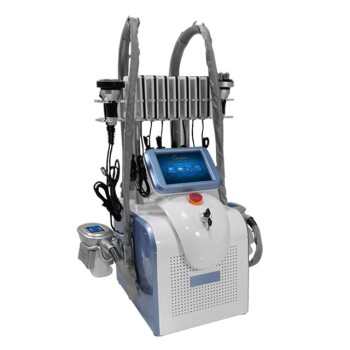
The integration of a dynamic cooling device (DCD) is strictly required because it lowers the skin surface temperature to between 5°C and -9°C immediately before or during laser emission. This critical thermal regulation protects the epidermis (the outer layer of skin) from burning while enabling the laser energy to penetrate safely to deeper tissue.
By decoupling surface temperature from laser intensity, dynamic cooling devices allow practitioners to treat deep-seated scar tissue with the necessary high energy without compromising the safety or comfort of the patient.
The Mechanism of Protection
Precise Thermal Regulation
The primary function of a DCD is to rapidly reduce the temperature of the skin's surface. By achieving a target range of 5°C to -9°C, the device creates a thermal shield that safeguards the epidermis against the intense heat generated by Q-switched or picosecond lasers.
The Cryogen Burst
DCDs operate by spraying a controlled burst of cryogen onto the target area milliseconds before the laser pulses. This is a timing-critical operation.
Rapid Evaporation
Upon contact with the skin, the cryogen undergoes rapid evaporation. This physical phase change absorbs heat instantaneously from the epidermis, ensuring the surface remains cool even as the laser energy passes through it.
Why This Matters for Scar Treatment
Enabling Higher Fluences
Treating scars often requires reaching deep-seated tissue to stimulate remodeling. To reach these depths effectively, practitioners must use higher energy fluences (intensity).
Deep Penetration Without Surface Damage
Without cooling, high energy levels would burn the skin's surface before reaching the scar. The DCD protects superficial layers, ensuring that sufficient energy reaches the deep targets without causing collateral damage to the top of the skin.
Enhancing Patient Comfort
Laser treatments for scars can be painful due to the heat involved. By cooling the skin, the DCD significantly reduces the sensation of pain. This enhances patient compliance, making it more likely they will complete the full course of necessary treatments.
Understanding the Trade-offs
The Risk of Heat Diffusion
While lasers target specific tissues, heat naturally diffuses to surrounding areas. A lack of proper cooling increases the risk of thermal damage to non-target tissues.
Balancing Efficacy and Safety
There is an inherent tension between using enough energy to fix the scar and using too much energy that harms the patient. The DCD resolves this trade-off. It minimizes side effects from excessive heat, allowing the practitioner to focus on efficacy rather than defensively lowering energy settings solely to prevent surface burns.
Making the Right Choice for Your Goal
When evaluating laser protocols for scar revision, the presence of a dynamic cooling device dictates your operational limits.
- If your primary focus is Safety: The DCD is the fail-safe that selectively protects the epidermal layer, preventing burns and minimizing damage to non-target tissue.
- If your primary focus is Efficacy: The cooling mechanism is the enabler that permits the use of higher energy fluences required to effectively remodel deep scar tissue.
Mastering the use of dynamic cooling is not optional; it is the prerequisite for safe, high-energy laser applications.
Summary Table:
| Feature | Role in Scar Treatment | Benefit |
|---|---|---|
| Thermal Regulation | Lowers surface temp to 5°C to -9°C | Prevents epidermal burns |
| Cryogen Burst | Sprayed milliseconds before laser pulse | Immediate surface protection |
| Energy Fluence | Allows higher laser intensity | Reaches deep-seated scar tissue |
| Patient Comfort | Rapid heat absorption/evaporation | Enhances treatment compliance |
Elevate Your Clinic's Scar Revision Results with BELIS
At BELIS, we specialize in professional-grade medical aesthetic equipment designed exclusively for clinics and premium salons. Integrating advanced cooling technology with our high-performance Pico and Nd:YAG laser systems is essential for delivering safe, high-fluence treatments that your clients demand.
Our comprehensive portfolio—including CO2 Fractional lasers, HIFU, Microneedle RF, and body sculpting solutions like EMSlim—is engineered to provide maximum efficacy with minimal downtime. Partner with us to bring cutting-edge safety and superior clinical outcomes to your practice.
Contact our experts today to upgrade your equipment
References
- Steven Paul Nisticò, Giovanni Cannarozzo. Fractional Q-Switched 1064 nm Laser for Treatment of Atrophic Scars in Asian Skin. DOI: 10.3390/medicina58091190
This article is also based on technical information from Belislaser Knowledge Base .
Related Products
- Cryolipolysis Fat Freezing Machine Ultrasonic Cavitation Fat Reducing Device
- Fat Freezing Cryolipolysis Machine for Body Contouring
- Fat Freezing Cryolipolysis Machine for Body Contouring
- Cryolipolysis Fat Freezing Machine and Ultrasonic Cavitation Device
- Cryolipolysis Fat Freezing Machine with Cavitation and Laser Lipolysis
People Also Ask
- What are the main benefits of using a fat freezing machine? Achieve Permanent, Non-Surgical Body Sculpting
- Do fat freezing machines really work? Achieve Non-Invasive Body Contouring
- What are the potential side effects and risks associated with fat freezing? Safety Profile & Rare Risks Explained
- What is the treatment principle of cryolipolysis fat freezing? Science-Backed Fat Reduction and Body Contouring
- What are the technical advantages of using lower temperatures and shorter durations in cryolipolysis fat reduction?